



















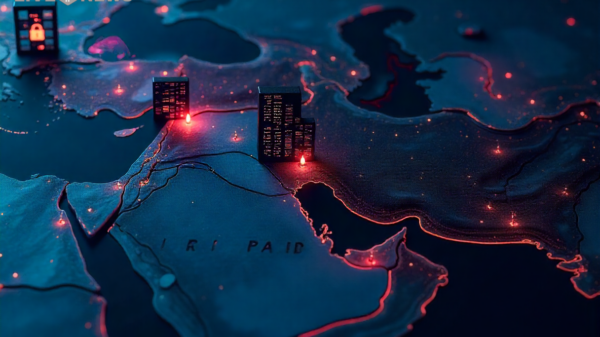


















In the wake of the assassination of Supreme Leader Ayatollah Khamenei, Iran witnessed a dramatic spike in cryptocurrency activity, with a staggering 700% surge in transactions on Nobitex, the nation”s largest digital asset exchange. Millions of Iranians flocked to the platform to protect their savings, reflecting a desperate financial exodus as fear over the collapsing rial intensified.
The number of accounts on Nobitex has surged to nearly 11 million, with many users transferring their assets into private, non-custodial wallets or opting to move funds overseas. Analysts attribute this mass movement to concerns about potential government actions that could restrict access to banks and exchanges, or even lead to a total financial system shutdown amidst escalating unrest.
On-chain analytics from Elliptic reveal that customers were exchanging rials for Bitcoin and directing their funds to international trading platforms known to accept transactions from Iran. This trend underscores a broader flight from traditional financial systems, as cryptocurrencies provide a means to circumvent the restrictions imposed by international sanctions that have long isolated Iranians from global banking.
This phenomenon goes beyond mere panic selling. In a country where the banking sector is largely disconnected from the global economy and where rampant inflation has diminished the value of savings, digital currencies have emerged as a critical alternative for many citizens. They view cryptocurrencies as a safeguard against a financial system capable of abruptly cutting off access to funds or freezing financial transactions without warning.
The fears that triggered this surge quickly materialized. Following the unrest, the Iranian government implemented sweeping internet restrictions, resulting in a nearly 99% drop in connectivity across the nation. This blackout effectively stranded many traders, halting automated trading operations and disrupting API connections that professional traders rely on.
By March 2, access to several domestic exchanges was completely cut off. It remains uncertain whether these outages stemmed from deliberate government actions, physical damage due to protests, or a combination of both. Notably, Wallex.ir cited a power outage at the Asiatech data center, which is significant since Nobitex also relies on this hosting provider. Such outages severely impact a large segment of the country”s crypto users.
On-chain data from Arkham Intelligence indicated that Nobitex”s Ethereum address suspended outgoing transactions for several days, although some activity continued on the TON network. Other platforms, like Tabdeal, adjusted their withdrawal processes, advising users to expect delays of up to 24 hours. Nobitex attempted to maintain operations, warning users of potential slowdowns and thinner markets.
Despite initial withdrawals being in the low millions in dollar terms—far from significant on a global scale—the rapidity of the response and the sheer volume of participants highlight a deeper trend. This was not an isolated incident; similar spikes in activity occurred on Nobitex during previous protests that led to internet shutdowns, suggesting a recurring pattern.
This situation illustrates the dual-edged nature of cryptocurrencies in regions like Iran. While they offer a viable avenue for individuals to move their assets beyond governmental control, the transparent nature of blockchain technology also enables authorities and global watchdogs to track the flow of funds, a capability that traditional banking lacks.
If ongoing crises in Iran continue to trigger such surges in cryptocurrency activity, it may encourage other sanctioned populations worldwide to increasingly rely on digital assets as a financial lifeline. This trend presents a complex challenge for regulators: how to monitor these financial flows without jeopardizing the lifelines that ordinary citizens depend on during turbulent times.