



















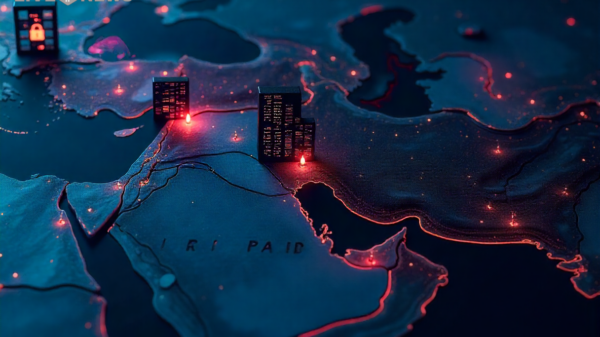















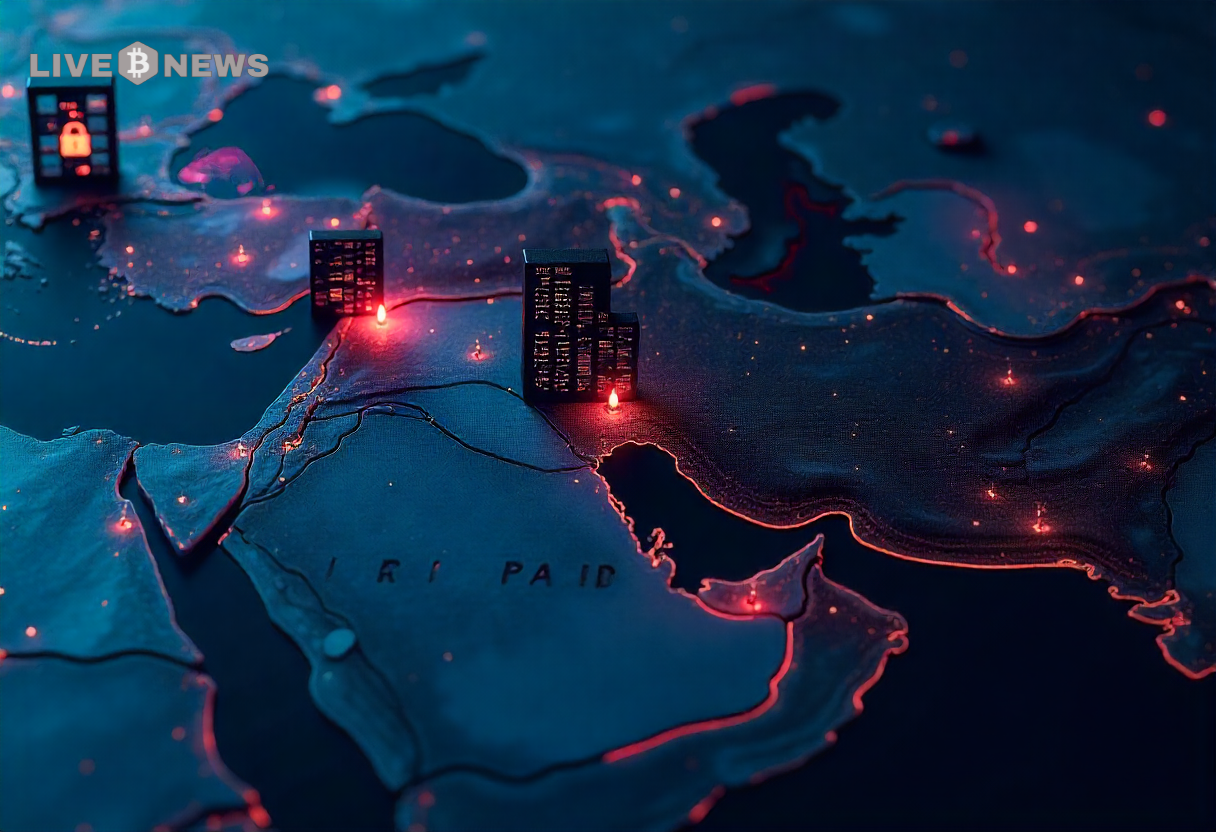
Iran”s cryptocurrency market is undergoing significant challenges following the recent US-Israeli strikes that commenced on February 28. According to findings from TRM Labs, the local crypto ecosystem has swiftly moved into a defensive mode as major exchanges implement stricter controls and suspend various trading pairs.
In the wake of escalating conflict, exchanges such as Wallex and Nobitex have halted all withdrawals, citing unstable infrastructure caused by a power outage at the Asiatech data center. Simultaneously, Aban Tether has completely suspended both crypto and rial withdrawals, while Ramzinex has assured users that their assets are secured in cold wallets despite suspending deposits and withdrawals.
Major exchanges have responded collectively to the liquidity stress and severe internet blackouts affecting the region. This situation has led to a significant contraction in market activity, with a marked absence of capital flight. Instead, the market is experiencing a dramatic reduction in trading volume, as highlighted by TRM Labs.
Exchanges Implement Risk Management Measures
As the situation deteriorated, exchanges began to implement various risk management strategies to protect their operations. Tabdeal transitioned to a twice-daily batch processing system, warning users of potential delays of up to 24 hours. Bitpin has also issued guidance to its users, advising them to avoid making impulsive trading decisions during this volatile period.
TRM Labs noted that while exchanges remained operational, they have all tightened their service offerings to navigate through the challenges posed by the current environment. The adjustments made by these platforms highlight the shared infrastructural stress faced by the Iranian crypto ecosystem.
Central Bank Actions Impact Key Trading Pair
The Iranian Central Bank has intervened by directing exchanges to temporarily halt trading of the USDT-toman pair, a critical link between cryptocurrency and fiat in Iran. Exchanges like Nobitex, Wallex, Bitcoin, and Tabdeal have cancelled open orders and paused trading of this key pair overnight, effectively stabilizing fiat valuations amid ongoing volatility.
Upon resuming trading, exchanges reported brief price dislocations and a thinning of their order books. Nobitex noted imbalances in supply and demand, prompting it to reverse some liquidations. Meanwhile, Bitpin encountered a short pricing anomaly and pledged to compensate users affected by these fluctuations.
Internet Blackouts Severely Limit Crypto Activity
According to reports, Iran”s internet connectivity has dropped by approximately 99% due to government-imposed restrictions. TRM Labs pointed out that such blackouts are not uncommon during periods of unrest, recalling similar instances during past conflicts and protests. This disruption has left retail users without access, cut off automated trading systems, and severed market makers” API connectivity.
On-chain data analysis by TRM Labs revealed three significant trends: a simultaneous contraction in inbound and outbound flows, fragmentation of transfer sizes, and a noticeable thinning of market depth following the reopening of trading. A spike in activity on Nobitex around February 28 was attributed to an internal transfer rather than any capital flight.
TRM Labs cautioned against drawing premature conclusions regarding the future of Iran”s crypto market. With over $11 billion in volume processed since the start of 2025, the current landscape appears to be one of adjustment to severe operational constraints. The normalization of activity will largely depend on the restoration of internet access and the evolution of the broader conflict.