










































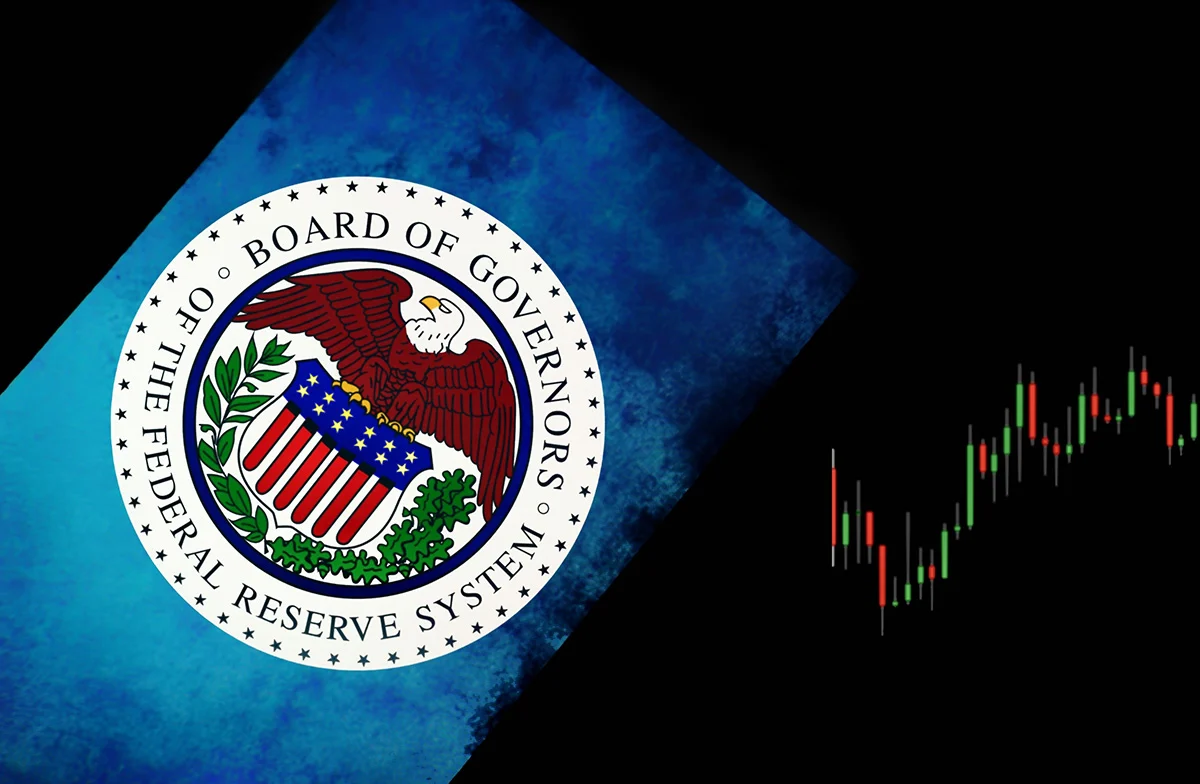
The U.S. Federal Reserve has recently clarified how banks should approach the capital treatment of tokenized securities, affirming that existing capital rules will apply uniformly, irrespective of whether the securities are issued on a blockchain network.
In a detailed FAQ released by the Federal Reserve Board, it was emphasized that the technology utilized for the issuance or transfer of a security does not alter its regulatory treatment. This guidance reinforces the principle of technology neutrality in regulatory standards.
As financial institutions increasingly explore tokenization, the Federal Reserve”s statement serves as a crucial standard. The agency noted that tokenized securities, when deemed eligible, should receive identical treatment as their traditional counterparts. The capital rules focus primarily on the legal rights and exposure linked to the asset.
The Federal Reserve explicitly stated, “An eligible tokenized security should be treated in the same manner as the non-tokenized form of the security would be treated under the capital rule.” This firmly establishes that blockchain issuance does not create distinct regulatory categories.
Moreover, the guidance elaborated that the capital rules do not differentiate between permissioned and permissionless blockchains. The essential factor remains the structure and rights associated with the security itself. Banks must continue to adhere to sound risk management practices while ensuring compliance with existing banking laws and supervisory standards.
In terms of financial collateral, the Federal Reserve confirmed that tokenized securities could qualify, provided they meet the same legal and risk criteria applicable to traditional securities. Banks must hold a perfected first-priority security interest or its legal equivalent for the tokenized assets to serve as a mitigant for credit risk.
This guidance indicates that both regulatory haircuts and capital calculations will remain unchanged, with treatment based on the asset”s legal rights rather than its digital format. The agency reiterated that the design of the blockchain—whether private or public—does not influence the regulatory framework.
This recent clarification aligns with earlier guidance from the Securities and Exchange Commission (SEC), which confirmed that tokenized securities are still governed by federal securities laws. The SEC highlighted that all registration, disclosure, and investor protection requirements apply equally to blockchain-based securities, ensuring compliance with existing statutory frameworks.
As interest in tokenized assets continues to grow, with estimates suggesting that the market for tokenized public equities has reached approximately $1.1 billion, the Federal Reserve”s guidance affirms that current capital rules are adaptable to tokenized securities, provided the legal rights remain consistent. Banks pursuing tokenization strategies must ensure they meet established capital and risk requirements, maintaining a robust framework for both conventional and blockchain-based securities.