




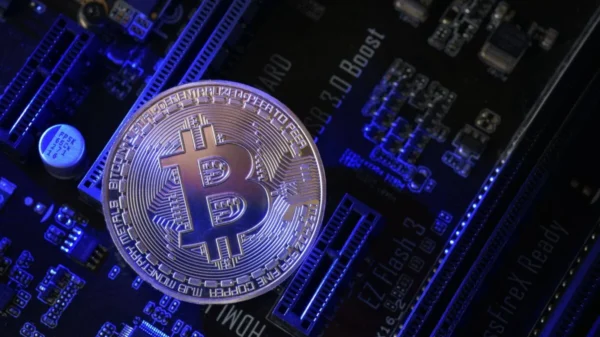

































Bitcoin is being framed as a stabilizing force for the US dollar, according to Coinbase CEO Brian Armstrong. In a recent discussion, Armstrong emphasized that rather than undermining the dollar, Bitcoin actually serves as a market-driven check on inflation and government spending. This assertion comes at a time when the US grapples with significant national debt and persistent inflationary pressures.
Armstrong stated that Bitcoin introduces competition into the financial system, which pressures governments to adhere to better fiscal practices. He argues that Bitcoin acts as an external benchmark, limiting how far inflation and deficit spending can escalate before eroding market confidence. This perspective is a departure from the common narrative that positions Bitcoin as a direct threat to fiat currencies.
As the US national debt has surpassed $37 trillion, with billions added daily, concerns about the long-term purchasing power of the dollar have intensified. In this context, Bitcoin is perceived not as a replacement but as a pressure relief valve. Investors can use Bitcoin to hedge against inflation risks, which, according to Armstrong, encourages more responsible monetary policies.
Importantly, Armstrong does not contend that Bitcoin will replace the dollar as the world”s reserve currency. Instead, he suggests that Bitcoin fosters moderation within the existing financial framework, reinforcing the dollar”s role in global trade and finance. The dollar remains central to international lending, energy prices, and trade, with no other asset currently matching its liquidity and institutional infrastructure.
Armstrong”s views reflect a broader shift in how Bitcoin is perceived in the financial landscape. It is increasingly seen not just as a parallel currency, but as a macroeconomic hedge and a tool for accountability in fiscal policy. The structural growth of US debt, coupled with rising interest rates, has made Bitcoin a focal point for institutional investors seeking protection against currency depreciation.
Additionally, the rise of stablecoins, which are pegged to the dollar, further fortifies the dollar”s position in the decentralized finance ecosystem. These stablecoins extend the dollar”s reach into areas with limited access to traditional banking, driving demand for US Treasury assets globally. The market for stablecoins has already exceeded $300 billion, with projections suggesting it could grow to trillions in the coming years.