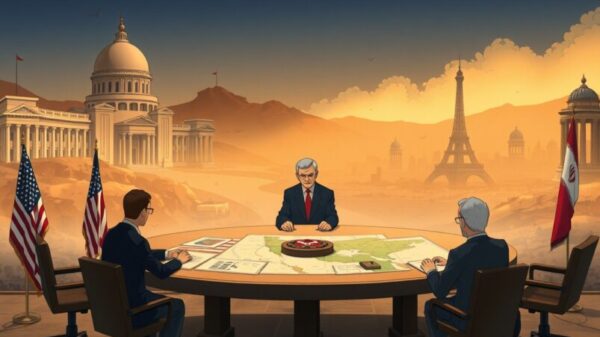











































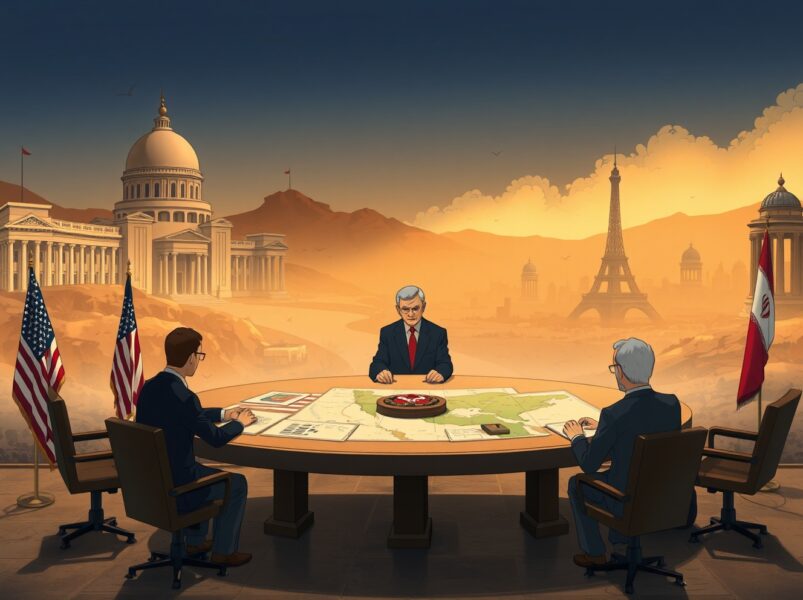
On March 15, 2025, President Donald Trump reaffirmed that military operations conducted by the United States against Iran will persist until every strategic objective is accomplished. This declaration comes amid rising tensions in the Middle East and signifies a pivotal moment in U.S. foreign policy. The announcement was made during a press briefing at the White House, where the President elaborated on his administration”s steadfast stance regarding Iran”s actions in the region.
The President”s statement builds upon a long history of intricate diplomatic and military relations with Iran. Analysts are now scrutinizing the potential ramifications for stability in the region. The Trump administration has consistently adopted a robust posture against the expansion of Iranian influence. Recent intelligence reports indicate a surge in Iranian proxy activities across various Middle Eastern countries.
Military analysts have identified several key objectives that likely underpin the President”s remarks, which include:
- Nuclear program containment: Preventing Iran from acquiring nuclear weapons capabilities.
- Proxy force neutralization: Addressing Iranian-supported militias in Iraq, Syria, and Yemen.
- Shipping lane protection: Ensuring safe navigation in the Strait of Hormuz.
- Terror financing disruption: Targeting networks that fund militant organizations.
- Regional stability promotion: Supporting U.S. allies against Iranian encroachments.
Officials from the Department of Defense provided further insights during background briefings, indicating that ongoing operations had roots in previous administrations but have been significantly intensified under the current leadership. Moreover, advancements in technology have bolstered operational capabilities aimed at Iranian targets.
The backdrop of U.S.-Iran relations has been marked by considerable volatility over the decades. The 2015 Joint Comprehensive Plan of Action (JCPOA) initially created a sense of diplomatic hope. However, the Trump administration”s withdrawal from the agreement in 2018 led to a steady escalation in tensions, characterized by a series of confrontations.
A timeline of notable events underscores this escalation:
- May 2018: U.S. withdraws from the JCPOA, resulting in renewed sanctions on Iran.
- June 2019: Attacks on tankers in the Gulf of Oman attributed to Iranian forces.
- January 2020: Assassination of Qasem Soleimani marks a significant escalation in targeted operations.
- November 2023: Reports indicate significant advances in Iran”s nuclear capabilities.
- August 2024: Major naval exercises conducted in the Persian Gulf as a show of force by the U.S. and allies.
Today”s announcement is viewed as a continuation of established policy rather than a new direction. Nonetheless, the explicit commitment to persist until “all objectives are achieved” represents a notable rhetorical shift, particularly in light of ongoing diplomatic activities in the region.
Retired General James Thompson, a former CENTCOM commander, provided his perspective on the situation. He remarked, “The President”s statement aligns with established military doctrine. Clearly articulated objectives are fundamental to warfare, yet the challenge is determining when those objectives have been met.” He also noted that Iranian strategy has significantly evolved, with forces developing advanced asymmetric capabilities, including drone technology and cyber operations.
Current operations appear to involve multiple military branches alongside intelligence agencies, with increased surveillance along Iran”s borders. Naval patrols maintain a constant presence in critical maritime routes, while cyber operations are directed at Iranian command and control systems. Special forces are also engaging in training missions with regional allies.
Reactions to the President”s announcement have emerged swiftly across the Middle East. Gulf Cooperation Council nations have voiced cautious support for U.S. initiatives, while Iranian officials have condemned what they label as “continued American aggression.” European partners have expressed concerns about potential escalation.
The economic implications are already visible, with oil prices fluctuating sharply following the announcement and shipping insurance rates rising for vessels navigating the Persian Gulf. Stock markets in the region have reacted variably, depending on each country”s exposure to the unfolding conflict.
Humanitarian organizations have raised alarms about the impact on civilian populations, particularly in Syria and Yemen, where conflict zones could see increased refugee flows if hostilities escalate further. The medical infrastructure in these areas remains precarious.
Despite the military focus, international diplomatic efforts persist. Representatives from the United Nations continue to engage with all parties involved, while mediation initiatives are underway through various neutral states. Track II diplomacy efforts involve academics and former officials working to facilitate dialogue.
Legal authorities backing ongoing military operations are under scrutiny, with congressional leaders examining the 2001 Authorization for Use of Military Force (AUMF) as a foundation for actions against terrorist organizations. However, its applicability to state actors like Iran is contested. Constitutional scholars are debating the allocation of war powers between the executive and legislative branches.
Moreover, international law experts emphasize the relevance of the United Nations Charter in governing interstate use of force, with self-defense provisions allowing certain military responses. Collective security arrangements and treaty obligations further complicate the legal landscape.
Modern military operations leverage advanced technologies that differentiate them from earlier conflicts. Unmanned systems enhance surveillance capabilities, while artificial intelligence aids in data analysis and targeting. Cyber capabilities offer non-kinetic options for achieving military objectives.
These technological advancements present both opportunities and challenges. Enhanced precision can reduce collateral damage; however, adversaries are constantly developing countermeasures, necessitating ongoing innovation and adaptation. Operational security considerations restrict public discourse on specific capabilities, but defense analysts identify several key areas requiring focus:
- Advanced intelligence, surveillance, and reconnaissance systems.
- Electronic warfare and spectrum dominance capabilities.
- Missile defense and counter-rocket technologies.
- Secure communications and navigation systems.
- Logistical support for extended military operations.
Training and readiness are equally critical, with military personnel undergoing comprehensive preparation for diverse scenarios. Joint exercises with allied forces enhance interoperability, and simulation technologies provide realistic training environments.
In summary, President Trump”s announcement concerning the continuation of military operations against Iran marks a significant juncture in U.S. foreign policy. The commitment to fulfill all objectives signals a strategic resolve in the face of complex geopolitical challenges. Central concerns include regional stability, nuclear non-proliferation, and counter-terrorism initiatives. The administration”s position indicates that military actions will persist as part of an overarching strategy that seeks to balance multiple competing priorities in the Middle East.