





































The recent upheaval in the Middle East is sending shockwaves through Asian financial markets, igniting sudden and significant fluctuations in major stock indices. Notably, South Korea has felt the brunt of this instability, with trading halts implemented due to rapid declines in stock values.
Amid rising concerns regarding regional unrest, a wave of risk-averse behavior swept across various Asian markets, revealing the heightened sensitivity of these economies to geopolitical disturbances. In particular, South Korea”s Kospi and Kosdaq indices experienced steep losses exceeding 10% in early trading sessions, prompting automatic market stabilizers—the largest drop for both indices since August 2024. Other markets were not spared; Japan”s Nikkei 225 and Topix suffered downturns of 4%, while Hong Kong”s Hang Seng index fell by 3%, and China”s Shanghai Composite experienced a 1.3% decline.
The fears surrounding energy supply disruptions, exacerbated by the geopolitical tension, have contributed to further market anxiety. South Korea”s dependency on the Middle East for approximately 94% of its oil imports has rendered its economy particularly vulnerable to international turmoil. This reliance has been a significant factor in the sharp market reactions observed following recent geopolitical events. Thailand mirrored these trends, with its major index plunging 7.8% during intraday trading.
Industry experts, including Kazuaki Shimada from IwaiCosmo Securities and Jim Bianco from Bianco Research, have pointed out the tendency for investors to divest from stocks during such uncertain times. The situation intensified when Iran threatened to obstruct shipments through the crucial Strait of Hormuz, a critical maritime chokepoint for global oil trade. Consequently, Brent crude prices skyrocketed to $82 a barrel, while WTI rose to $75, marking one of the swiftest increases seen in recent history.
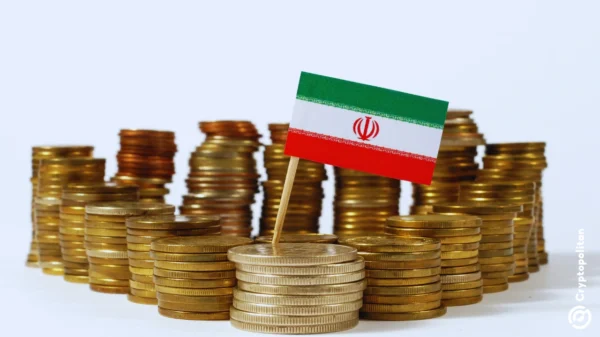
In an intriguing twist amidst the market chaos, Iran has signaled a willingness to accept cryptocurrencies for military exports, indicating a strategic shift towards alternative financial instruments. This development comes at a time when cryptocurrency valuations have shown relative stability, with total digital asset market capitalization slightly declining to $2.39 trillion, contrasting starkly with the estimated $3.2 trillion decrease in the global stock market value within the same timeframe.
Key insights from this tumultuous period reveal:
- South Korea”s market witnessed the most drastic declines, with both Kospi and Kosdaq indices falling over 10%.
- The country”s heavy reliance on Middle Eastern oil imports has exposed it to considerable economic risks.
- Global oil prices surged sharply, while cryptocurrency markets remained relatively stable.
- Geopolitical tensions are generating some of the most significant market impacts observed in recent years.
The ongoing developments in the Middle East continue to challenge the resilience of Asian financial markets, highlighting the vulnerabilities linked to energy dependency and the broader economic fallout stemming from geopolitical events. Investors and policymakers alike are closely monitoring these changes as they navigate a precarious financial landscape.