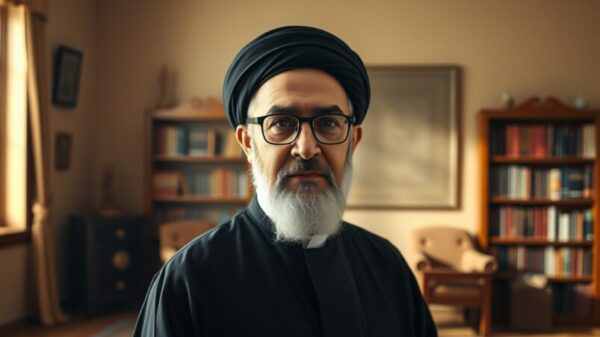









































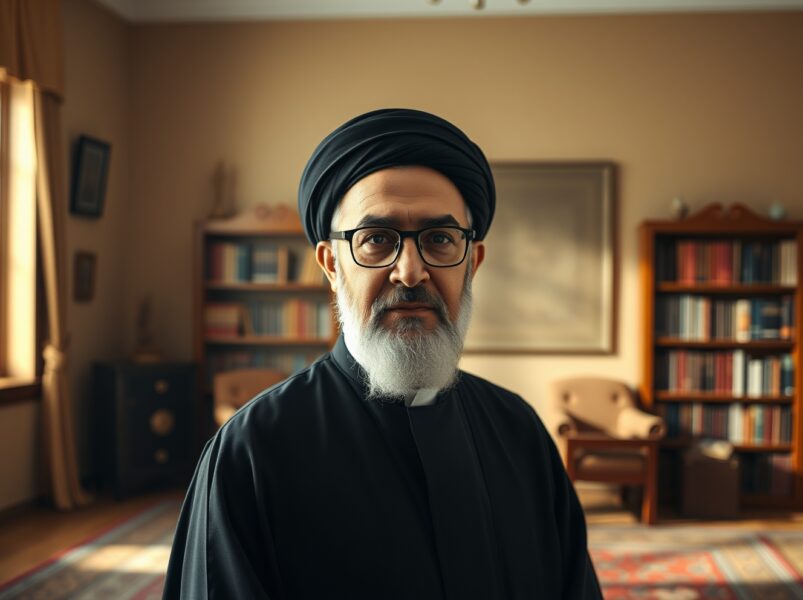
In a remarkable shift for Middle Eastern geopolitics, Iran appears to be positioning Mojtaba Khamenei, the son of current Supreme Leader Ayatollah Ali Khamenei, as the prospective successor to the highest office in the Islamic Republic. This potential transition arises amidst escalating regional tensions and intricate internal political dynamics.
The process of selecting Iran”s supreme leader is traditionally entrusted to the Assembly of Experts, an 88-member clerical body. Recent reports, however, suggest that significant behind-the-scenes negotiations are underway. The criteria for this position typically demand substantial religious credentials and political acumen. Although Mojtaba Khamenei, at 55, has generally maintained a lower public profile than other candidates, he has gradually taken on more responsibilities within his father”s administration over the past decade.
In accordance with Iran”s constitution, the supreme leader holds the position of commander-in-chief, wielding ultimate authority over foreign policy, military matters, and the judiciary. This role surpasses even that of the presidency, making the succession process one of the most pivotal political transitions in Iran”s history. The implications of this shift are profound, with far-reaching effects on Iran”s domestic policies and international relations.
The historical context of leadership transitions in Iran reveals a trend of only two supreme leaders since the 1979 revolution. Ayatollah Ruhollah Khomeini led from 1979 until his death in 1989, after which Ayatollah Ali Khamenei assumed leadership. The emergence of a potential third leader signifies a generational change while also testing the resilience of the revolutionary system. Previous discussions regarding succession have typically centered on senior clerics rather than family members.
Mojtaba Khamenei has an academic background in Islamic jurisprudence from Qom, Iran”s religious center, and holds the title of “Hojjatoleslam,” denoting advanced religious education. Despite not having attained the status of “Ayatollah,” which is often expected for a supreme leader, his supporters contend that his administrative experience makes up for this shortcoming. His profile includes:
- Active involvement in religious educational institutions
- Close collaboration with the Islamic Revolutionary Guard Corps (IRGC)
- Management of charitable organizations associated with the supreme leader”s office
- Limited public speaking engagements but notable influence behind the scenes
The prospect of this succession carries immediate political ramifications. First, it could centralize authority within a specific faction. Additionally, it may influence Iran”s nuclear negotiation strategies and regional proxy operations. Key regional players, including Saudi Arabia, Israel, and the United States, are closely monitoring how this leadership change might impact Iran”s strategic conduct.
The Islamic Revolutionary Guard Corps is a vital player in any potential succession scenario. Historically, the IRGC has demonstrated strong loyalty to the supreme leader. Nevertheless, internal divisions regarding preferred candidates exist. Mojtaba reportedly enjoys solid relationships with significant IRGC commanders, possibly facilitating a smoother transition.
Examining succession mechanisms in various countries highlights Iran”s unique position. In Saudi Arabia, the Allegiance Council relies on royal family consensus, while North Korea follows a hereditary succession model. In contrast, Iran”s system does not explicitly forbid familial succession, but religious qualifications remain essential. The Assembly of Experts must validate the candidate”s Islamic scholarship and political wisdom, and some senior clerics express concerns about candidates lacking the “marja” status, which refers to top-ranking Shia scholars authorized to issue religious edicts.
Historically, there has been flexibility in the qualifications for leadership. For instance, Ayatollah Khamenei himself was not widely recognized as a marja when he ascended to leadership, but the Assembly later elevated his religious standing. This precedent may provide a pathway for similar accommodations for Mojtaba Khamenei, even as theological debates within Iran”s religious community continue over the appropriate qualifications.
The implications of leadership changes extend to economic and social policy directions. Although Mojtaba”s specific policy inclinations remain somewhat unclear due to his minimal public commentary, analysts note his affiliations with conservative economic factions favoring principles of a resistance economy over liberal policies. Tackling persistent challenges such as youth unemployment and inflation will be critical for any new leader while upholding revolutionary ideals. The timing of this possible succession coincides with delicate nuclear negotiations, adding further complexity to the situation.
Experts emphasize the importance of institutional resilience during this transition. Dr. Ali Vaez, Iran Project Director at the International Crisis Group, asserts, “The Islamic Republic has demonstrated remarkable durability through previous crises. However, succession represents its most significant institutional test since the revolution.” Similarly, Sanam Vakil from Chatham House highlights that “the system prioritizes continuity and control. Any succession will reflect consensus among powerful stakeholders.”
While foreign governments typically refrain from direct commentary on internal succession matters, intelligence agencies are closely tracking developments. The United States State Department often stresses concerns regarding policy continuity, while European nations focus on the implications for nuclear agreements. Regional adversaries like Saudi Arabia and Israel assess the military and strategic consequences of this potential shift.
Despite prevailing tensions, diplomatic channels remain open. International businesses are keenly observing policy signals that could impact investments and sanctions. Furthermore, global energy markets consider the potential ramifications for supply chains, given Iran”s substantial oil and gas reserves.
In conclusion, the possible designation of Mojtaba Khamenei as Iran”s next supreme leader marks a crucial juncture in the country”s history. Though not yet formalized, this succession plan signals meticulous political preparation for an eventual leadership transition. The process involves intricate negotiations among religious, military, and political entities and unfolds against a backdrop of regional tensions and economic obstacles. Ultimately, the succession of Iran”s supreme leader will significantly influence the nation”s trajectory for decades to come, shaping both domestic policies and international relations.
FAQs
Q1: Who officially selects Iran”s supreme leader?
A1: The Assembly of Experts, an 88-member body of Islamic clerics, is responsible for selecting, supervising, and potentially dismissing the supreme leader. This body operates independently but takes into account the preferences of various political and military stakeholders.
Q2: What religious rank does Mojtaba Khamenei currently hold?
A2: Mojtaba Khamenei holds the title “Hojjatoleslam,” indicating advanced religious education. He has yet to achieve the rank of “Ayatollah” or “Grand Ayatollah,” which some consider traditional prerequisites for the supreme leadership position.
Q3: How does this potential succession compare to previous transitions?
A3: Iran has experienced only one supreme leader transition since the 1979 revolution, following Ayatollah Khomeini“s death. That process involved consensus among revolutionary elites rather than apparent familial consideration, making this potential succession historically distinctive.
Q4: What role does the Revolutionary Guard play in succession?
A4: The Islamic Revolutionary Guard Corps wields significant influence due to its loyalty to the supreme leader institution. While not formally part of the selection process, the IRGC leadership”s preferences substantially impact political calculations and transition stability.
Q5: When might this leadership transition occur?
A5: No official timeline exists. Ayatollah Ali Khamenei, at 85, remains in position. Succession planning typically takes place discreetly, with formal selection occurring only after a vacancy arises. The process emphasizes continuity and avoids public speculation about timing.