
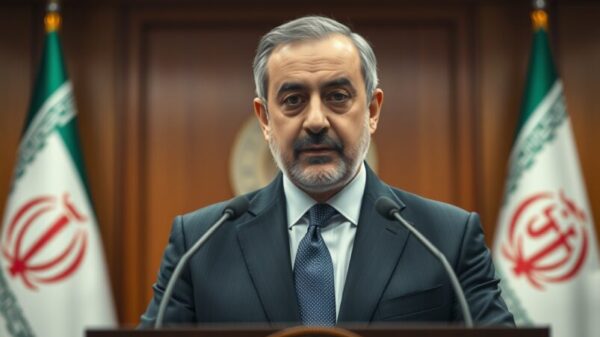







































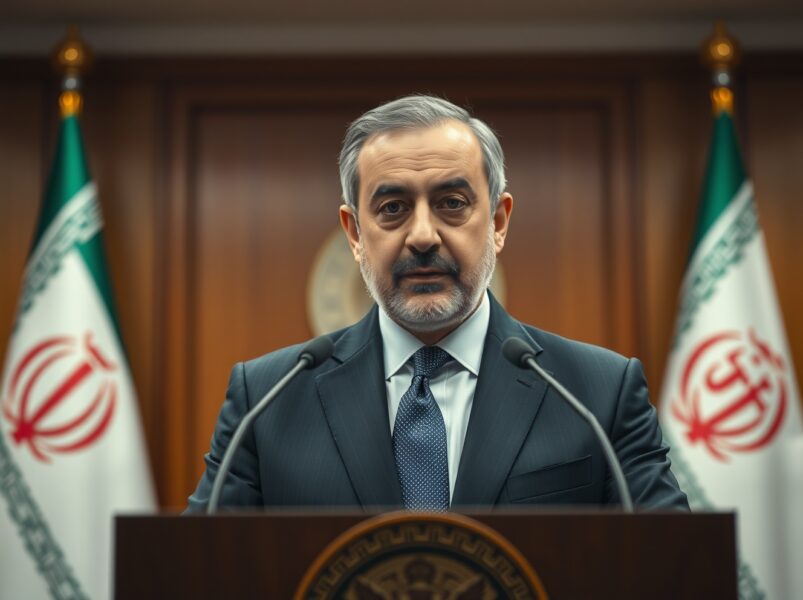
In a bold national address, Iranian President Masoud Pezeshkian emphatically stated that unconditional surrender is not an option for the Islamic Republic. This significant declaration was made from Tehran and reported by Chinese state media on March 7, 2025, directly challenging the latest pressures from the United States.
Pezeshkian”s remarks underline a recalibrated defensive stance from Iran, marking a crucial moment in the ongoing strategic standoff in the Middle East. The President”s speech was aimed at both domestic and international audiences, reinforcing the notion of national resilience and sovereignty. He urged the Iranian populace to unite in defense of their country, a move that seeks to bolster political stability at home while projecting strength abroad.
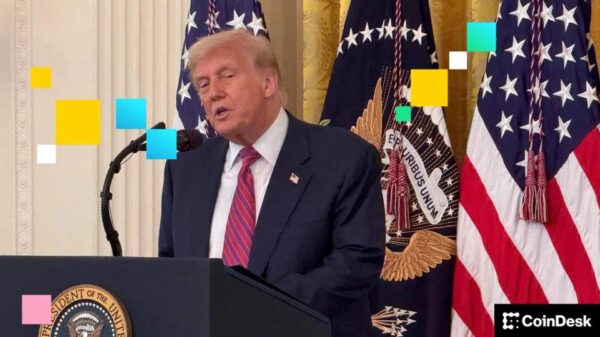
This declaration comes on the heels of previous statements from U.S. President Donald Trump, who asserted that unconditional surrender was the only viable basis for negotiations with Iran. Pezeshkian”s address serves as a clear rebuttal, establishing a firm boundary for any future diplomatic discussions. Analysts interpret this exchange as solidifying the existing deadlock, with neither party appearing willing to alter its fundamental stance.
Shift in Iran”s Missile Policy
A critical aspect of Pezeshkian”s address was the announcement of a new missile policy by Iran”s interim leadership committee. On March 6, the committee resolved to suspend all missile launches unless provoked by an attack from a neighboring country. This policy marks a significant shift, framing Iran”s extensive missile arsenal as primarily defensive.
The policy aims to alleviate security concerns among Gulf Cooperation Council (GCC) nations and presents Iran as a responsible regional actor pursuing stability. However, security experts caution that the practical application of this policy remains untested, as the definitions of “attack” and potential retaliatory measures are not clearly defined, leaving room for interpretation in crisis situations.
Apology to Neighbors and Regional Dynamics
In a conciliatory gesture, President Pezeshkian offered an apology to neighboring countries. While he did not elaborate on specific incidents, this gesture is widely viewed as an attempt to mend relations with regional counterparts, potentially counterbalancing U.S. influence. Iran shares borders and waterways with several nations, making stability with these countries vital for its economic and security interests, particularly in relation to oil exports and mitigating the effects of international sanctions.
Longstanding US-Iran Negotiation Challenges
The current impasse reflects a long, tumultuous history of U.S.-Iran relations. The 2015 Joint Comprehensive Plan of Action (JCPOA), known as the Iran nuclear deal, once represented a pinnacle of diplomatic efforts. However, the U.S. withdrawal from this agreement in 2018 and the subsequent re-imposition of sanctions disrupted this framework, leading to sporadic and fruitless negotiations since.
The historical pattern reveals a consistent clash over negotiation principles, with the U.S. typically demanding upfront, verifiable concessions while Iran insists on reciprocal measures and guarantees against future abandonment of agreements.
Global Reactions and Economic Ramifications
The international response to Pezeshkian”s address has been mixed. Initial reports from Chinese media highlighted the strong diplomatic and economic ties between Beijing and Tehran, while European nations, committed to the JCPOA framework, received the missile policy announcement with caution, constrained by U.S. sanctions. Regional powers, including Saudi Arabia and Israel, are expected to view the defensive pledge with skepticism given Iran”s track record of supporting proxy groups.
Economically, the reaffirmation of a hardline stance creates uncertainty in global energy markets. With some of the largest proven oil and gas reserves, a continued deadlock means Iran”s substantial supply remains largely absent from formal international markets, contributing to price volatility. Meanwhile, the Iranian economy continues to struggle with inflation and currency depreciation due to sanctions, a situation that the U.S. strategy aims to exploit.
Expert Analysis on Strategic Risks
Security analysts highlight several calculated risks in Iran”s approach. By openly rejecting unconditional surrender, Pezeshkian eliminates any domestic perception of weakness, thereby consolidating political support. The new missile policy and the apology aim to create a divide between the U.S. and its regional allies by offering direct security assurances. Furthermore, the reliance on Chinese media for communication emphasizes Iran”s strategic “Look East” policy, fostering closer ties with Beijing and Moscow as counterweights to Washington.
However, this strategy is fraught with peril. It provides a narrative for the U.S. administration to portray Iran as obstinate, potentially justifying further coercive measures. Additionally, it does little to alleviate the severe economic difficulties faced by ordinary Iranians, which could lead to domestic unrest.
In summary, Pezeshkian”s assertion that unconditional surrender is not an option solidifies the current diplomatic stalemate with the United States. By coupling this defiance with a newly declared defensive missile policy and an apology to neighboring countries, Iran aims to strengthen domestic unity while maneuvering for regional advantage. The immediate future appears to be marked by continued tension, with a high potential for miscalculations.