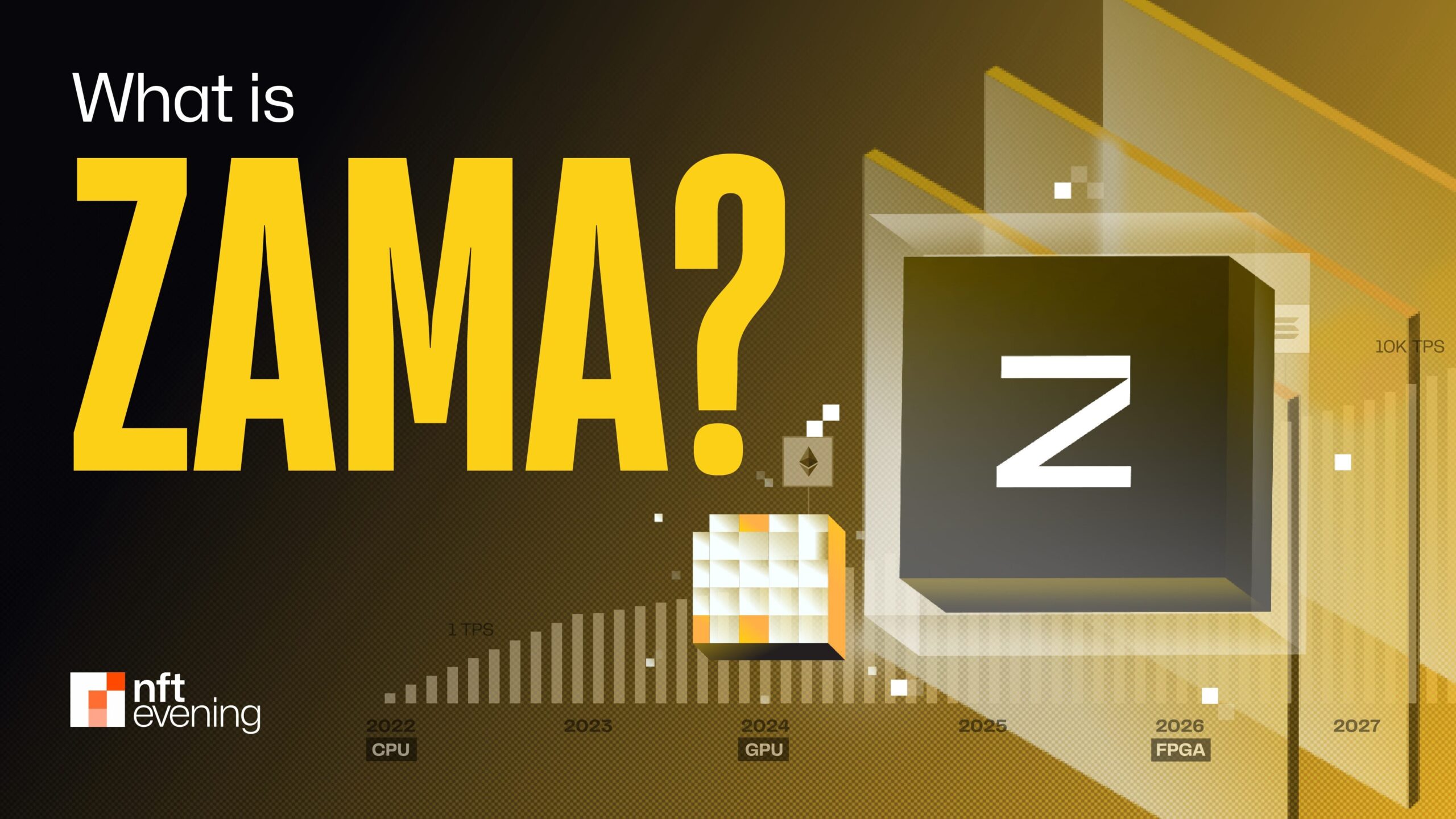
If you”re exploring the landscape of cryptocurrency and blockchain technology, understanding Zama is crucial, especially as it emerges as a key player in the realm of privacy solutions. Zama is a protocol designed to facilitate the execution of applications on encrypted data without exposing sensitive details to public blockchains. While many blockchains operate transparently, revealing transaction details and balances, Zama introduces a paradigm shift by enabling confidential smart contracts that maintain privacy while still operating on-chain.
The core innovation of Zama lies in its confidentiality protocol, which utilizes Fully Homomorphic Encryption (FHE) to allow computations on encrypted information without exposing it to the network or validators. This means that data remains encrypted at all times, making it impossible for unauthorized parties to access sensitive information. Zama effectively bridges the gap between the need for transparency in blockchain technology and the necessity for privacy in real-world applications.
Understanding the Zama Network
The operational framework of the Zama network is built around advanced encryption methods that enable data to remain secure from the moment it enters the system until it is decrypted by an authorized user. The process unfolds as follows: a user submits encrypted data to a smart contract, the contract performs calculations without decrypting the data, and the outputs remain encrypted on-chain. Authorized users are then able to decrypt the results, ensuring that sensitive information is never publicly visible.
Key Features of Zama
Zama is distinguished by its focus on practical privacy solutions rather than theoretical constructs. Its main features include:
- End-to-End Encrypted Smart Contracts: These contracts maintain the confidentiality of sensitive data throughout their lifecycle, meaning that information such as account balances and identities is never exposed publicly.
- Programmable Confidentiality: Developers can specify which aspects of an application should remain private, offering flexibility where confidentiality is required.
- Fully Homomorphic EVM (fhEVM): This component allows compatibility with the Ethereum ecosystem, enabling developers to create confidential smart contracts using existing tools.
- Cross-Chain Composability: Zama supports multiple blockchains, allowing applications to interact with various networks while preserving privacy.
- Developer-Friendly Tooling: Zama provides libraries, SDKs, and documentation that simplify the process of building privacy-focused applications.
Applications and Use Cases
The versatility of Zama”s technology allows for a wide variety of applications in both the cryptocurrency space and broader industries. Some notable use cases include:
- Decentralized Finance (DeFi): Users can conceal transaction amounts and trading strategies, fostering a more secure trading environment.
- Payments: Confidential transfers can be executed without disclosing amounts to the public.
- Identity Systems: Zama can help manage personal data securely while allowing for necessary verification.
- Enterprise Solutions: Businesses can tokenize assets while keeping financial data private.
- Governance: Voting within Decentralized Autonomous Organizations (DAOs) can occur without revealing individual votes.
The ZAMA token plays a vital role within the ecosystem, facilitating network usage, rewarding contributors, and enabling governance decisions. Launched on February 2, 2026, the token aims to align the interests of developers, users, and network maintainers, fostering a sustainable growth environment.
As Zama continues to develop its infrastructure, it is positioned to redefine privacy on the blockchain. The combination of Zama”s technology and evolving ecosystem indicates a promising future where privacy becomes a standard feature rather than an afterthought.