
























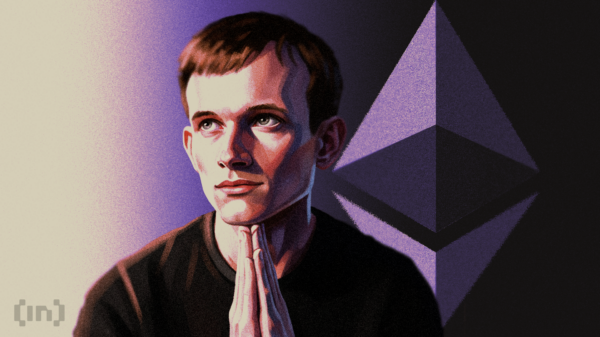

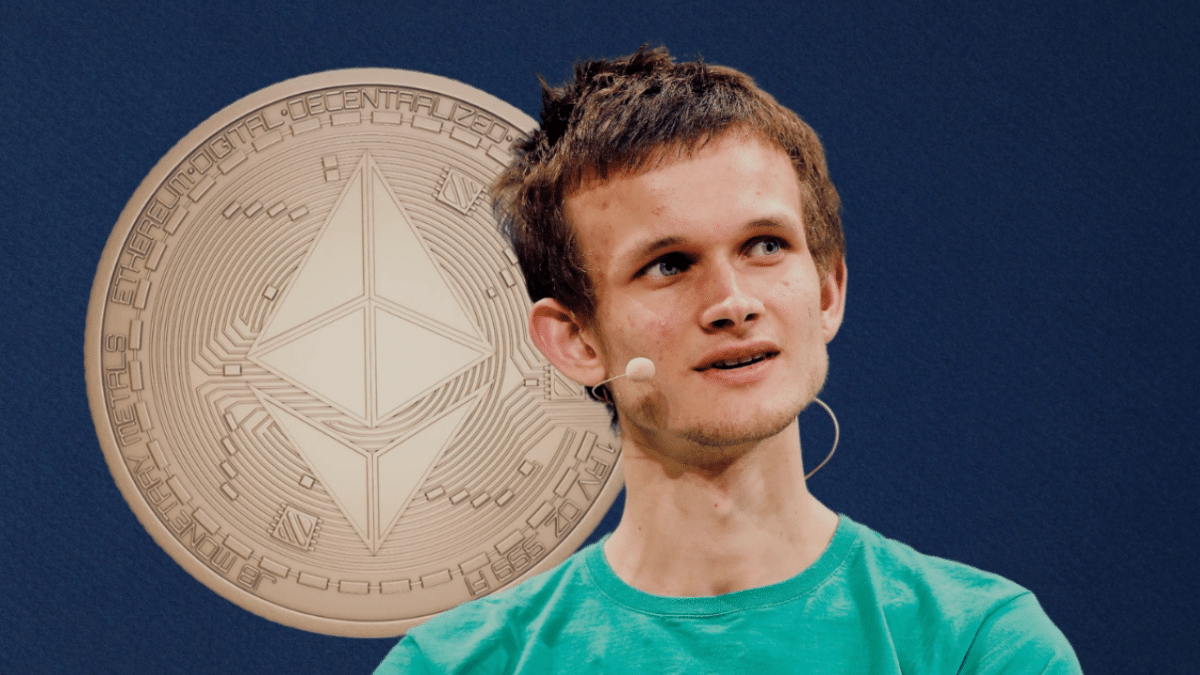
In a significant development for Ethereum, co-founder Vitalik Buterin recently outlined the impact of PeerDAS and ZK-EVMs on the network”s evolution. These advancements are not merely theoretical; they are operational, indicating a pivotal shift in Ethereum”s scaling capabilities.
Buterin announced that PeerDAS is now live on the Ethereum mainnet, while ZK-EVMs have achieved production-grade performance, paving the way for broader adoption anticipated by 2026. He emphasized that the changes brought by these technologies will enhance the way Ethereum processes data and validates blocks, effectively addressing long-standing limitations in blockchain performance.
Historically, blockchains faced a trilemma: they could be decentralized and secure but slow, or fast but with reduced decentralization. Buterin illustrated this issue by comparing Ethereum to earlier peer-to-peer systems. He noted that while BitTorrent excelled in decentralized data transfer, it lacked a consensus mechanism. Conversely, Bitcoin”s approach to consensus, reliant on every node performing the same computations, severely limited throughput.
With the introduction of PeerDAS, or Peer Data Availability Sampling, Ethereum can now validate data availability more efficiently. Rather than requiring all validators to download and store extensive data, they will only need to verify small, random portions. This method significantly reduces the burden on validators, allowing Ethereum to handle larger data volumes without necessitating expensive hardware.
On the other hand, ZK-EVMs, or zero-knowledge Ethereum Virtual Machines, revolutionize transaction validation. Traditionally, validators re-executed all transactions within a block to confirm their accuracy. With ZK-EVMs, they can instead rely on cryptographic proofs that validate the execution of the block, streamlining the computational demand on validators and facilitating higher gas limits without overwhelming the network.
Buterin underscored that this shift is not simply academic; it represents real, functioning code that has emerged from years of research dating back nearly a decade. He stated, “The trilemma has been solved – not on paper, but with live running code.” Both PeerDAS and ZK-EVMs are crucial components of Ethereum”s strategy to support greater scalability while maintaining decentralization.
Looking ahead, Buterin anticipates gradual changes rather than an instantaneous overhaul. By 2026, Ethereum expects to implement higher gas limits independent of ZK-EVMs, along with other adjustments to enhance throughput and safety. He also expects ZK-EVMs to become the predominant method for block validation between 2027 and 2030, facilitating substantial increases in gas limits.
In addressing the issue of block building centralization, Buterin highlighted a long-term objective to prevent full blocks from being assembled in one location, thereby mitigating censorship risks and promoting fairness. Although this goal is not immediately required, it reflects Ethereum”s commitment to evolving in a decentralized manner.
While challenges remain, such as further safety enhancements for ZK-EVMs and the complexity introduced by higher gas limits, Buterin”s insights confirm that Ethereum is transitioning toward a more scalable future. The integration of these technologies marks a critical juncture in Ethereum”s roadmap, enabling the network to accommodate increased usage while preserving decentralized validation.