































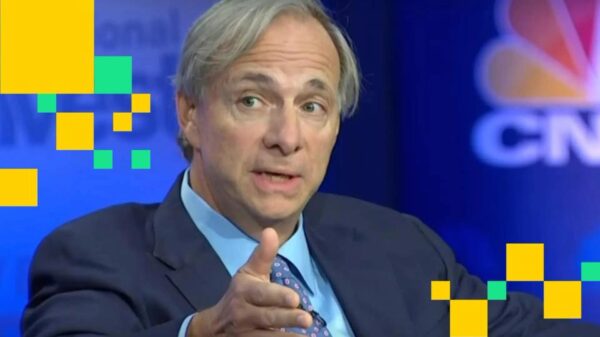








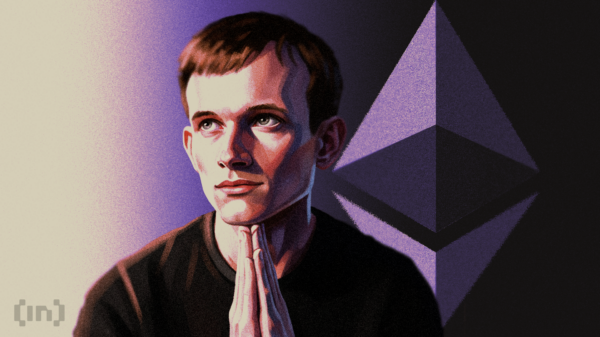


Vitalik Buterin, co-founder of Ethereum, has publicly voiced his support for Roman Storm, a developer of Tornado Cash, who is facing serious legal repercussions that could lead to a five-year prison sentence. This case has emerged as a pivotal moment in the ongoing debate surrounding the legal implications of open-source software development, particularly as it relates to privacy tools.
Storm”s situation escalated following a mixed verdict in a significant U.S. criminal trial that many in the cryptocurrency community view as a litmus test for the legality of writing open-source code. Storm has urged the public for support, emphasizing that the prosecution has attempted to frame the act of software development as a criminal offense, equating tools designed for privacy with illicit activities such as money laundering.
In a recent post on X, Storm stated, “They argued that writing code is a crime. They compared privacy tools to money laundering. But we know the truth: Privacy is a human right. Math is not a crime.” He called upon the crypto community to rally behind him, highlighting the critical nature of public support in his ongoing legal battle.
Buterin responded with a detailed letter advocating for Storm, framing the case as more than just a personal struggle; it represents a significant threat to privacy, personal safety, and digital rights. He has been a supporter of Storm”s initiatives from the outset, acknowledging the legitimate uses of privacy tools, which he has utilized for various purposes, including software purchases and charitable contributions.
Buterin firmly rejected the notion that governments should possess unrestricted access to personal financial information, citing alarming trends of data breaches and the outsourcing of sensitive data to private entities. He characterized Storm as a principled developer, focused on creating quality tools with enduring utility, rather than seeking profit or fame. This commitment is evident in the continued functionality of Tornado Cash tools, even after Storm ceased active development on them.
The stakes in Storm”s case are considerable, as he was arrested in August 2023 and charged with conspiracy to commit money laundering and operating an unlicensed money transmitting business, among other offenses. Following a federal trial in August 2025, the jury returned a partial verdict, convicting him on the charge of unlicensed money transmission, which carries a maximum sentence of five years. The jury was unable to reach a decision on the money laundering and sanctions charges, leaving those counts open for potential retrial.
Currently free on bail, Storm”s legal team has filed a motion for acquittal, arguing that Tornado Cash operates as a non-custodial and immutable protocol, asserting that the act of writing open-source code does not equate to running a money service. Prosecutors have contested this motion and have yet to confirm whether they will pursue a retrial for the unresolved charges.
Support for Storm has surged within the tech and cryptocurrency sectors, with numerous developers, legal scholars, and advocacy organizations asserting that the case contradicts existing guidance from the Financial Crimes Enforcement Network (FinCEN), which states that non-custodial software developers should not be classified as money transmitters. Over 65 organizations have appealed to President Donald Trump to intervene, arguing that this prosecution represents a form of “regulation by prosecution,” which could drive innovation out of the U.S.
Additionally, industry representatives have referenced recent statements from the Department of Justice acknowledging that developers acting without malicious intent should not face criminal charges merely for publishing code. The sanctions against Tornado Cash were lifted in 2025 after a federal appeals court ruled that the Treasury Department had exceeded its authority by sanctioning immutable smart contracts. This ruling has become a pivotal point in Storm”s defense, despite the prosecution”s claims that it does not pertain to his current charges.