










































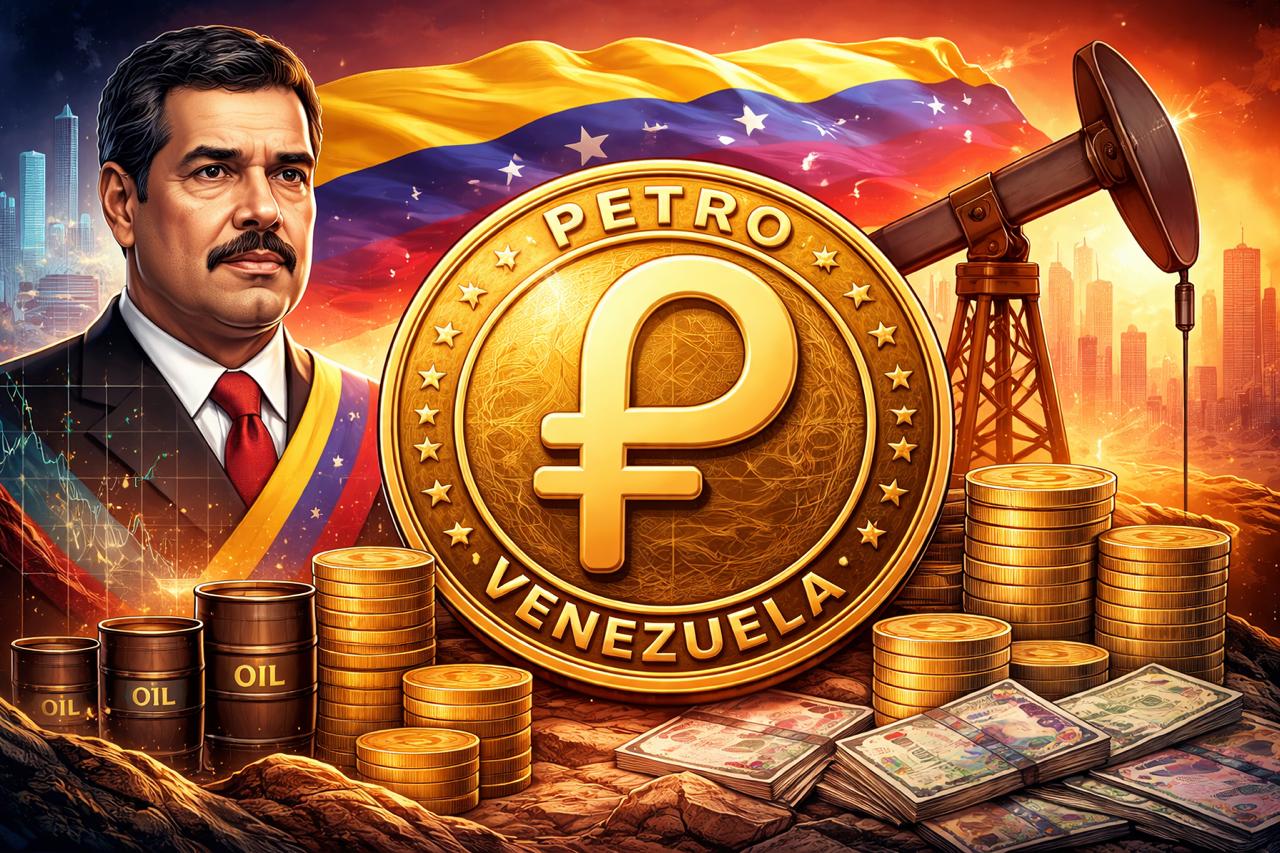
The story of Venezuela”s Petro serves as a stark warning about the pitfalls of state-backed cryptocurrencies. Launched in February 2018 by President Nicolás Maduro amid a backdrop of hyperinflation surpassing 1,000,000%, the Petro was intended as a digital lifeline for a country reeling from economic disaster. The initiative aimed to leverage blockchain technology to facilitate transactions beyond the constraints of the U.S. dollar system, asserting that each Petro would be backed by the nation”s oil reserves valued at $60 billion.
By August 2018, the Petro was granted official currency status alongside the bolívar, with the government incorporating it into pension payments and military salaries. Maduro even promoted its distribution by personally airdropping tokens to retirees on national television, positioning the Petro as a beacon of hope for economic recovery.
Despite the government”s ambitious marketing strategies and claims of technological innovation, public acceptance remained elusive. Many Venezuelans were deterred by the cumbersome registration process, which involved intrusive identity checks and frequent application rejections. The official “Fatherland Wallet” suffered from technical glitches, leading to payment failures and necessitating compensation from the government.
Internationally, the Petro faced immediate backlash when the U.S. government prohibited all transactions involving the token, labeling it as a mechanism for evading sanctions. Consequently, financial institutions associated with the Petro were also sanctioned, further isolating it from any potential global adoption.
Structural Flaws and Economic Mismanagement
At its core, the Petro was plagued by structural issues. Although it was marketed as a blockchain-based currency, it was entirely centralized, with its supply and regulations dictated by presidential decree. The blockchain activity associated with the Petro was minimal, casting doubt on its operational viability. Investigations revealed that claims of oil backing were unfounded, with little evidence of substantial oil production in the designated reserve areas.
Furthermore, the Petro”s official valuation was often contradicted by its market performance, as it traded far below the government-set price. While the government maintained a price point of $60, the token frequently fell below $10 in real-world transactions, if accepted at all.
Corruption and the Ultimate Collapse
The downfall of the Petro accelerated in early 2023 amidst Venezuela”s largest corruption scandal, leading to the arrest of senior officials from the crypto regulatory authority, SUNACRIP. Investigators uncovered billions of dollars in oil revenues that had been laundered through cryptocurrency channels, with funds diverted to private real estate and mining operations.
By 2024, SUNACRIP was dissolved, and a nationwide ban on crypto mining was enacted. Over 11,000 ASIC miners were confiscated, and licensed exchanges were shuttered. The Petro ceased trading without any formal announcement, concluding not with public outrage but rather a quiet disappearance.
The failure of the Petro is emblematic of the broader institutional decay within Venezuela. Instead of confronting deep-seated economic challenges, the government attempted to conceal its failures with a superficial technological fix. The Petro”s legacy is a powerful reminder that without public trust and decentralization, even the most innovative digital currencies can become tools of oppression rather than instruments of liberation.
Xiao Bing”s analysis emphasizes that technology cannot compensate for a lack of credibility. When citizens lose faith in their government and its financial systems, no amount of blockchain branding can restore that confidence.