At the current moment, Bitcoin (BTC) is trading near the significant threshold of $70,000, capturing the attention of lawmakers in the U.S. Congress. During a review session of the Financial Stability Oversight Council (FSOC) 2025 report, Treasury Secretary Scott Bessent found himself under intense scrutiny regarding the implications of cryptocurrency on financial stability.
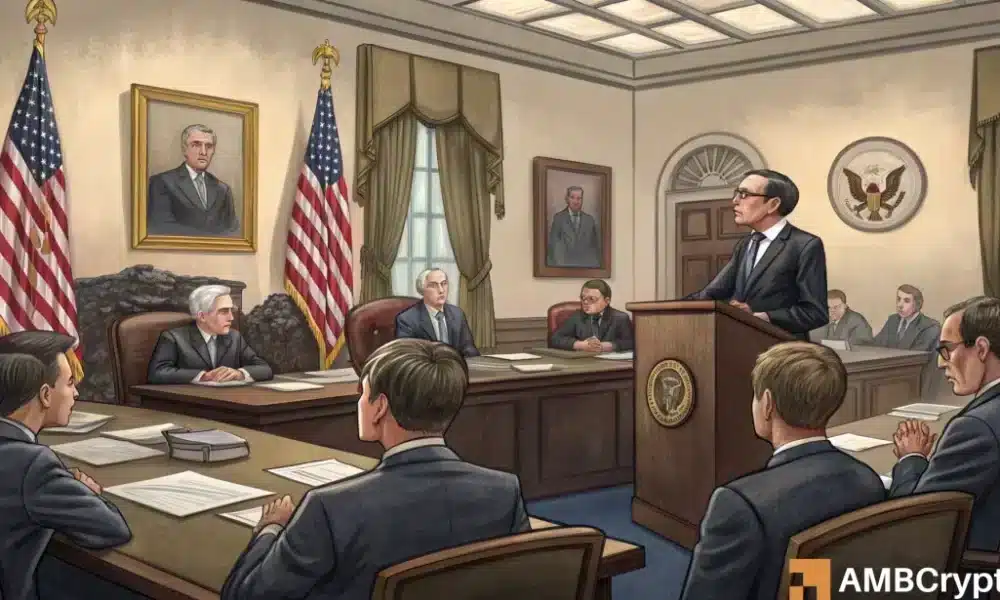
While testifying before the House Financial Services Committee, Secretary Bessent faced pointed inquiries from Representative Brad Sherman, a prominent critic of digital currencies. Sherman questioned whether the government might step in to “bail out” Bitcoin in the event of a market collapse, highlighting a contentious debate over whether Bitcoin should remain a free market entity or be recognized as a critical asset that needs governmental protection.
In his questioning, Rep. Sherman asked, “Could you instruct the banks of this country to buy more Bitcoin or change banking regulations so that they”re encouraged to do so in terms of the reserves that they”re otherwise required to have?” Bessent firmly responded, “I am secretary of the treasury. I do not have the authority to do that and as chair of FSOC I do not have that authority.”
The tension escalated as Sherman pressed for a straightforward answer regarding the potential use of taxpayer money to stabilize a faltering crypto market. Instead of a direct response, Secretary Bessent pivoted to the administration”s overarching strategy. He defended the concept of a Strategic Bitcoin Reserve, asserting it is not a financial liability but a national security asset that aims to enhance America”s status in the digital economy.
Bessent clarified, “We are retaining seized Bitcoin. That”s not exactly taxpayer money. That is an asset of the US. It”s an asset of the US.” This statement underscored the Treasury”s perspective, indicating that it views Bitcoin as an integral component of the U.S. financial framework, which it intends to support through policy rather than bailouts.
During the hearing, Bessent mentioned that the value of the seized Bitcoin had appreciated, further reinforcing the asset”s perceived importance. For the administration and its allies, including Chairman French Hill and Representative Andy Barr, the rising value of crypto assets exemplifies the success of their pro-growth initiatives.
However, Democratic members concluded the session with sharp criticisms, arguing that the administration”s policies favor large financial institutions over everyday Americans. Ranking Member Maxine Waters accused Secretary Bessent of disregarding significant warnings regarding potential market vulnerabilities.
In contrast, Republican representatives defended the administration”s stance, with Chairman French Hill lauding deregulation and favorable economic indicators. Bessent remarked that lighter regulations would foster innovation and benefit smaller banks, emphasizing the need for tailored regulations to ensure that smaller financial institutions are not subjected to the same standards as their larger counterparts.