




































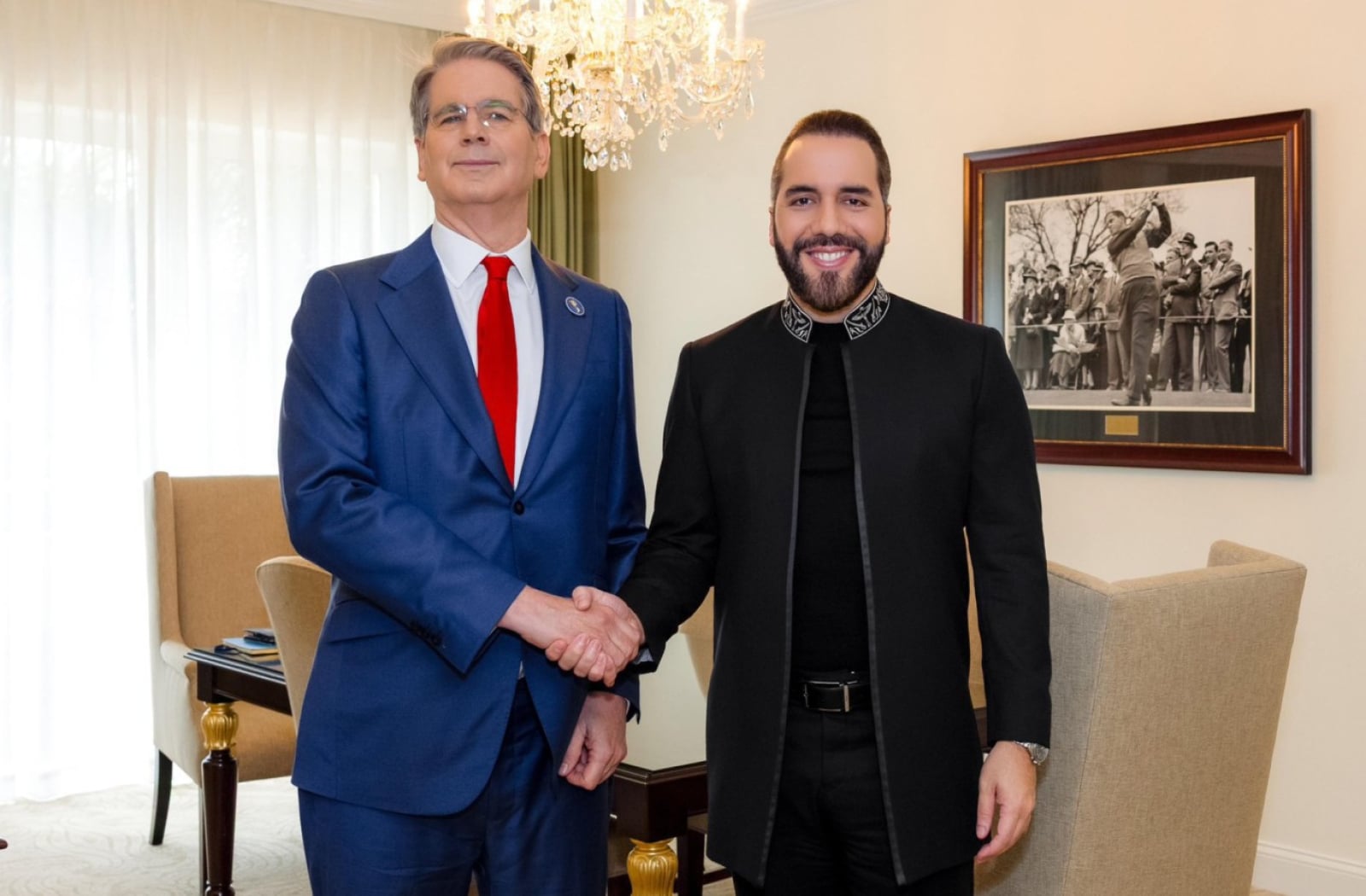
In a significant meeting, U.S. Treasury Secretary Scott Bessent met with Salvadoran President Nayib Bukele this past weekend to explore El Salvador”s economic transformation and its approach to cryptocurrency. This high-level discussion occurred during the “Shield of the Americas” summit held in Miami, Florida.
After their talks, Secretary Bessent expressed his enthusiasm about Bukele”s vision for economic reform, emphasizing the efforts to position El Salvador as a hub for digital assets. He remarked, “I was glad to hear more about President Bukele”s pro-market reforms for El Salvador and his efforts to make El Salvador a digital assets hub. We will continue to work together to advance strategies to strengthen our hemisphere.”
Historically, relations between U.S. officials and Bukele”s administration had been strained, particularly following El Salvador”s decision to adopt Bitcoin as legal tender in 2021. The reaction from international financial institutions, particularly the U.S.-led International Monetary Fund (IMF) and various rating agencies, was overwhelmingly negative, leading to warnings from U.S. lawmakers regarding potential risks to the American financial system.
However, the current U.S. administration”s pro-crypto stance appears to be reshaping its foreign policy, signaling a shift towards a more collaborative relationship. Despite this positive momentum, the Bukele administration faced challenges, notably in early 2025, when it made the difficult decision to amend its landmark Bitcoin Law due to escalating debt concerns. This amendment included the removal of Bitcoin”s compulsory legal tender status and restrictions on government engagement in crypto activities.
Interestingly, despite these setbacks in domestic crypto adoption—where a survey indicated that only “8 out of every 100 Salvadorans” actively used Bitcoin—Bukele”s government has persisted in its Bitcoin purchases, indicating a commitment to the cryptocurrency despite the legal adjustments. This ongoing dialogue between Bessent and Bukele could be pivotal in shaping the future of cryptocurrency in the region.