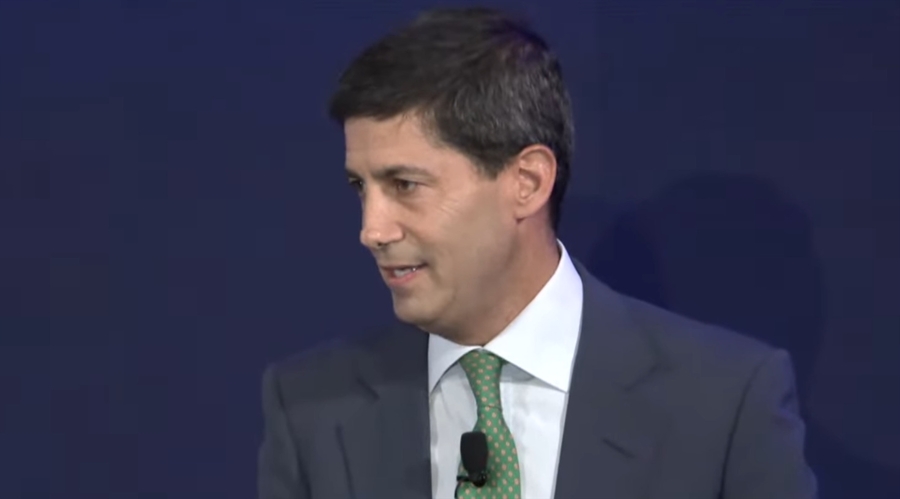
In a significant political move, US President Donald Trump has selected former Federal Reserve governor Kevin Warsh as his nominee to take over leadership of the Federal Reserve. This decision suggests a potential shift in the central bank”s dynamics with the White House, with Warsh expected to succeed current chair Jerome Powell when his term concludes in May. The nomination is subject to Senate approval.
Trump made the announcement on a Friday, expressing his long-standing acquaintance with Warsh and his confidence in Warsh”s capabilities. The President stated that Warsh “will never let you down” and could emerge as “one of the GREAT Fed Chairmen.”
Powell, appointed by Trump in 2017, has faced ongoing criticism from the President for the Federal Reserve”s pace in adjusting interest rates. Trump has advocated for a benchmark rate closer to 1 percent, which currently sits around 3.6 percent.
Warsh made history as the youngest member of the Federal Reserve”s Board of Governors, serving from 2006 to 2011. His tenure coincided with the lead-up to and the fallout from the 2008 financial crisis. Following his time at the Fed, he became a fellow at the Hoover Institution and lectured at the Stanford Graduate School of Business. Notably, Warsh has been recognized as a policy hawk, previously voicing concerns about maintaining low interest rates and opposing some of the Fed”s expansive monetary policies post-recession. In more recent communications, he has shown support for lower rates, aligning with Trump”s monetary stance.
This nomination raises critical questions regarding the independence of the Federal Reserve. The institution is designed to operate without political influence, a principle that has come under scrutiny due to Trump”s public criticisms. Under the proposed plan, Warsh would first join the Fed”s board, filling a seat currently occupied by White House adviser Stephen Miran, before potentially stepping into the role of chair upon Powell”s departure.
Even if his nomination is confirmed, Warsh will encounter limitations, as monetary policy decisions are determined by a committee of 19 members. This committee”s members remain divided between addressing inflationary pressures and responding to indications of slowing economic growth.