



































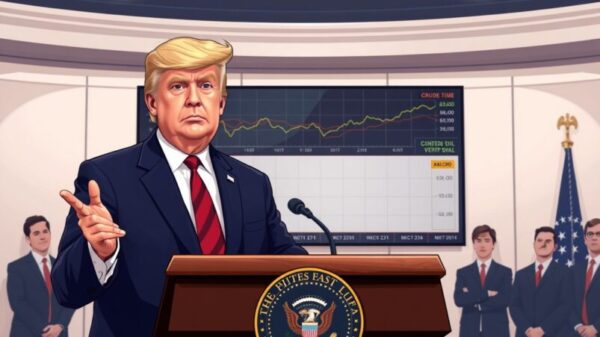










In a critical response to soaring gas prices, which have reached unprecedented levels, President Donald Trump convened a meeting with top energy executives this past Monday. The national average for gasoline hit $4.30 per gallon, marking a significant financial strain on American families and businesses alike.
This surge in fuel costs is a result of a combination of factors, including geopolitical tensions and production cuts from major oil-producing nations. As West Texas Intermediate crude oil was trading at around $110 per barrel, the unpredictability of the market has left consumers and analysts alike grappling with where prices will head next.
During the meeting, energy leaders from prominent oil companies engaged with Trump, discussing potential solutions to alleviate the burden on consumers. However, details about the discussions remain scarce. Critics have been vocal about the administration”s approach, pushing back against Trump”s longstanding message of energy independence through increased domestic production.
Despite commitments from ExxonMobil and Chevron to consider ramping up domestic output, questions linger regarding the speed at which production can be increased and whether these efforts will translate into immediate relief for consumers at the pump.
In the wake of rising fuel costs, Treasury Secretary Janet Yellen emphasized the importance of stabilizing energy prices to prevent further inflationary pressures on the economy. The Treasury is prepared to support measures aimed at easing the financial burden on everyday Americans.
Meanwhile, Congress is reportedly exploring relief legislation, with Senator Lisa Murkowski working on a bill that could offer tax rebates or subsidies to help offset rising fuel expenses. However, the timeline for implementation remains unclear.
On the global front, OPEC decisions are under intense scrutiny, as their production quotas remain unchanged despite escalating prices. Secretary of State Antony Blinken has been involved in diplomatic discussions with Saudi Arabia, seeking to influence production levels that could impact both global oil markets and domestic prices.
Consumer advocacy groups have also voiced their concerns, with the American Automobile Association calling for urgent government action to protect consumers from unsustainable fuel costs. The economic ramifications of this crisis extend beyond just fuel prices, with potential implications for monetary policy as well.
As discussions continue, the situation remains fluid, and the upcoming meeting between Energy Secretary Jennifer Granholm and state governors promises to address regional impacts, particularly in states heavily affected by recent price hikes.
With the International Energy Agency planning an extraordinary meeting to strategize a global response to the crisis, stakeholders across the board are bracing for what comes next in this volatile energy landscape.