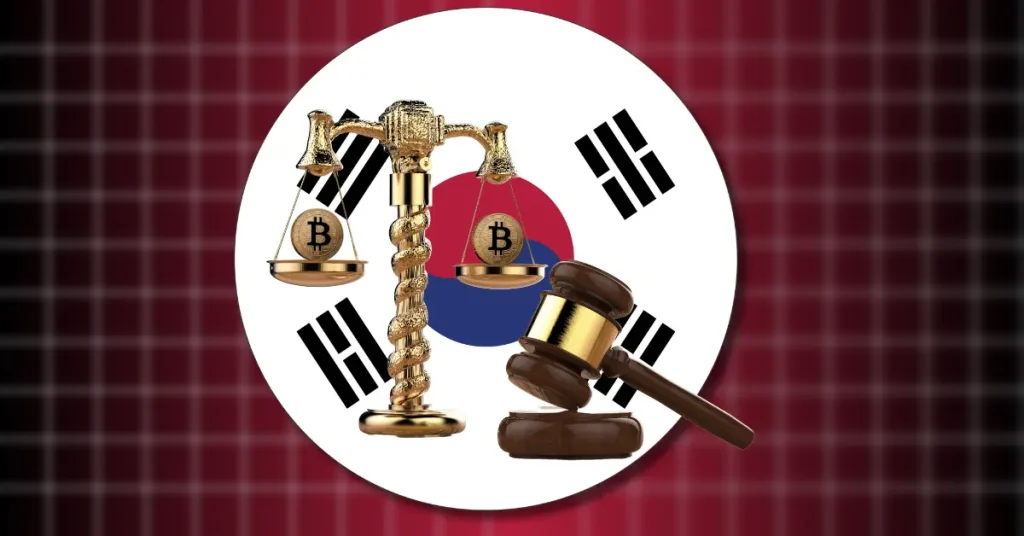
South Korea”s anticipated Digital Asset Basic Law is facing another significant setback, as the authorities have announced a postponement of the bill”s submission until 2026. This delay highlights ongoing disputes regarding the regulation of stablecoins within one of Asia”s most dynamic cryptocurrency markets.
The decision to push back the bill reflects a lack of agreement among financial regulators and central banking authorities, as digital assets continue to gain traction in South Korea”s financial landscape.
The Digital Asset Basic Law aims to establish a comprehensive legal framework for digital assets, focusing primarily on enhancing investor protection. A notable provision in the proposed legislation is the introduction of no-fault liability for digital asset operators, which would hold companies accountable for losses even without proven negligence.
Another critical element of the draft law is its intent to mitigate systemic risk associated with stablecoins. The legislation mandates that stablecoin issuers maintain full backing of their tokens with reserve assets, ensuring reserves exceed 100% of the circulating supply. This strategy is designed to isolate potential bankruptcy risks and prevent adverse effects in the case of an issuer”s failure.
The ongoing delay is primarily attributed to disagreements between the Financial Services Commission (FSC) and financial institutions, notably the Bank of Korea. While there is a general consensus on the necessity of oversight, there remains no clear agreement on who should oversee reserve requirements, supervision, and enforcement for stablecoin issuers, complicating the finalization of the bill.
As a result, authorities have opted to delay submission instead of advancing with unresolved issues. This uncertainty can significantly impact crypto firms operating in South Korea, particularly stablecoin issuers, exchanges, and payment service providers, who are left to navigate ambiguous regulations as adoption continues to rise.
Industry experts caution that regulatory indecision, even if rooted in caution, can stifle innovation and diminish investor confidence. Without definitive guidelines, companies may reconsider their expansion strategies or look to more favorable jurisdictions.
In tandem with these developments, the ruling Democratic Party is drafting its own version of a digital asset bill, integrating ideas from various lawmakers. Political pressure is increasing, particularly as President Lee Jae Myung prioritizes the creation of a Korean won-backed stablecoin to preserve monetary sovereignty amidst a global landscape dominated by dollar-pegged stablecoins.
This delay represents a critical phase in South Korea”s broader regulatory framework for cryptocurrency. The initial phase, which is already implemented, concentrated on combating unfair trading practices. The upcoming regulations will significantly influence how stablecoins and digital assets are integrated into the future of South Korea”s financial system.