












































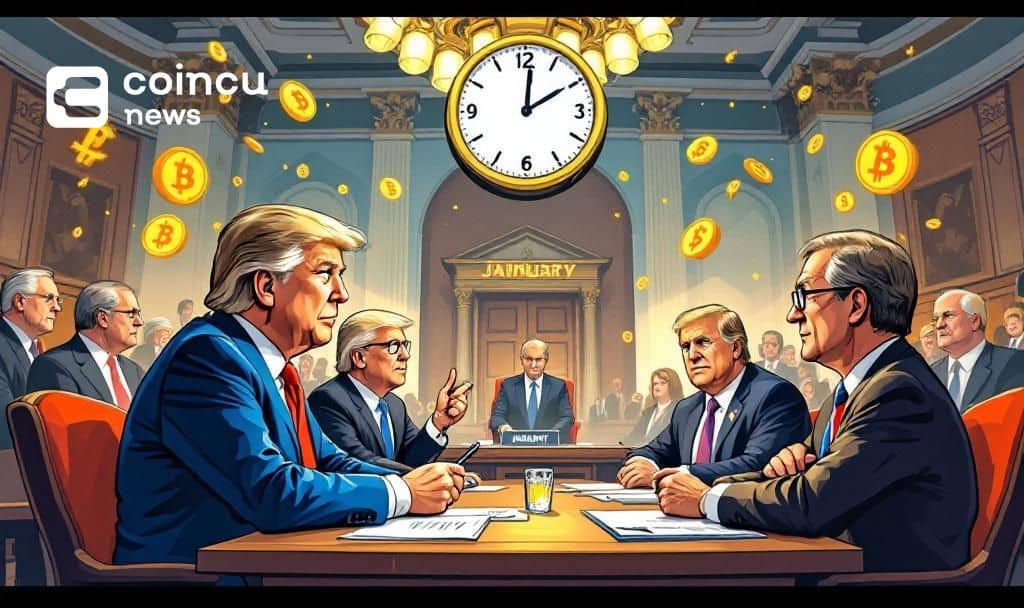
The Senate Banking Committee is gearing up for a crucial vote on a significant cryptocurrency regulation bill, scheduled for January 15. This development comes amidst ongoing discussions about bipartisan support, which remains uncertain.
Chairman Tim Scott has confirmed the date, indicating that all committee members have had the opportunity to review draft versions over the past six months. While there have been constructive dialogues between Democratic and Republican members, the overall support from both parties is still unclear.
Democratic negotiator Catherine Cortez Masto noted that discussions have been productive, yet ethical concerns continue to pose challenges. The proposed crypto market structure bill aims to clarify regulations regarding digital asset classifications and enhance investor protections.
If passed, this legislation could significantly affect major cryptocurrencies like Bitcoin and Ethereum, along with various altcoins. It seeks to establish more defined regulations surrounding cryptocurrency exchanges and decentralized finance (DeFi) products, potentially reshaping the landscape of the U.S. crypto market.
The market”s reaction has been relatively subdued as stakeholders await further clarity on the regulations. Chairman Scott has publicly emphasized the importance of transparency, stating, “We must have a public record and vote.” As the January 15 deadline approaches, anticipation grows among investors and industry analysts regarding the potential implications of these regulations.
In the wake of these regulatory discussions, the price of Bitcoin is currently at $92,394.51, with a market capitalization of $1.85 trillion. Recent trading activity indicates a volume of $53.95 billion over the last 24 hours, noting a 12.33% change. While Bitcoin”s price adjusted down by 1.60% in the past day, it has seen a notable increase of 4.24% this past week.
Experts suggest that the anticipated regulations could bolster investor confidence in leading cryptocurrencies while fostering a more structured environment for newcomers. Future legislative adjustments, aligned with current technological advancements and market trends, could significantly influence the performance of various digital assets as regulatory frameworks evolve.