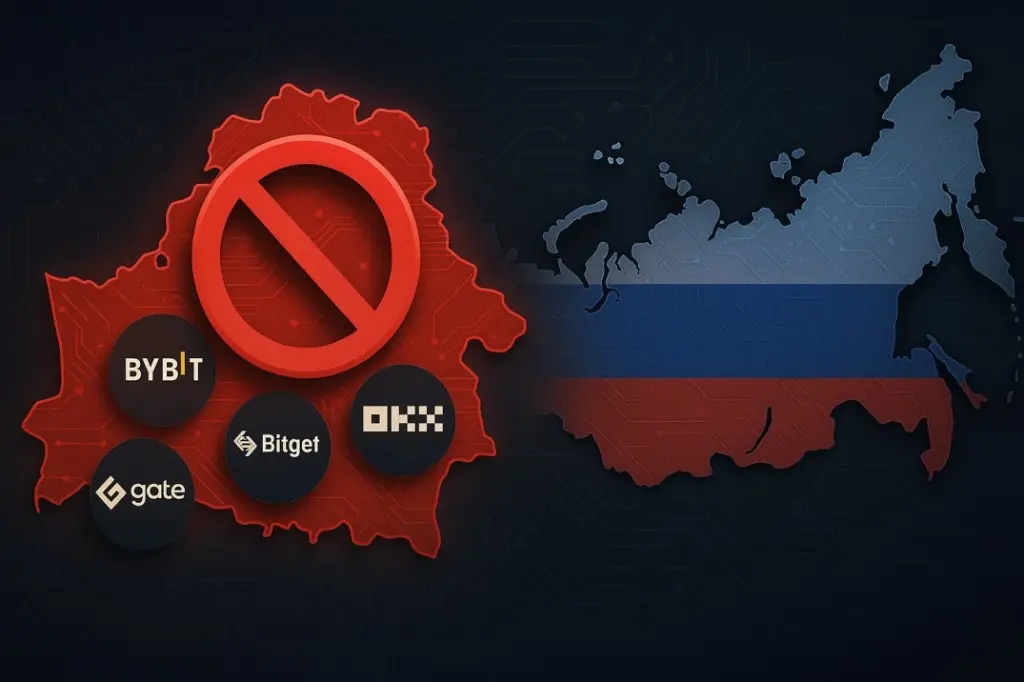
In a significant move, Russia”s federal communications watchdog, Roskomnadzor, is set to initiate large-scale blocking of crypto exchange websites that lack registration in the country, potentially starting in the summer of 2026. This strategy appears to be modeled after the restrictions imposed on platforms like YouTube, incorporating DNS-level blocking and measures to target tools that enable users to bypass these restrictions.
According to N. Zuborev, a Senior Analyst at Bestchange, regulatory bodies are actively developing technical solutions to curtail access to foreign platforms that operate without the necessary Russian licenses. Currently, exchanges such as MEXC continue to cater to Russian users, but the scrutiny over cross-border crypto transactions is intensifying.
This anticipated crackdown coincides with lawmakers working on a comprehensive regulatory framework for digital assets. Authorities contend that foreign exchanges operating in a legal gray area are siphoning billions of rubles away from the domestic market. Russian citizens reportedly spend around $15 billion each year on fees to foreign crypto exchanges.
As the legalization of the domestic crypto market advances, the Moscow Exchange is positioning itself to capture this substantial revenue. Sergei Shvetsov, Chairman of the Moscow Exchange Supervisory Board, expressed intentions to compete directly with international platforms that either function abroad or do not fully comply with Russian regulations.
Under the proposed regulatory framework from the Bank of Russia, foreign exchanges that wish to engage with Russian residents will be required to secure a Russian license and localize a portion of their operations. This legislative initiative is projected to be finalized by July 1, 2026, followed by a transition period that extends to July 2027. The draft legislation aims to amend Federal Law No. 259-FZ “On Digital Financial Assets,” introducing mandatory licensing for all crypto exchange operators, including those from abroad.
The concept paper released by the Bank of Russia in December 2025 categorized cryptocurrencies as foreign currency assets while prohibiting their use for domestic transactions. The proposal also encompasses various investor access regulations and limitations on anonymous crypto assets. Once these rules are in place, foreign exchanges serving Russian clients without a license from the Central Bank could face operational bans.
However, the feasibility of implementing a YouTube-style blocking mechanism for crypto exchanges presents challenges. Historically, crypto users have swiftly adapted to censorship through the use of VPNs and decentralized platforms. Insights from China”s regulatory experience suggest that stringent bans do not entirely eradicate crypto activities; rather, trading often migrates to less transparent channels, heightening risks for participants and diminishing regulatory oversight.
For Russia, the impending reforms represent more than just enforcement; they signify a strategic effort to redirect billions in annual commission revenue back into the domestic financial system. The effectiveness of these regulations in curbing foreign exchange activity without inadvertently driving it underground remains a critical question.