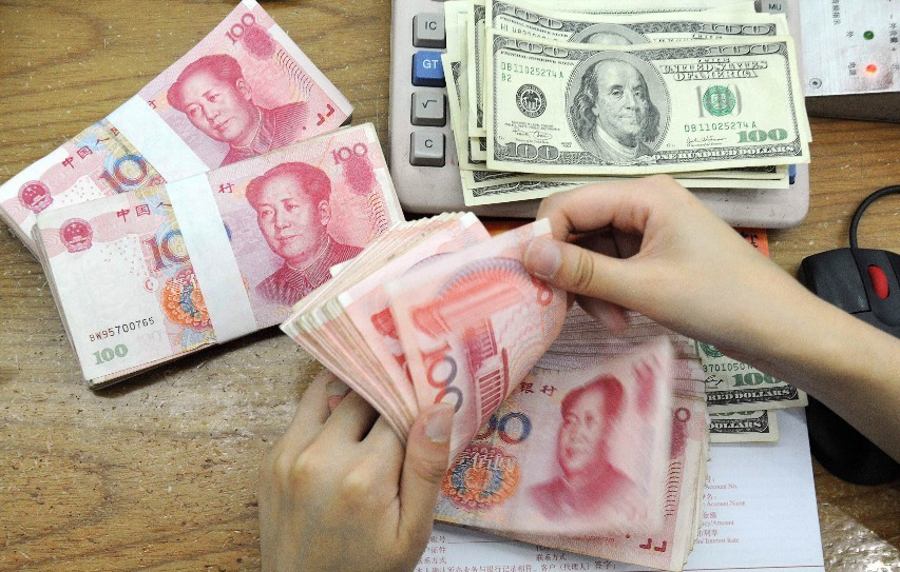
The People”s Bank of China (PBOC) has established the USD/CNY mid-point today at 7.0331, a notable increase compared to the market expectation of 7.0057. This rate reflects a slight rise from Friday”s closing figure of 7.0063. The adjustment comes at a time when China is engaging in significant military drills, dubbed “Justice Mission 2025,” simulating a blockade around Taiwan, with live-fire exercises scheduled for December 30.
In addition to these geopolitical tensions, the Chinese government has indicated a shift towards a more proactive fiscal policy for 2026, aimed at stimulating domestic demand. These developments are occurring against a backdrop of declining industrial profits, which have experienced their steepest decline in 14 months, illustrating the weakening demand within the economy.
The PBOC”s daily USD/CNY reference rate is a crucial indicator in Asian foreign exchange markets. China employs a managed floating exchange rate system, allowing the renminbi (yuan) to fluctuate within a specific band around a central reference rate determined by the PBOC each day. Currently, this trading band permits movements of plus or minus 2% from the official midpoint during onshore trading hours.
Each morning, the PBOC calculates the midpoint using various inputs, including the previous day”s closing price, fluctuations in major currencies like the US dollar, global foreign exchange conditions, and domestic economic factors such as capital flows and growth momentum. This process is not purely mechanical; it allows for discretion from policymakers to shape market expectations.
Once the midpoint is published, the onshore USD/CNY is free to trade within the established band. Should market dynamics push the yuan toward the edges of this range, the central bank may intervene to mitigate volatility. Such interventions can include direct market actions, adjustments to liquidity conditions, or guidance through state-owned banks.
The daily fixing of the USD/CNY is frequently interpreted as a policy signal rather than merely a technical reference. A stronger-than-anticipated midpoint is typically seen as a sign that the PBOC is resisting depreciation pressures, while a weaker fixing may indicate a willingness to allow the currency to soften, often influenced by the strength of the US dollar or domestic economic challenges.
In times of increased global volatility, such as changes in US interest rate expectations or trade tensions, the significance of the fixing escalates. For investors, the midpoint provides crucial insights into Beijing”s priorities regarding currency management, balancing the need for competitiveness against the imperatives of capital stability and financial market confidence.