























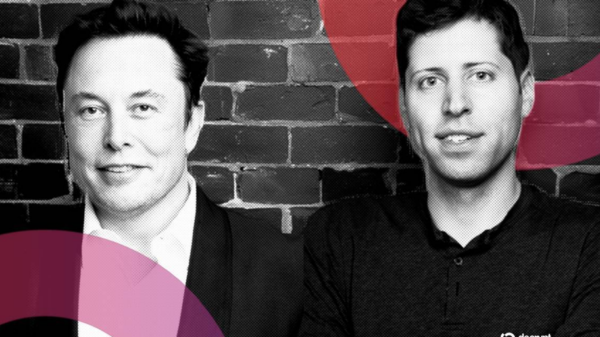



















A federal judge has dismissed the trade secrets lawsuit filed by xAI against OpenAI, citing insufficient evidence to connect the company with any alleged misconduct by former employees. The ruling, made by U.S. District Judge Rita F. Lin, allows xAI the opportunity to refile an amended complaint by March 17, 2026.
The lawsuit, initiated by Elon Musk”s xAI in September 2025, accused OpenAI of leading a “coordinated, unfair, and unlawful campaign” to acquire proprietary technology through the poaching of employees. xAI claimed that OpenAI lured away eight former engineers with lucrative offers, resulting in the alleged misappropriation of source code, training methods, and data center strategies.
Judge Lin pointed out that xAI”s allegations primarily centered on the actions of individual employees rather than any wrongdoing by OpenAI itself. The court found no evidence indicating that OpenAI had encouraged the theft or utilized any purportedly stolen materials in its offerings. In her ruling, Lin emphasized that to advance beyond the initial phase of litigation and into the discovery stage, a plaintiff must present factual allegations that demonstrate a defendant”s involvement in wrongful acts.
In response to the ruling, OpenAI released a statement welcoming the decision, referring to the lawsuit as “baseless” and a continuation of Musk”s “ongoing campaign of harassment.” Legal experts, including Ishita Sharma of Fathom Legal, remarked that the ruling illustrates the rigorous standards courts maintain for establishing corporate liability concerning trade secrets, especially in cases involving employee transitions. Sharma noted that a refiled complaint would need to present more detailed allegations that more directly implicate OpenAI”s actions or specific behaviors of the former employees.
One of the central figures in the case, Xuechen Li, was accused by xAI of uploading the entire source code to a personal cloud account while in communication with an OpenAI recruiter. Judge Lin clarified that even if Li had engaged in misconduct, xAI failed to demonstrate that OpenAI was aware of or complicit in any theft, particularly since Li”s employment offer was rescinded before he started work at OpenAI.
This ruling represents a significant moment in the ongoing legal tensions between Musk and OpenAI, marking yet another chapter in a complex rivalry that has seen various legal disputes, including a recent antitrust lawsuit. As the tech landscape continues to evolve, the implications of this case could resonate throughout the industry, particularly regarding the movement of talent and the protection of intellectual property.