











































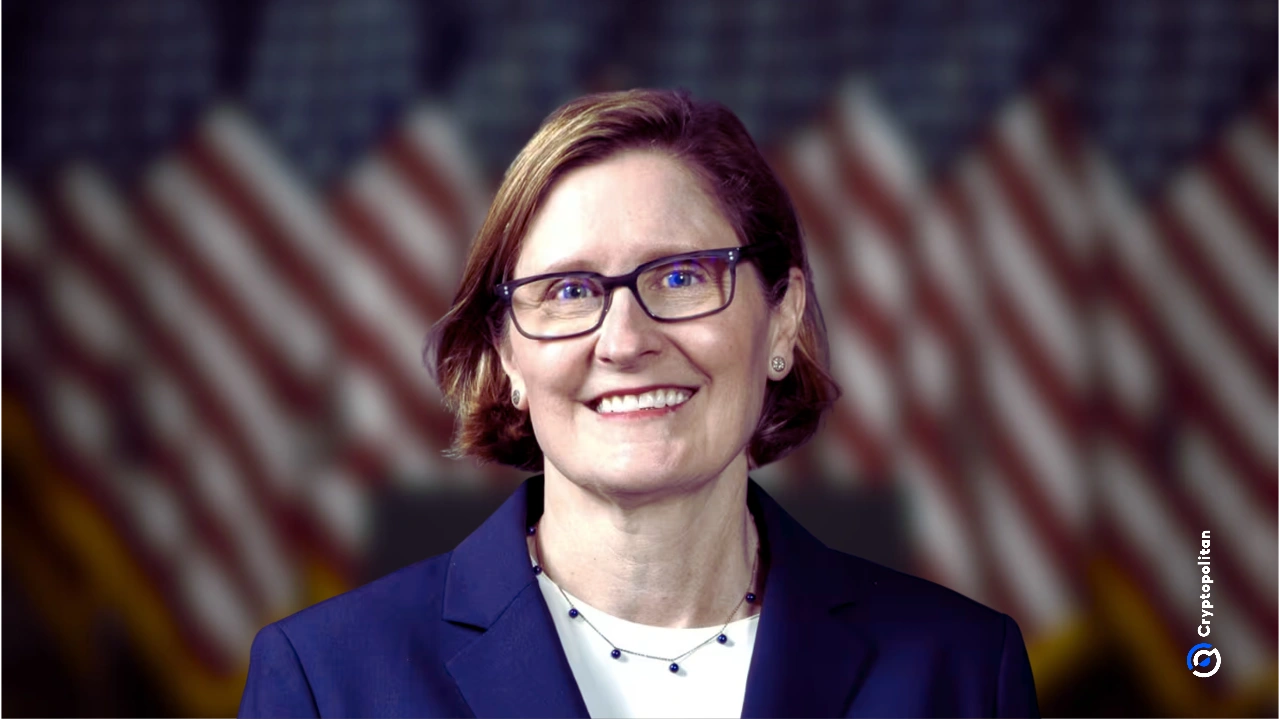
The Federal Reserve Bank of Philadelphia”s CEO, Anna Paulson, has indicated that further interest rate cuts are unlikely to materialize until later in 2026. During her address at the 2026 Allied Social Science Associations Annual Meeting, she emphasized the Fed”s desire to assess the economic landscape before making additional adjustments to interest rates.
Paulson expressed her outlook for the economy, stating, “I see inflation moderating, the labor market stabilizing, and growth coming in around 2 percent this year.” Her comments suggest that if these conditions hold, “some modest further adjustments to the funds rate would likely be appropriate later in the year.”
Currently, Paulson believes that the prevailing rates are “still a little restrictive,” contributing to the ongoing efforts to curb inflation. Her perspective carries additional weight this year as she holds a voting position on the Federal Open Market Committee, the body responsible for setting interest rates.
Last year, the committee executed three separate rate cuts, each by 25 basis points, totaling a reduction of three-quarters of a percentage point, resulting in rates between 3.5% and 3.75% following their December meeting. These decisions were challenging, as officials had to balance the need to lower rates to ease inflation while avoiding detrimental impacts on the job market.
The situation was further complicated by external pressures, including calls from former President Donald Trump for more aggressive cuts despite inflation remaining above the Fed”s 2% target. Fed Chair Jerome Powell”s statements during the December meeting left many questions unanswered regarding future policy directions.
Paulson noted that while the labor market is under strain, it is not collapsing. She commented, “While the labor market is clearly bending, it is not breaking,” attributing the slowdown in hiring to various supply and demand factors that require careful observation throughout the year.
As 2026 commences, major U.S. stock indices, including the Dow and S&P 500, experienced gains, led primarily by the performance of chipmakers and industrial sectors. Although the anticipated year-end “Santa Claus rally” did not occur, investor sentiment appears to remain optimistic, characterized by strategic buying during market downturns and expectations of a more dovish stance from the Federal Reserve.
Globally, markets are navigating the implications of interest rate fluctuations. European stock markets have seen upward movement since the Fed”s last rate cut, with traders betting on further easing measures. Analysts highlight that investors are still grappling with the interplay between inflation rates and growth forecasts, striving to predict the Fed”s policy trajectory for the coming year.