



























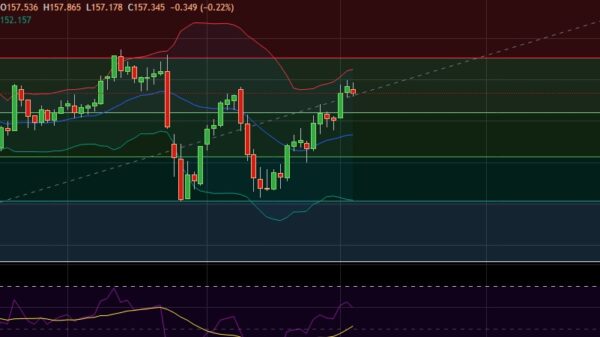


















The recent announcement regarding an investigation by the US Department of Justice into Federal Reserve Chair Jerome Powell has stirred significant concern about the independence of the central bank and its implications for investor confidence. Over the past few days, gold prices have surged to record levels while the US dollar has shown signs of weakening. Although the immediate effects on cryptocurrencies have been minimal, Bitcoin”s market reaction may soon reveal whether it is viewed as a non-sovereign hedge or merely a speculative asset.
In a striking video statement released on Sunday, Powell disclosed that US prosecutors are looking into the Federal Reserve”s renovations of its Washington headquarters. This investigation represents the latest phase in a year-long campaign by the Trump administration aimed at either pressuring the Federal Reserve to lower interest rates or persuading Powell to resign before his term concludes in May. In his address, Powell cautioned that such actions could jeopardize the autonomy of monetary policy. He stated, “The threat of criminal charges is a consequence of the Federal Reserve setting interest rates based on our best assessment of what will serve the public, rather than following the preferences of the President.”
The ongoing scrutiny of the Federal Reserve”s independence has already begun to influence market dynamics. Following Powell”s announcement, the dollar depreciated against several major currencies as investors reevaluated their confidence in US monetary policy. Concurrently, a heightened interest in safe-haven assets has driven gold prices to record highs. Long-term US Treasury yields have also risen, reflecting concerns about the Federal Reserve”s capacity to manage inflation effectively. Equity markets responded with declines, notably in S&P 500 futures, highlighting growing unease among investors regarding the reliability of US monetary policy.
Historically, the Federal Reserve”s independence has been a cornerstone of its credibility, which in turn supports global trust in the US dollar and American assets. In the context of cryptocurrencies, particularly Bitcoin, the effects may not be immediately apparent but are nonetheless significant. The recent developments have reignited discussions about Bitcoin”s status as a potential hedge against institutional and policy risks.
Currently, Bitcoin has maintained relative stability, trading within the $90,000 to $93,000 range. However, the ongoing political pressures surrounding the Federal Reserve have intensified debates regarding Bitcoin”s function within the global financial landscape. Often likened to digital gold, Bitcoin”s fixed supply and decentralized nature position it as a possible safeguard against systemic risks. Should apprehensions regarding the US dollar”s health escalate, it is plausible that demand for Bitcoin could increase.
Nevertheless, Bitcoin”s behavior during previous periods of uncertainty has shown a tendency to correlate with broader risk assets. As the market digests the implications of political interference in Federal Reserve policies, the ultimate impact on Bitcoin will depend on whether investors regard it as a protective asset or a high-volatility investment.