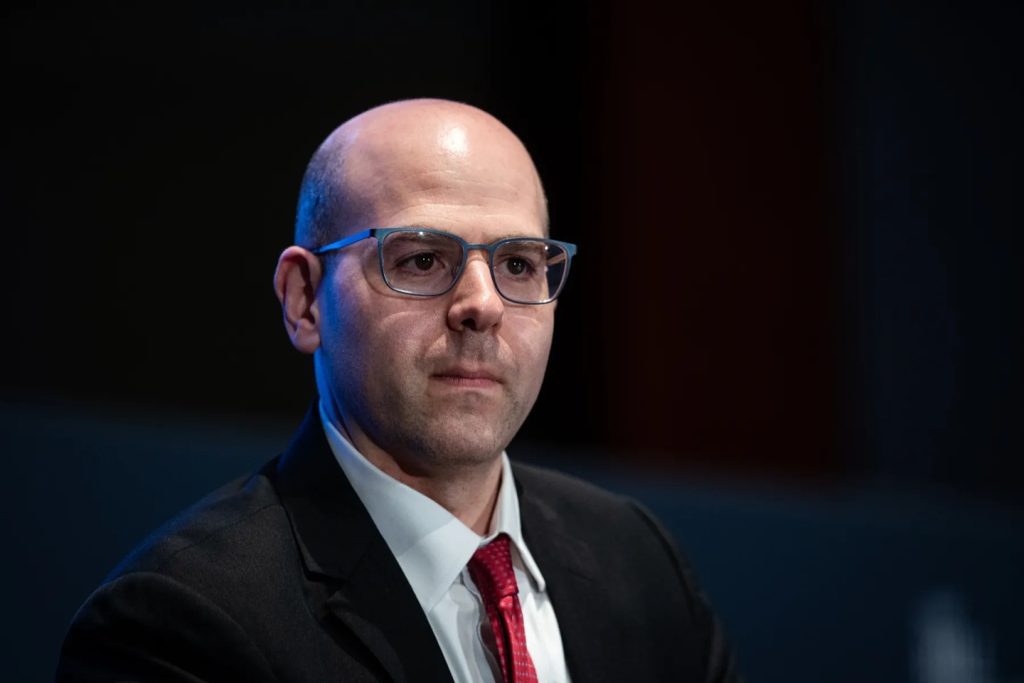
In a recent appearance on the “Making Money” program, Stephen Miran, a member of the Federal Reserve Board appointed by Donald Trump, shared his insights on the evolving role of cryptocurrencies, particularly stablecoins, in the global financial landscape.
Miran highlighted that stablecoins have the potential to initiate a new wave of global savings, which may exert downward pressure on interest rates in the United States over time. He drew parallels to a speech he delivered about stablecoins last month, referencing the “global savings abundance” concept introduced by former Federal Reserve Chairman Ben Bernanke two to three decades ago.
During that era, numerous Asian economies directed their substantial trade surpluses into US dollars and Treasury bonds, contributing to lower interest rates within the US. Miran posited that stablecoins could facilitate a similar dynamic.
In addressing current regulations, Miran noted that stablecoins, classified as “payment stablecoins” under the GENIUS Act, do not provide interest or deposit insurance. This limitation impacts their attractiveness for investors in countries with free capital movement like the US. However, in regions with stringent capital controls or limited access to banking services, stablecoins emerge as a compelling alternative.
He emphasized that stablecoins afford individuals in these countries a pathway to low-volatility savings instruments pegged to the US dollar, suggesting that their growth could primarily stem from outside the United States. Miran explained that the funds flowing into stablecoins globally would eventually channel into dollar-denominated savings instruments, such as US Treasury bonds and bank reserves, potentially mirroring historical global savings booms.
According to Miran”s projections, this emerging savings wave tied to stablecoins might reach one-third the scale of earlier global savings surges. He indicated that if this scenario materializes, it could impose “significant” downward pressure on US interest rates.
Additionally, Miran touched on broader economic policies, expressing his belief that supply-side incentives could foster economic growth without triggering inflation.