


















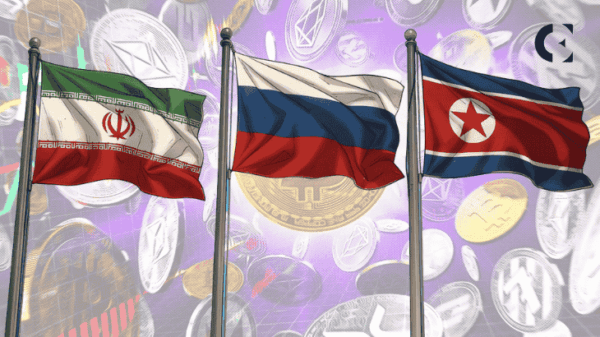















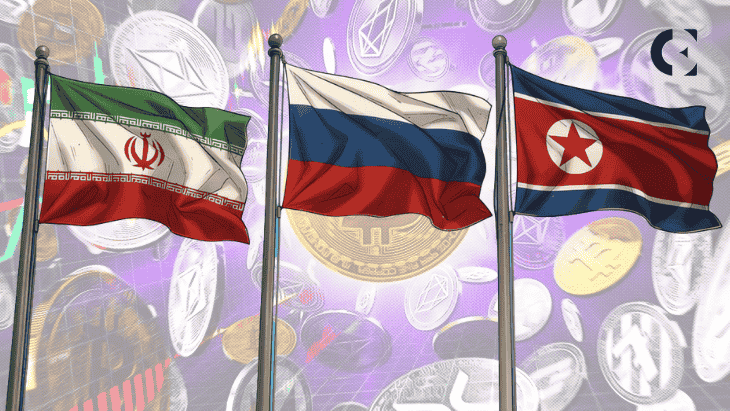
Recent data indicates a significant rise in cryptocurrency activity among sanctioned states, with illicit inflows reaching approximately $154 billion in 2025. This marks a 162% increase compared to the previous year, primarily driven by entities under sanctions, which accounted for $104 billion of this total—a staggering 694% year-over-year surge.
In response to the escalating use of cryptocurrencies for sanctions evasion, regulatory bodies in the United States, Europe, and the United Kingdom ramped up their enforcement efforts in 2025. Key agencies, including the U.S. Office of Foreign Assets Control (OFAC), the European Union, and the U.K.”s Office of Financial Sanctions Implementation, broadened their sanctions designations. These actions targeted crypto infrastructures associated with ransomware groups and state-linked networks, aiming to curtail the use of digital assets for illicit activities.
The European Union has specifically targeted Russian cryptocurrency providers and the ruble-backed A7A5 stablecoin, which processed around $93.3 billion in transactions within just ten months. This illustrates the extent to which digital currencies are being utilized to facilitate cross-border transactions outside traditional banking systems.
Legal developments surrounding decentralized technologies have also influenced enforcement actions. Notably, in March 2025, OFAC removed the decentralized mixer Tornado Cash from its Specially Designated Nationals list following a court ruling that autonomous smart contracts cannot be classified as sanctionable property.
Several sanctioned nations significantly expanded their cryptocurrency operations throughout 2025. Reports indicate that North Korean-linked actors were responsible for the theft of over $2 billion in cryptocurrency during the year, while simultaneously executing cyber operations and global IT schemes for revenue generation. Meanwhile, Iran”s use of blockchain technology surged, with addresses connected to the Islamic Revolutionary Guard Corps accounting for more than half of the value received by Iranian entities by the year”s end, moving over $3 billion to support militia networks and oil-related transactions.
Furthermore, Russia adopted blockchain-based systems for international trade, particularly surrounding the A7A5 token. Activity analysis suggests its primary use aligns with weekday business hours, indicating its role as a settlement layer for cross-border transactions.
As the landscape of cryptocurrency continues to evolve, the intersection of sanctions and digital assets highlights the ongoing challenges for regulators and the innovative strategies employed by sanctioned states to navigate the financial system.