













































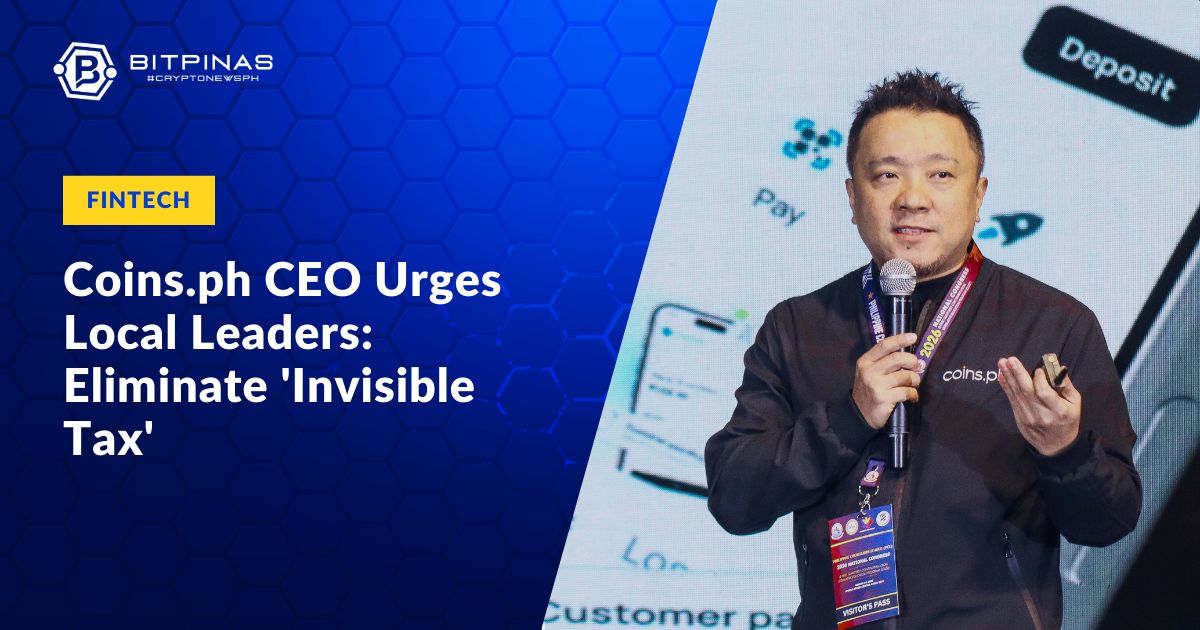
Wei Zhou, the CEO of Coins.ph, addressed local legislators at the 2026 Philippine Councilors League National Congress, urging them to adopt digital collection systems. He characterized bureaucratic inefficiencies as an “invisible tax” that significantly drains resources from Local Government Units (LGUs).
During his keynote speech, Zhou highlighted the pressing need for local governments to modernize their public service operations, aligning them with the digital standards that have become commonplace in the private sector. He pointed out that reliance on manual processes and outdated reconciliation methods leads to substantial time and revenue losses.
According to a report from the Bangko Sentral ng Pilipinas (BSP), digital payments have surged, now accounting for 57.4% of retail payment volume in the Philippines. Zhou argued that this shift indicates that constituents are prepared for and expect instant digital services from their local governments.
To illustrate this growing trend, Zhou shared impressive statistics from the Coins.ph platform, revealing that monthly transactions using QR Ph technology skyrocketed from ₱559 million to ₱29.95 billion over a single year in 2025. He positioned Coins.ph as a reliable partner for LGUs, providing essential infrastructure that facilitates the collection of business permits and real property taxes, ensuring continuity even during natural disasters when physical offices may be inaccessible.
This call for digitization comes in the wake of significant strategic expansions by Coins.ph, including the launch of PHPC, a Philippine Peso-backed stablecoin aimed at simplifying and reducing the costs of remittances and trading. Additionally, the platform has rapidly broadened its token offerings and integrated support for the Solana network and other high-performance blockchains. Recently, Coins.ph has also expanded its global presence by acquiring licenses in various jurisdictions outside the Philippines.
Concluding his speech, Zhou reassured attendees of the robustness of their regulated infrastructure, which currently serves 18 million registered users and maintains an impressive average of 140 million monthly transactions with 99.9% uptime.
The push for digitization among LGUs is not just a technological upgrade but a necessary step to optimize public resource management and enhance service delivery in the Philippines.