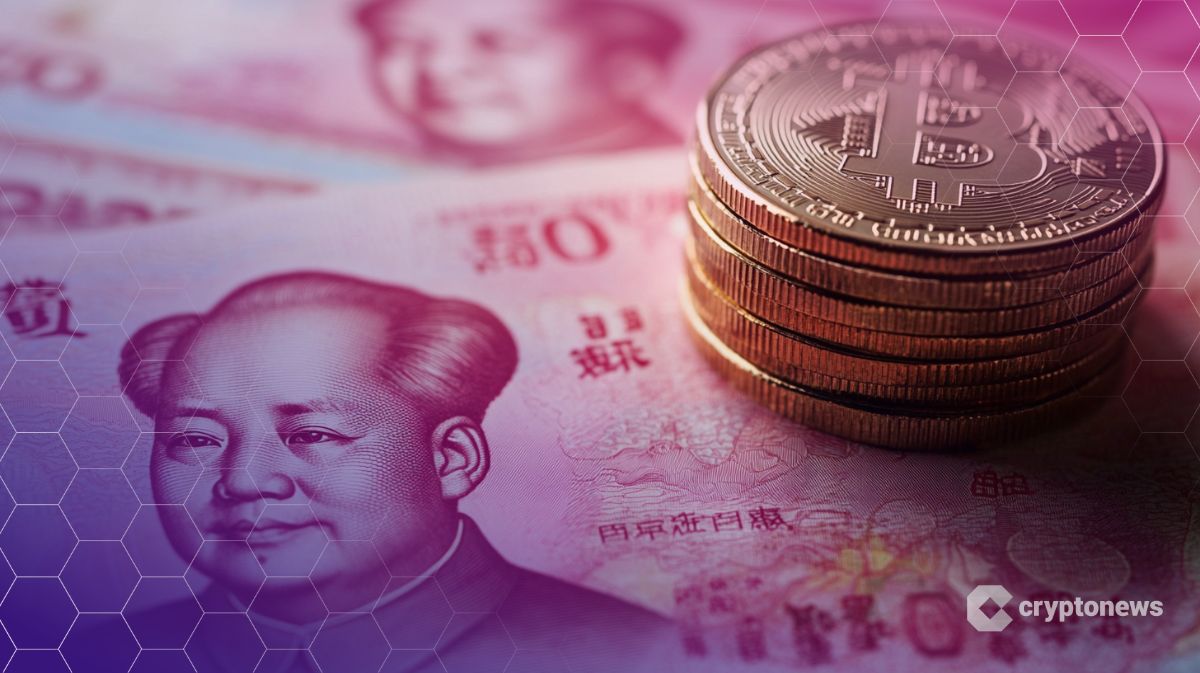
China has taken decisive action by prohibiting the issuance of unauthorized yuan-pegged stablecoins and related tokenized assets outside its borders. This move aims to protect the country”s monetary sovereignty and ensure the stability of its currency.
In a joint announcement made on Friday, the People”s Bank of China (PBOC) and seven other government agencies declared that no individual or company, whether domestic or foreign, is allowed to issue stablecoins linked to the renminbi without prior approval. The authorities expressed concerns that these tokens replicate essential functions of traditional money, potentially endangering the stability of the yuan.
The regulation specifically targets the circulation of stablecoins outside regulatory oversight, which the PBOC believes could undermine the yuan”s stability. Additionally, the new rules extend to services associated with tokenized financial assets, including blockchain representations of equities and bonds. Foreign entities are barred from offering these products to users in China without explicit permission from regulators.
This latest policy reaffirms China”s long-standing prohibition of crypto payments, with the PBOC reiterating that cryptocurrencies like Bitcoin and Ether do not constitute legal tender. Engaging in transactions or offering services related to these assets is deemed illegal under current regulations. This prohibition builds upon a broader ban established by the central bank in 2021, which effectively eliminated cryptocurrency trading and payments within the domestic financial ecosystem.
Legal expert and former sovereign wealth fund executive Winston Ma pointed out that the restrictions apply to both onshore and offshore versions of the renminbi. The offshore yuan, or CNH, is intended to facilitate foreign exchange while maintaining capital controls. This regulatory approach fits within a larger strategy to limit privately issued digital currencies while advancing the state-backed digital yuan.
China has invested significant effort into developing its central bank digital currency, e-CNY. Recently, the PBOC has allowed commercial banks to offer interest on balances held in digital yuan wallets to stimulate adoption. This move exemplifies a shift in the role of the digital yuan from merely a cash alternative to a more integrated component of banking operations.
In contrast, neighboring regions are moving toward more regulated stablecoin markets. Japan has established a legal framework for stablecoin issuance, while Hong Kong is set to begin licensing stablecoin issuers this year. Notably, China had briefly considered allowing private entities to issue yuan-pegged tokens in 2025, only to terminate those pilot programs shortly thereafter.
According to Bloomberg data compiled by Artemis Analytics, the global value of stablecoin transactions reached $33 trillion in 2025, marking a significant 72% increase from the previous year. Notably, USDC emerged as the most widely used stablecoin by transaction volume, processing $18.3 trillion, while Tether”s USDT managed $13.3 trillion, maintaining its lead in market capitalization.
The recent developments underscore the contrasting regulatory landscapes in Asia, as China tightens its grip on digital assets while others embrace a more open approach to stablecoin regulation.