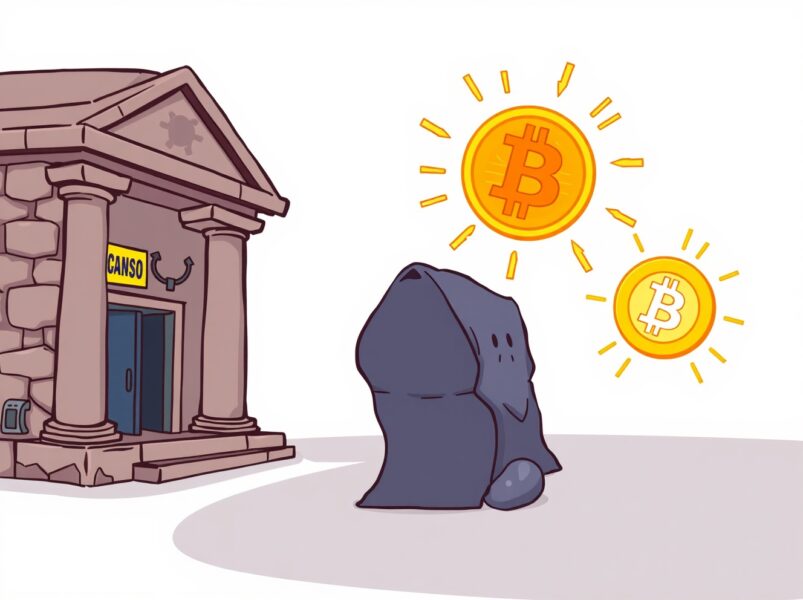
In a significant declaration, the Bank of Mexico has reinforced its cautious stance towards cryptocurrency, drawing a distinct boundary between conventional finance and the unpredictable domain of digital assets. According to its year-end report, the central bank has made it clear that for the time being, cryptocurrencies must remain separate from the traditional financial ecosystem.
This prudent approach from the Bank of Mexico underscores the formidable challenges that regulators encounter while balancing innovation with financial stability. The report outlines specific concerns that drive the central bank”s reluctance to embrace cryptocurrencies more openly. Chief among these worries is the extreme price volatility associated with digital currencies, which undermines their reliability as a stable store of value or means of exchange.
Additionally, the report highlights serious operational and security risks that many cryptocurrency platforms pose, alongside persistent fears regarding money laundering and the lack of consumer protection. For the Bank of Mexico, these issues are not abstract; they represent immediate threats to the integrity of the financial system.
Particularly alarming is the central bank”s warning regarding stablecoins. Although these digital assets are often marketed as a secure connection between cryptocurrency and traditional finance, the Bank of Mexico perceives them as potential systemic risks. The report cautions that the unchecked proliferation of stablecoins, without appropriate regulatory oversight, could endanger the stability of the entire financial system. If a major stablecoin were to collapse, the repercussions could extend to the conventional banking sector, impacting individuals and businesses alike.
The Bank of Mexico remains open to the idea of integrating cryptocurrencies in the future, but only if a comprehensive and robust global regulatory framework is established. Until such a framework is realized, the central bank insists on maintaining a “healthy distance” from digital currencies. This position aligns with a growing consensus among global central banks, which are awaiting the maturation of the cryptocurrency market under clear regulations that address key issues such as:
- Investor Protection: Implementing clear guidelines to shield users from fraud and market manipulation.
- Financial Stability: Creating mechanisms to prevent crashes in the cryptocurrency market from cascading into traditional banks.
- Anti-Money Laundering (AML): Establishing enforceable and transparent standards to combat illicit financial activities.
Mexico”s stance on cryptocurrency is measured, positioning itself between nations that outright ban digital assets and those that aggressively pursue crypto-friendly legislation. The Bank of Mexico does not prohibit individuals from owning or trading cryptocurrencies; rather, it seeks to prevent their integration into the regulated financial system it oversees. This “wait-and-see” approach allows for innovation to flourish in the private sector while the public sector develops the necessary regulatory framework.
The report by the Bank of Mexico conveys a strong message. It acknowledges the existence of cryptocurrency but denies it legitimacy within the established financial infrastructure until significant risks are addressed. This perspective prioritizes systemic safety over speculative opportunities. For advocates of cryptocurrency, the pathway ahead is evident: the industry must come together to create the transparent, secure, and regulated environment that central banks are demanding. Until that happens, both Mexico and numerous other nations will likely continue to maintain their distance from digital assets.
Frequently Asked Questions (FAQs)
- Q: Does this mean cryptocurrency is illegal in Mexico?
A: No. The Bank of Mexico”s position is about maintaining a separation between crypto and the traditional banking system it oversees. - Q: What are the main risks the Bank of Mexico is concerned about?
A: The report identifies four primary risks: extreme price volatility, operational and cybersecurity vulnerabilities, potential for money laundering, and inadequate consumer protections. - Q: Why are stablecoins highlighted as a risk?
A: Stablecoins, which are linked to traditional assets like the U.S. dollar, could create systemic risk if they fail due to their rapid growth in an unregulated environment. - Q: Will Mexico eventually regulate and adopt cryptocurrency?
A: The report indicates that a consistent regulatory framework is essential for any future integration, suggesting it remains a possibility. - Q: How does Mexico”s position compare to other countries?
A: Mexico”s approach is cautious but not extreme, more open than nations with outright bans yet more reserved than crypto-friendly jurisdictions.
To gain more insights into the latest developments in central banking and cryptocurrency, readers can explore our articles discussing emerging trends that shape global regulatory approaches to digital asset adoption.