





































The crypto landscape in Asia is undergoing significant transformation as governments tighten their grip while institutions ramp up adoption. Recent developments highlight a diverse response across the region, with Iran”s burgeoning crypto ecosystem reaching $7.78 billion, primarily driven by state actors.
According to blockchain analytics firm Chainalysis, Iran”s crypto activities have allowed it to circumvent traditional financial systems, particularly the U.S. dollar framework. Notably, addresses linked to the Islamic Revolutionary Guard Corps (IRGC) accounted for more than half of the country”s crypto inflows, amassing over $3 billion throughout 2025. Additionally, the Iranian central bank has reportedly accumulated at least $507 million in USDT, likely to stabilize the rial and facilitate trade.
Meanwhile, significant legal changes are unfolding in Russia, where President Vladimir Putin enacted a law that enables courts to seize virtual currencies classified as intangible assets during criminal proceedings. This law empowers law enforcement to transfer confiscated assets to secure addresses via hardware wallets, marking a pivotal moment in how crypto is regulated within the country.
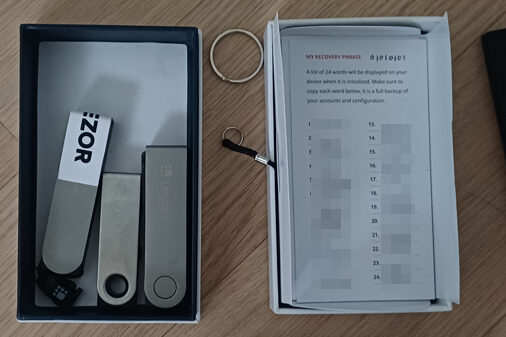
In South Korea, the National Tax Service (NTS) inadvertently leaked a hardware wallet seed phrase, leading to a transfer of approximately 4 million PRTG tokens valued at about $4.8 million. This incident underscores the importance of security in the rapidly evolving crypto environment. Concurrently, the Bank of Korea has reiterated its call for commercial banks to spearhead the issuance of Korean won stablecoins, cautioning that private issuance might pose risks to monetary policy and currency stability.
Despite regulatory hurdles, major players like Tether and Circle are expanding their presence in South Korea. Tether has begun hiring local staff to manage government relations, while Circle”s USDC has captured roughly 10% of the market share on South Korean exchanges.
Japan is also moving forward with its crypto framework but at a different pace. The Financial Services Agency (FSA) recently announced support for private-sector anti-money laundering trials set to run from March to May 2026. The initiative, backed by Hitachi, aims to create a wallet-sharing framework to monitor suspicious activities within the crypto space.
In a notable corporate move, Japan”s largest security token platform, Progmat, plans to migrate over $2 billion in tokenized assets to Avalanche by the end of June 2026. This migration will involve tokenized real estate and corporate bonds currently hosted on the Corda platform.
Furthermore, Daido Tokushu Metal, a listed company in Japan, has received approval to purchase Bitcoin worth up to 1 billion yen as part of its mid-term management strategy through March 2029. The firm cited Bitcoin”s limited supply and its low correlation with traditional assets as compelling reasons for this investment.
China is not lagging behind; its Supreme People”s Court is working on enhancing judicial responses to virtual currency cases, aiming to bolster financial protections for these emerging asset classes. A recent report indicated that China ranks second globally in stablecoin inflow volume, receiving about $71 billion monthly.
Overall, the rapid growth of the crypto ecosystem in Asia, combined with varying approaches to regulation, reflects a complex and evolving landscape that will significantly shape the future of digital assets in the region.