












































In early 2025, the USD/JPY currency pair has become a pivotal indicator of global risk sentiment and divergence in central bank policies. Recent analyses, particularly from Rabobank, highlight the significant influence of safe-haven demand for the US dollar and the ambiguous policy trajectory of the Bank of Japan (BoJ). These dynamics are exerting considerable upward pressure on the pair, consequently shaping trading strategies and economic forecasts across the globe.
Understanding the USD/JPY Currency Dynamics
The exchange rate between the US dollar and the Japanese yen stands as one of the most scrutinized financial instruments worldwide. It fundamentally mirrors the relative economic strength and monetary policy approaches of the largest and third-largest economies. Lately, this pair has seen marked volatility, primarily fueled by two prevailing themes. First, geopolitical tensions and economic uncertainty have instigated traditional safe-haven flows. Second, a stark divergence in monetary policy between the Federal Reserve and the BoJ has emerged as a strong fundamental driver.
Historically viewed as a safe-haven currency, the yen”s status has shifted in the current macroeconomic climate. The BoJ”s commitment to an ultra-accommodative policy contrasts sharply with the Fed”s inclination to maintain higher interest rates for an extended period. This pronounced interest rate differential heavily favors the US dollar, prompting investors to engage in carry trades by borrowing in low-yielding yen to invest in higher-yielding dollar assets, which in turn creates ongoing selling pressure on the yen.
The Safe-Haven Appeal of the US Dollar
The concept of a safe haven has transformed throughout the 2020s, with the US dollar solidifying its status amid global uncertainties. While traditional safe-haven assets like US Treasury bonds and the Swiss franc remain relevant, the depth and liquidity of US markets attract investors during times of crisis. For example, heightened tensions in the Middle East or instability in Europe often trigger rallies in the US Dollar Index (DXY), consequently pushing USD/JPY higher.
Market data from the first quarter of 2025 indicates a clear correlation between spikes in the CBOE Volatility Index (VIX) and intraday surges in USD/JPY. This relationship underscores the premium placed on the dollar during risk-off scenarios. Analysts at Rabobank, along with other financial institutions, are closely tracking capital flow data, which consistently shows net inflows into US asset classes during periods of global anxiety, providing robust support for the USD/JPY pair despite fluctuating technical patterns.
Bank of Japan”s Policy Dilemma
Conversely, the uncertainty surrounding the BoJ”s policy normalization presents a significant counterpoint. After years of battling deflation with negative interest rates and yield curve control (YCC), the BoJ initiated a cautious shift in 2024. However, the trajectory and completion of this normalization remain highly speculative, with market participants scrutinizing every comment from Governor Kazuo Ueda for clues regarding potential rate hikes or changes to bond-buying strategies.
The BoJ faces a complex challenge of balancing fragile wage growth, managing Japan”s substantial public debt, and curbing excessive yen depreciation that could lead to imported inflation. Recent core CPI figures have moderated but still exceed the 2% target, increasing pressure on the bank to tighten policy. Yet, any premature action could hinder economic recovery and destabilize the Japanese Government Bond (JGB) market, widening the interest rate gap that contributes to the strength of USD/JPY.
Key considerations for the BoJ include:
- Wage Growth: The annual “Shunto” spring wage negotiations are pivotal for sustainable inflation.
- Yield Curve Control: Any adjustments to YCC could trigger significant volatility in the yen.
- Global Risk Sentiment: A widespread market downturn may compel the BoJ to delay any actions to mitigate volatility.
Rabobank”s Insights and Market Implications
Financial institutions like Rabobank offer crucial frameworks to comprehend these intricate dynamics. Their analyses often utilize quantitative models that measure interest rate differentials, purchasing power parity, and risk appetite indices. Additionally, Rabobank”s currency strategists monitor political developments, including US fiscal policy and interventions by the Japanese government in the foreign exchange market. For instance, Japan”s expenditure exceeding $60 billion in 2022 to support the yen remains a contingency that could influence extreme bullish positions on USD/JPY.
Rabobank emphasizes the significance of real yields—nominal yields adjusted for inflation—as a cornerstone of the dollar”s strength. Their modeling suggests that for USD/JPY to undergo a sustainable trend reversal, the Fed would need to initiate a decisive rate-cutting cycle, or the BoJ would have to commit to a series of rate hikes aimed at closing the yield gap. Currently, neither scenario appears likely based on the data projections for 2025.
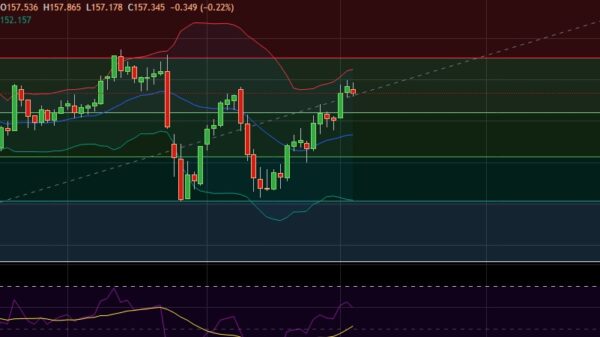
From a technical standpoint, the price structure of USD/JPY reveals critical levels that traders are monitoring globally. The pair has consistently established support at higher lows, indicative of underlying bullish momentum. Key resistance levels, often clustered around significant psychological thresholds like 155.00 or 160.00, represent zones where fears of official intervention may escalate. A break beyond these thresholds would require a substantial catalyst, such as an unexpectedly hawkish stance from the Fed or a dovish misstep from the BoJ.
The implications of a robust USD/JPY extend throughout the global economy. A weaker yen tends to enhance the profitability of major Japanese exporters such as Toyota and Sony but raises the costs of imported energy and food, putting pressure on household budgets. In contrast, a strong dollar can make US exports pricier while helping to mitigate inflation by reducing import costs. For global carry traders and multinational corporations, fluctuations in this pair directly impact hedging strategies and international revenue calculations.
In conclusion, the trajectory of the USD/JPY currency pair in 2025 will largely depend on the ongoing interplay between safe-haven capital flows and the BoJ”s cautious policy shifts. As highlighted by Rabobank, the structural conditions currently favor the US dollar, bolstered by higher yields and its role as a sanctuary amid global uncertainty. Meanwhile, the BoJ”s tentative normalization efforts struggle to counterbalance this momentum. Market participants should remain vigilant regarding geopolitical developments, inflation metrics from both nations, and communications from the central banks, as these elements will ultimately determine the direction of USD/JPY in the months ahead.