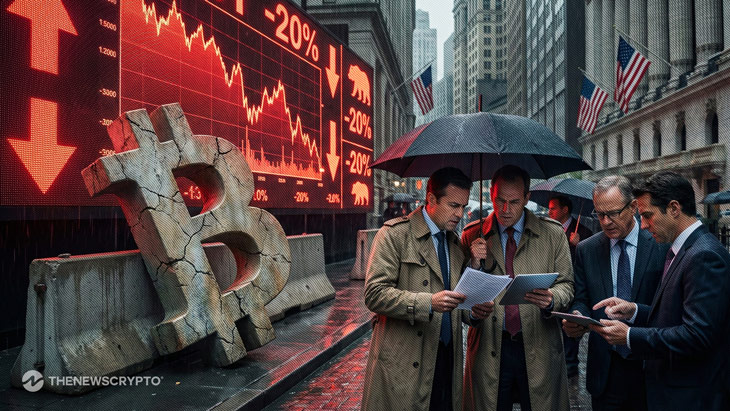
The recent plunge of US Wall Street indices has triggered a notable decline in the cryptocurrency market, with Bitcoin taking the lead. The Dow, S&P 500, and Nasdaq composite indices fell by 1.76%, 2.06%, and 2.39%, respectively, marking the largest one-day drop since October 10, 2025. As a result, the global cryptocurrency market cap has decreased by 3.23%, indicating a significant shift in investor sentiment.
Currently, Bitcoin is trading at $89,816.09, having fallen below the $90,000 threshold, reflecting a 1.97% drop over the last 24 hours. Ethereum has also seen a decline, trading at approximately $2,989.61, down by 5.70% in the same period. The overall decline in the crypto market comes amid rising concerns regarding US economic policies, particularly following the announcement of tariffs on several European nations.
The US Federal Reserve”s stance on interest rates has added to the market”s uncertainty, with little to no expectation of a rate cut. The recent 10% tariffs related to Greenland have further exacerbated market volatility, leading analysts to predict an increase in fluctuations across both traditional and crypto assets. The Financial Greed Index has shifted to 32 points, indicating a growing fear among investors.
Market dynamics are expected to evolve as tensions between the US and Europe persist. Reports suggest that Europe may consider suspending the approval of a US trade deal, which could further escalate the situation and impact US financial markets. Should these tariffs increase to 25%, the repercussions for both Wall Street and the cryptocurrency market could be severe.
In addition to Bitcoin and Ethereum, the broader meme coin segment is suffering, with its market cap down by 2.27%. Leading tokens like DOGE and SHIB are struggling to maintain their positions amid this turmoil. As conditions remain unpredictable, traders and investors are advised to exercise caution.
The current volatility in the cryptocurrency market reflects a complex interplay of geopolitical and economic factors. Analysts are closely monitoring developments related to US tariffs and Federal Reserve policies, as these elements are critical in shaping market movements in the near future.