





























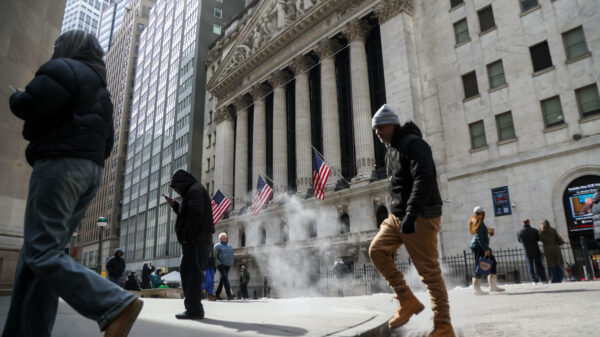














NEW YORK – March 2025. The US Dollar Index (DXY), a vital gauge of the US dollar”s strength against a selection of major currencies, has noticeably declined from the five-week peaks observed just days ago. This retreat represents a crucial transition in global market sentiment, as the heightened safe-haven interest that recently boosted the dollar seems to be waning.
Traders and analysts are now carefully examining economic indicators and central bank communications with renewed intensity. The recent high of the DXY marked its strongest position since late January 2025, driven by aggressive demand for the dollar amidst rising geopolitical tensions and concerns regarding a slowdown in global economic activity.
However, a combination of easing geopolitical tensions and positive economic data from key regions has led to a reduction in this fear-driven demand. The DXY”s movement illustrates a complex interaction of global capital flows, with currencies such as the euro and British pound recovering some losses against the dollar during this timeframe.
The technical analysis of the DXY reveals that it faced substantial resistance around the 105.50 level, a zone that has historically acted as a barrier multiple times over the past year. The recent price pullback suggests that traders are securing profits from the earlier rally. Moreover, the above-average trading volume during this decline indicates a strong conviction behind the movement.
This price action aligns with historical trends where prolonged safe-haven rallies in the dollar are often succeeded by corrections as markets reevaluate fundamental drivers. Analysts from major financial institutions, including insights from Bloomberg and Reuters, have noted that positioning data indicated extreme long positions on the dollar had become overcrowded, setting the stage for a potential reversal.
The initial strength of the dollar was primarily fueled by a significant flight to safety, where investors, concerned about escalating conflicts and economic instability, allocated capital into US Treasury securities and dollar-denominated assets. This behavior is typical in market conditions characterized by uncertainty, as the US economy and its assets are regarded as a stable refuge.
Nevertheless, the safe-haven demand has begun to decline as tangible diplomatic efforts gain traction and key economic data releases exceed pessimistic expectations. Recent manufacturing surveys from Europe, for instance, demonstrated unexpected resilience, while commodity prices stabilized following a period of volatility.
The monetary policy trajectory of the Federal Reserve remains a critical influence on the dollar”s valuation. In its latest meeting, the Fed maintained a data-dependent approach, indicating that while interest rate cuts could be on the horizon for later in 2025, they are not imminent. This has resulted in a holding pattern for the dollar, with recent declines in the DXY reflecting market adjustments in the expected timing of the first Fed rate cut, now anticipated slightly sooner than before.
The narrowing interest rate differential—the gap between US yields and those of other developed nations—has also contributed to the dollar”s softer performance, as bond markets in Europe react to improving data. This reduction diminishes the dollar”s yield appeal, which is a crucial factor for international investors.
Several key elements contributing to the diminishing safe-haven demand include:
- Geopolitical De-escalation: Visible progress toward negotiations in ongoing conflicts.
- Robust Economic Data: Stronger-than-expected employment and activity figures from major economies outside the US.
- Stabilizing Commodities: Prices of oil and key industrial metals finding support, alleviating inflation concerns.
- Central Bank Coordination: Perceived alignment among major banks regarding liquidity management.
A declining US Dollar Index has significant implications for the global financial landscape. Emerging market currencies typically benefit from a weaker dollar, easing debt servicing burdens for nations with dollar-denominated obligations. Additionally, multinational US corporations may experience favorable translation effects on overseas earnings as the dollar weakens. Conversely, a softer dollar can lead to higher import costs in the US, potentially impacting domestic inflation figures.
The current market dynamics suggest that sustained dollar bull runs require ongoing catalysts. Without such stimuli, mean reversion could take hold. The environment now indicates that markets are entering a consolidation phase, digesting a heavy slate of forthcoming economic indicators, including US non-farm payrolls, Consumer Price Index (CPI) reports, and global purchasing managers” indices (PMIs), which will likely provide the next directional signals for the US Dollar Index and its counterparts.
In conclusion, the US Dollar Index”s retreat from five-week highs highlights the transient nature of market moves driven by fear. As the immediate safe-haven demand diminishes, attention shifts back to fundamental economic differences and central bank policy directions. The future trajectory of the DXY will likely be determined more by concrete data on growth and inflation rather than solely by geopolitical events, underscoring the dynamic and interconnected nature of global forex markets.
Monitoring the US Dollar Index remains essential for understanding broader financial market risk appetite and trends in global capital flows.
FAQs
Q1: What is the US Dollar Index (DXY)?
The US Dollar Index measures the value of the United States dollar relative to a basket of six major world currencies: the euro, Japanese yen, British pound, Canadian dollar, Swedish krona, and Swiss franc. It provides a broad indication of the dollar”s international strength.
Q2: Why does the dollar strengthen during market turmoil?
The US dollar is regarded as the world”s primary reserve currency. During periods of global uncertainty or financial stress, investors seek its perceived safety and liquidity, purchasing US Treasury bonds and dollar assets, which increases demand and drives its value higher.
Q3: What does a falling US Dollar Index mean for Americans?
A weaker dollar can lead to higher prices for imported goods, potentially contributing to inflation. However, it can also make US exports cheaper and more competitive abroad, benefiting domestic manufacturers and companies with significant overseas earnings.
Q4: How do Federal Reserve interest rates affect the dollar?
Higher US interest rates compared to other countries typically attract foreign investment into dollar-denominated assets seeking better returns, increasing demand for the currency and bolstering its value. Expectations of future rate changes are often quickly reflected in forex markets.
Q5: Could the US Dollar Index resume its climb?
Yes. The dollar”s path forward will depend on upcoming data and events. A resurgence of geopolitical risk, significantly stronger-than-expected US economic data, or a more hawkish stance from the Federal Reserve could reignite safe-haven demand and yield advantages, pushing the index higher again.