The US Dollar Index (DXY) has slipped below the significant threshold of 96 for the first time since early 2022, marking a critical breakdown of a 15-year support line that has underpinned dollar strength since 2011. This notable decline comes in the wake of recent comments from former President Donald Trump and a mix of macroeconomic factors, creating a renewed sense of optimism for a potential Bitcoin (BTC) rally.
Recent economic developments have exerted considerable pressure on the DXY. Speculation surrounding possible interventions in the Japanese yen has strengthened the yen while contributing to the dollar”s decline. Additionally, concerns about overall market stability have reemerged. Kristalina Georgieva, Managing Director of the International Monetary Fund (IMF), indicated during a recent event hosted by the Brussels-based think tank Bruegel that the IMF is enhancing its ability to model unpredictable events and devise policy responses. When questioned about the possibility of a run on dollar-denominated assets, she confirmed that the IMF is analyzing “all kinds of scenarios” as part of its ongoing assessments.
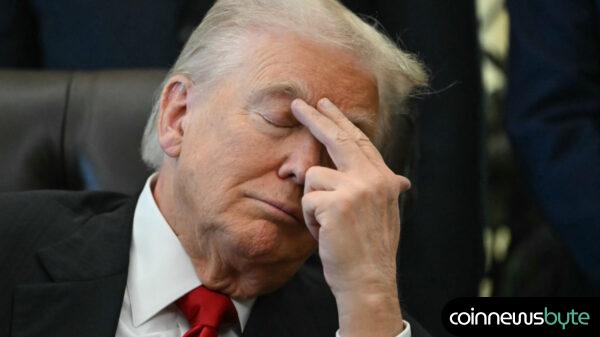
Trump”s remarks added further downward pressure on the dollar. In a statement to reporters in Iowa, he dismissed concerns about the dollar”s recent decline, asserting that it is “doing great.” He stated, “No, I think it”s great…I think the value of the dollar, look at the business we”re doing. The dollar”s doing great.” Following his comments, the DXY experienced its most significant one-day drop since the volatility driven by tariffs in April. The index fell to a low of 95.5, its weakest level since February 2022, before stabilizing at around 96.
Analysts are closely watching the next few days, as a monthly close below the 15-year trendline may indicate further weakness for the dollar. Market analysts are observing a textbook structure unfolding, characterized by a breakout, retests, and a continuation of the downward trend.
The impact of the DXY”s decline on Bitcoin is significant given the historical inverse relationship between the two. Past occurrences of the DXY falling below the 96 mark have frequently preceded substantial rallies in Bitcoin. The last two instances, in 2017 and 2020, saw Bitcoin surge dramatically, with prices escalating from $2,000 to $20,000 and from $10,000 to $64,000, respectively.
Currently, the DXY rests at approximately 96.3, which has analysts speculating about the potential for a similar bullish trend in Bitcoin. Additionally, technical analysis is revealing bullish indicators for Bitcoin, including a developing bullish divergence between Bitcoin”s price and the relative strength index (RSI). This pattern often signals a reduction in selling pressure, and similar setups have historically resulted in gains of around 10%, potentially steering Bitcoin toward the $95,000 level.
The analysis suggests that if there is a simultaneous increase in Network Fundamentals and Liquidity while Bitcoin Dominance holds, the crypto market could be on the verge of a significant bullish reversal. However, some analysts caution that further downside for Bitcoin remains a possibility. The outcome of the current market dynamics will largely hinge on confirmation from both currency markets and broader risk assets in the coming weeks.