








































The cryptocurrency landscape has been rocked by a troubling surge in price manipulation, with losses totaling $42 million reported in 2025. This alarming statistic comes from a recent analysis by CertiK, which documented a total of 51 incidents that have impacted traders throughout the year.
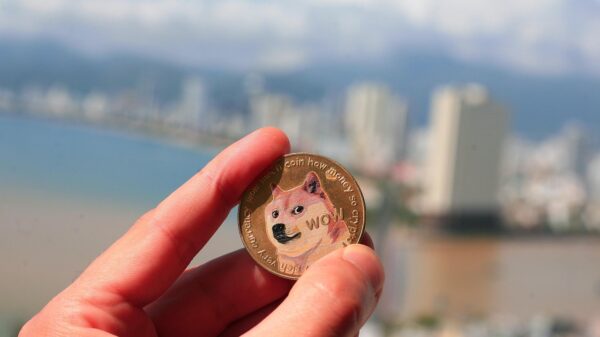
The latest case to draw attention occurred on November 12, when the meme coin Popcat experienced a catastrophic 43% crash. An alleged whale orchestrated this event on Hyperliquid, a decentralized perpetuals exchange, by artificially inflating the price to $0.21 using fake buy walls across 19 wallets. This move was strategically designed to entice retail investors into making long positions.
Initially, the whale injected $3 million from OKX, distributing the funds among 19 wallets. Following this, they established long positions valued between $26 million and $30 million at a leverage of 5x, subsequently creating a misleading $20 million buy wall at the inflated price of $0.21. Once retail traders were lured into the market, the whale quickly pulled their orders, resulting in a dramatic plummet of Popcat”s price to $0.12 within hours, leading to a staggering $63 million in liquidations, including a single loss of $21 million.
As the chaos unfolded, Hyperliquid”s vault absorbed $4.9 million in bad debt, while the manipulator”s collateral disappeared entirely. This incident serves as a stark reminder of the vulnerabilities inherent in decentralized finance (DeFi) platforms, particularly in meme coins and decentralized exchanges (DEXs).
According to CertiK”s findings, the incidents of price manipulation have been escalating, with 19 occurrences tracked in the fourth quarter alone, almost matching the peak of 20 incidents observed in the second quarter. This trend underscores the growing prevalence of such attacks, which exploit weaknesses in oracle systems, low liquidity, and the mechanics of leverage.
The top victims of price manipulation in 2025, as identified by CertiK, include: Resupply ($9.6 million in June), OdinFun ($7 million in August), Loopscale ($5.8 million in April), Future Protocol ($4.6 million in July), and Typus Finance ($3.4 million in October).
These incidents pose a significant challenge to the integrity of the cryptocurrency market. Unlike phishing attacks or code vulnerabilities that have historically resulted in billions in losses, price manipulation requires merely capital and coordinated effort. Traders have referred to the Popcat event as “peak degen warfare,” highlighting the unique conditions that meme coins and DEXs create for such manipulation.
The absence of circuit breakers or position limits—common safeguards in traditional exchanges—exacerbates the risk of cascading liquidations. Although Hyperliquid paused operations to manage the fallout, this raises critical questions about the balance between the freedom of permissionless trading and the need for protective measures against coordinated market manipulation. As the DeFi space continues to evolve, the challenge remains: can decentralized exchanges safeguard their users while maintaining their foundational principles?