











































The NVIDIA stock price has shown little movement this year, even as major indices like the TSX Composite, Nasdaq 100, and S&P 500 have reached all-time highs. Recently, the stock was trading at $190, slightly below a significant resistance level of $195. Currently, it sits approximately 10% shy of its peak value, which raises concerns among investors as earnings season approaches.
In recent months, NVIDIA has found itself in a tight trading range, navigating both substantial risks and opportunities. A key opportunity lies in the surge of data center investments, with leading firms committing over $660 billion for the year. Companies such as CoreWeave, Nebius, and Oracle are also allocating significant resources, all of which are expected to benefit NVIDIA, renowned for its cutting-edge AI chip technology. The company is also gearing up to introduce new products aimed at challenging competitors like Intel and AMD in the CPU market.
Optimism is rising regarding NVIDIA“s potential shipments of its H200 chips to China, with reports indicating over 700,000 orders from Chinese entities. With each chip priced at $27,000, this could position NVIDIA to generate substantial revenue from this venture. Nevertheless, the company faces notable risks, particularly a persistent memory chip shortage that could hinder AI advancements. Additionally, uncertainties loom over NVIDIA“s ability to conduct business with Chinese firms following recent US sanctions against Alibaba.
Moreover, customer concentration poses a risk; over half of NVIDIA“s revenue is derived from a handful of clients, with Microsoft alone accounting for approximately 20%. This reliance is concerning, especially as Microsoft“s shares have declined by 30% from their peak, raising questions about potential cuts in capital expenditure that could adversely affect NVIDIA“s earnings.
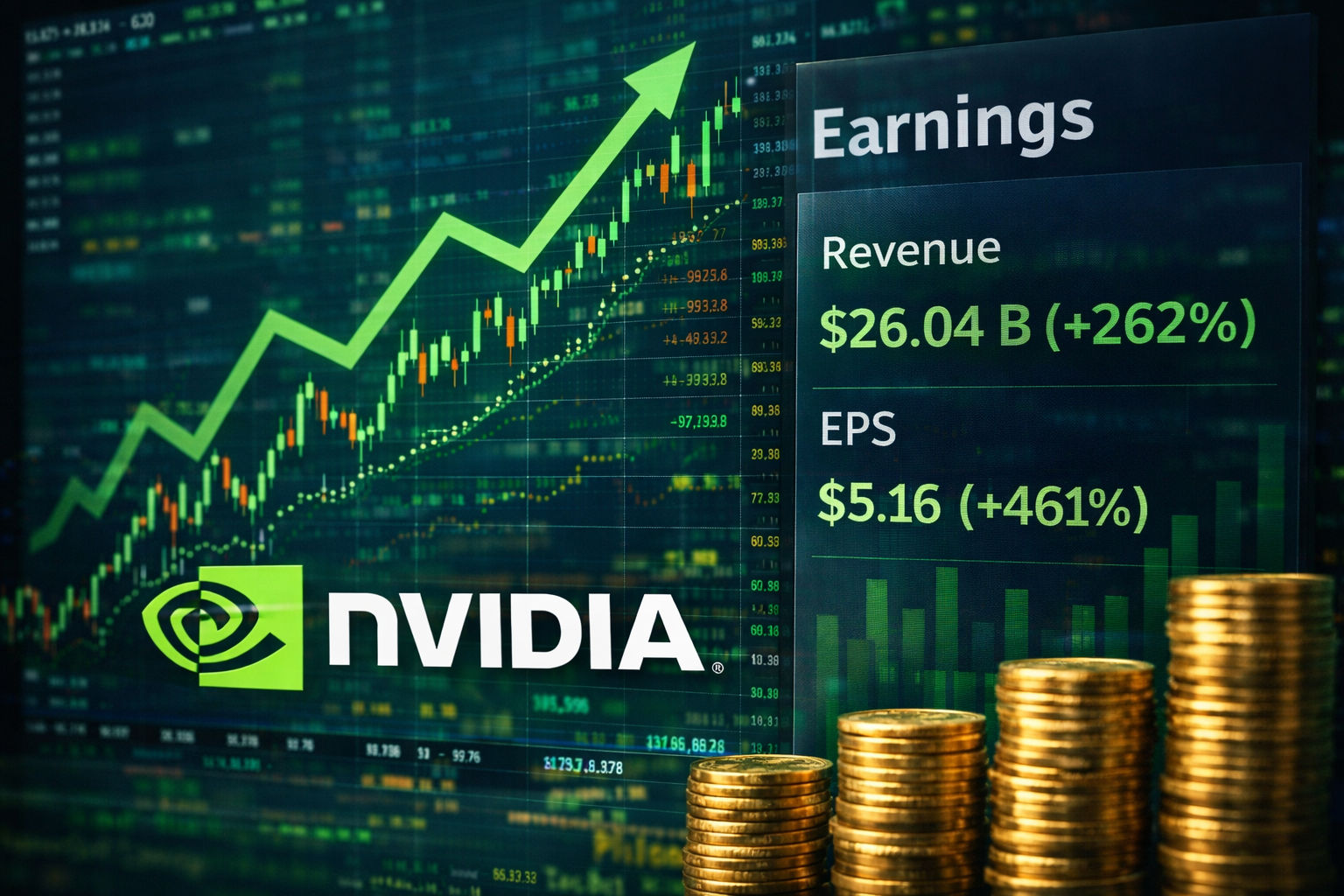
Despite these challenges, Wall Street analysts are anticipating strong financial results from NVIDIA, predicting a revenue increase to $65 billion for the upcoming quarter, representing a 68% rise year-over-year. This growth is projected to elevate the annual revenue to over $213 billion. Analysts expect earnings per share (EPS) to reach $1.53, a significant increase from $0.89 in the previous quarter. Historically, NVIDIA has outperformed expectations, with some analysts forecasting EPS to exceed $1.60.
The stock”s performance will also be influenced by forward guidance, with forecasts suggesting an annual EPS increase to $7.767 this year from $4.69 in 2025, alongside a revenue jump to $327 billion. On a positive note, current valuations may indicate that NVIDIA stock is undervalued, given its forward price-to-earnings ratio of 40 and a PEG ratio of 1.50, both significantly lower than historical averages.
From a technical standpoint, the NVIDIA stock price has encountered a barrier around $194, failing to surpass this level multiple times throughout the year. A detailed analysis reveals the formation of a head-and-shoulders pattern, with a neckline positioned at $170. This pattern is often seen as a bearish signal in technical analysis, suggesting a potential decline to $170 post-earnings. Should the stock fall below this threshold, further downside may lead it to $150.