








































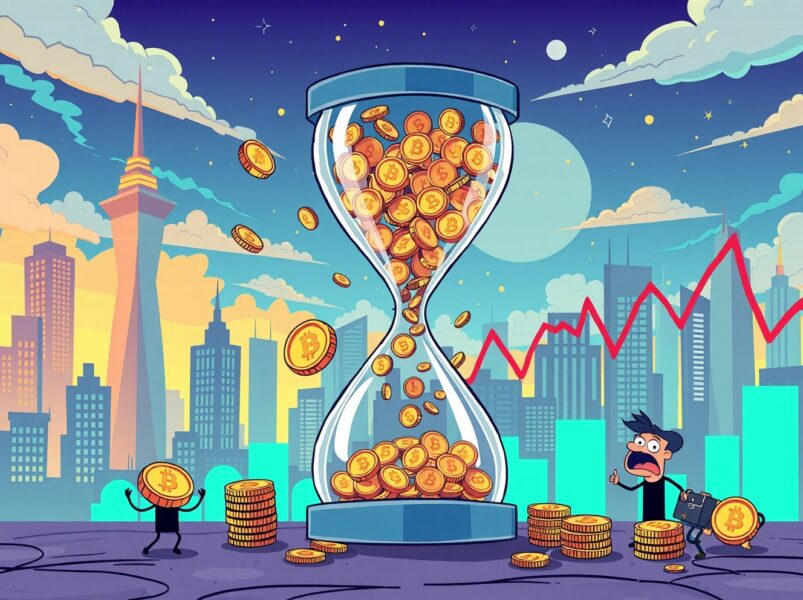
In a dramatic display of the cryptocurrency market”s volatility, major exchanges reported a staggering $103 million in futures liquidations occurring in just one hour. This rapid liquidation underscores the extreme risks traders face in the current landscape, with total liquidations over the last 24 hours reaching a jaw-dropping $358 million.
Futures liquidations happen when traders” positions are forcibly closed due to insufficient margin levels, typically resulting from sharp price movements that go against their positions. For example, a trader utilizing leverage could experience a minor price drop that triggers automatic sell-offs, leading to significant losses. The recent $103 million in futures liquidated signifies a high level of market stress and trader overexposure.
Several factors have contributed to the surge in liquidations. Unexpected news events or economic indicators can swiftly alter market dynamics, leading to rapid price changes. Additionally, excessive leverage amplifies the potential for loss when market conditions shift unfavorably. The current state of market sentiment can change abruptly, and without effective risk management, traders” positions can quickly deteriorate.
The impact of large-scale futures liquidations extends beyond the immediate loss of funds for traders. When a significant number of futures contracts are liquidated, it can create a cascading effect, pushing prices down and leading to further liquidations. This vicious cycle often results in heightened volatility and panic across the market. The recent $103 million in liquidated futures likely exacerbated the ongoing downturn, but it also provides a potential buying opportunity for astute investors looking to capitalize on lower prices.
To mitigate the risks associated with futures trading, traders should adopt several strategies:
- Utilize lower leverage to minimize exposure to sudden market fluctuations.
- Diversify portfolios across different assets to spread risk effectively.
- Implement stop-loss orders to automatically close positions at pre-determined levels.
- Stay informed on market news to anticipate potential volatility.
In conclusion, the recent liquidation of $103 million in futures serves as a stark reminder of the inherent risks in cryptocurrency trading. While liquidations are an inevitable aspect of the market, they emphasize the necessity for caution and preparedness. By understanding the underlying mechanisms of liquidations and employing sound risk management strategies, traders can convert potential setbacks into valuable learning experiences, ensuring a more robust approach to leveraged trading.
Frequently asked questions about futures liquidations include:
- What causes futures to be liquidated? Futures are liquidated when a trader”s margin falls below the required level due to adverse price movements.
- How can I check if my futures are at risk of liquidation? Monitor your margin ratio and liquidation price via your exchange”s platform, as most provide real-time alerts.
- Are liquidations more common in bull or bear markets? Liquidations can occur in any market but are often more frequent during periods of high volatility.
- Can liquidations affect spot market prices? Yes, large-scale liquidations can lead to increased selling pressure, influencing spot prices and overall market sentiment.
- What is the difference between long and short liquidation? Long liquidation occurs when prices drop, forcing buyers to sell, whereas short liquidation happens when prices rise, compelling sellers to buy back assets.
- Is there a way to recover funds after liquidation? Generally, liquidated positions cannot be reversed; however, traders can learn from the experience to adjust their strategies.
If this analysis on futures liquidations has been insightful, consider sharing it with your network on social media to help others stay informed about the dynamics of the crypto market.
For further insights into the latest trends in the cryptocurrency market, explore additional articles that delve into key developments shaping Bitcoin price action.