



























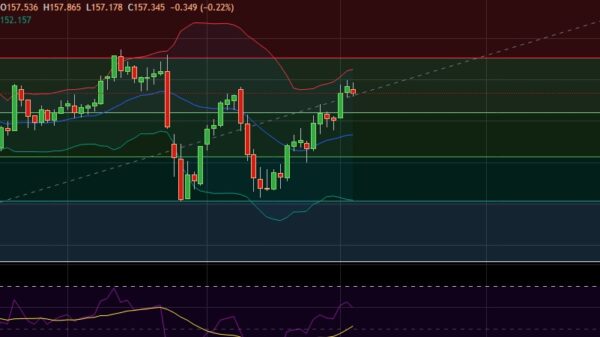


















The Asian foreign exchange landscape is currently marked by stark contrasts, with the Indian rupee plunging to unprecedented lows while the Australian dollar exhibits notable strength following robust economic data. The rupee has recently breached the significant threshold of 90 against the US dollar, setting a new record that raises concerns about India”s economic stability.
Several factors are contributing to the decline of the Indian rupee. Among these are rising yields on US Treasury securities, which have attracted capital away from emerging markets. Additionally, the country is grappling with a widening trade deficit and persistent inflation, which has resisted the effects of recent monetary tightening. A general aversion to risk in global markets has further exacerbated the situation, leading to outflows of foreign institutional investment from Indian equities.
In contrast, the Australian dollar is enjoying a period of resilience, primarily driven by economic performance that has outstripped expectations. Recent GDP data revealed an expansion of 0.6% in the latest quarter, surpassing forecasts that predicted only 0.4% growth. This positive economic indicator has various implications, including a heightened probability of further interest rate hikes by the Reserve Bank of Australia. The increased investor confidence in Australia”s economic fundamentals, alongside strong commodity exports, is propelling the currency”s strength, even amidst global economic headwinds.
The current currency dynamics in Asia illustrate the complex interplay of different economic fundamentals and monetary policies. While the Indian rupee faces challenges similar to those affecting various other emerging market currencies, the Australian dollar stands out as an anomaly, buoyed by its strong domestic performance.
Key economic indicators such as GDP growth rates, inflation figures, and trade balances are pivotal in driving these currency movements. Monitoring these indicators is essential for traders and investors who wish to anticipate future fluctuations in the foreign exchange markets.
For market participants, the ongoing situation presents both challenges and opportunities. The record low of the Indian rupee indicates a risk of further depreciation unless effective policy measures are enacted. Conversely, the strength of the Australian dollar may persist if economic data continues to show positive trends, although it remains vulnerable to global market conditions.
In conclusion, the dramatic divergence between the Indian rupee and the Australian dollar serves as a reminder of the significant role that regional economic fundamentals play in determining currency performance amidst broader global trends. Investors and traders must remain vigilant, paying close attention to economic indicators and central bank policies to navigate these volatile currency waters effectively.