











































Ethereum has demonstrated a consistent accumulation phase, driven by the realized cost of long-term holders. This cost has seen a steady increase since 2020, currently resting between $2,700 and $2,800. Even during the significant market corrections from 2022 to 2023, and similar stress periods anticipated in 2025, the accumulation cost for ETH remained relatively stable, contrasting sharply with many altcoins that lack a robust buying foundation.
Over the last 24 hours, the market witnessed approximately $42 million in liquidations, with notable absorption flows occurring near the established accumulation cost. This stability has been key in defining a structural reference for Ethereum”s market behavior. The accumulation cost is crucial as it reflects the average price at which dedicated long-term holders have acquired their ETH, and it serves as a benchmark for market strength.
Currently, the $2,700–$2,800 range has become a focal point for repeated purchases by long-term addresses. This level has shown resilience through various volatility events, sustaining demand without significant breaks below it. In stark contrast, a majority of alternative cryptocurrencies have struggled to create a similar accumulation base since 2022, leading to deeper price declines and slower recoveries.
The recent market activities further underscore this trend. Within the last day, Ethereum recorded liquidations totaling around $42 million, with $26.5 million linked to long positions and $16 million from short positions. Following these events, absorption occurred near the crucial accumulation cost, indicating continued interest from long-term holders.
According to data from CryptoQuant, addresses that have been gradually accumulating are concentrating their holdings in the $2,700–$2,800 range. Notably, in late 2025 and early 2026, these addresses added substantial amounts of ETH despite prevailing market pressures. Trend Research suggests that the average accumulation cost might even be higher, around $3,150, which expands the price range where these long-term positions have been established.
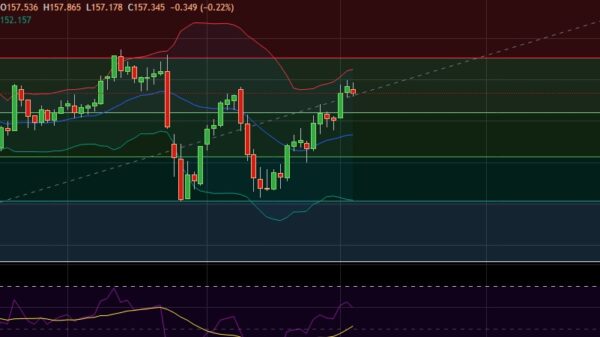
From a structural perspective, Ethereum”s market regime remains intact as long as prices stay around or above the accumulation cost. A prolonged drop below this level would indicate a shift in the behavior of long-term holders, potentially undermining the current support dynamics. In the short term, Ethereum is trading within a sideways range, revisiting the trading levels seen in December, with prices hovering around $3,100. Resistance appears concentrated near $3,300, while the $2,900 level aligns with previous support levels within the current trading channel.