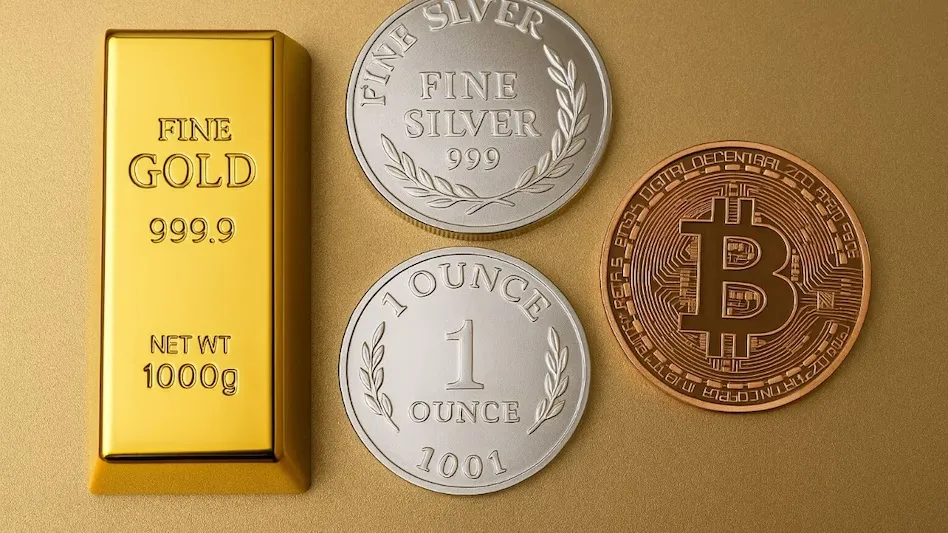
In a surprising turn of events, Bitcoin, along with traditional safe-haven assets like gold and silver, faced notable price declines recently. This downturn has raised questions about the underlying factors influencing these markets.
Market analysts suggest that a combination of rising inflation rates and shifting economic conditions contributed to the fall in prices. Investors are increasingly wary as economic indicators hint at potential instability, causing many to reassess their portfolios.
The Federal Reserve has been closely monitoring inflation, which has been on an upward trajectory. This has led to speculation about potential interest rate hikes, further intensifying market volatility. As traditional assets like gold and silver are often seen as hedges against inflation, their decline may indicate a shift in investor sentiment.
As Bitcoin continues to gain traction as a digital asset, its correlation with traditional commodities like gold and silver is becoming more pronounced. The recent sell-off in these markets could suggest that investors are seeking liquidity or reallocating their assets in response to changing economic forecasts.
Despite the current downturn, experts believe that the long-term fundamentals for cryptocurrencies remain intact. The growing adoption of blockchain technology and the increasing interest in decentralized finance (DeFi) continue to present opportunities for growth in the digital asset space.
As market participants navigate this period of uncertainty, the focus will likely remain on economic indicators and central bank policies. Investors are advised to stay informed and consider the broader economic landscape when making investment decisions in both cryptocurrency and precious metals.