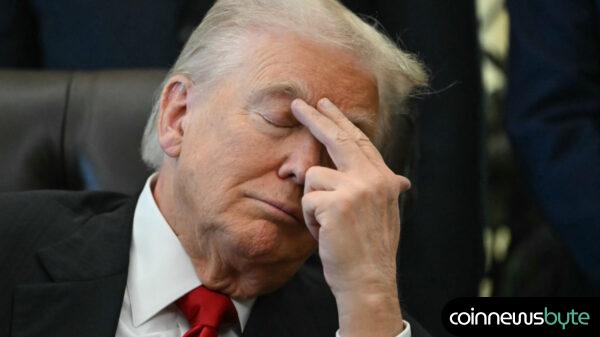
The cryptocurrency market is currently grappling with a significant downturn, with a sell-off intensifying over the weekend. This development saw futures open interest decline and liquidations soar past $1.6 billion, marking the highest level in several weeks. Investors are now left to ponder whether the industry can rebound from this sharp decline.
The ongoing crash can be attributed to several key factors. Notably, escalating geopolitical tensions have emerged as a critical trigger. According to data from Polymarket, the probability of a military confrontation involving former President Donald Trump and Iran has surged to over 80%, coinciding with reports of U.S. naval forces approaching the region. This situation has instilled fears that such an escalation could lead to increased oil prices and greater financial market volatility, thereby negatively impacting Bitcoin (BTC) and other altcoins. As a result, Bitcoin“s status as a safe-haven asset appears to be diminishing.
Moreover, the aftermath of the October 10 liquidation event looms large in the minds of market participants. This event, triggered by Trump”s warnings of potential tariffs against China, has caused leverage in the crypto space to evaporate. Open interest in futures has dropped dramatically from $255 billion to $113 billion since that warning.
Another contributing factor to this downturn is the appointment of Kevin Warsh, an inflation hawk, as the new Federal Reserve Chair. This move has disappointed market participants who were anticipating a more favorable stance from BlackRock”s Rick Rieder.
As investors contemplate the likelihood of recovery, opinions vary. Analyst Tom Lee, also the Chairman of BitMine, suggests that the current market conditions may soon stabilize. He points to historical trends indicating that Bitcoin has historically rebounded following significant declines. For instance, after a 30% drop between March and August, Bitcoin went on to reach new heights in November. Similarly, after falling below $16,000 in December 2022, it managed a notable recovery.
Despite the current turmoil, potential catalysts for a recovery are beginning to surface. The U.S. dollar index is experiencing a decline, which typically boosts demand for riskier assets. Furthermore, there is speculation that the Federal Reserve might soon resume its interest rate cuts, which could provide additional support for the crypto market. Additionally, indicators suggest that Bitcoin and leading altcoins may now be attracting buyers as their MVRV ratios have significantly dropped.
In summary, while the crypto market is currently facing a steep decline, historical patterns and emerging economic signals may suggest a rebound could occur later in the year. Investors will need to remain vigilant as the situation evolves.