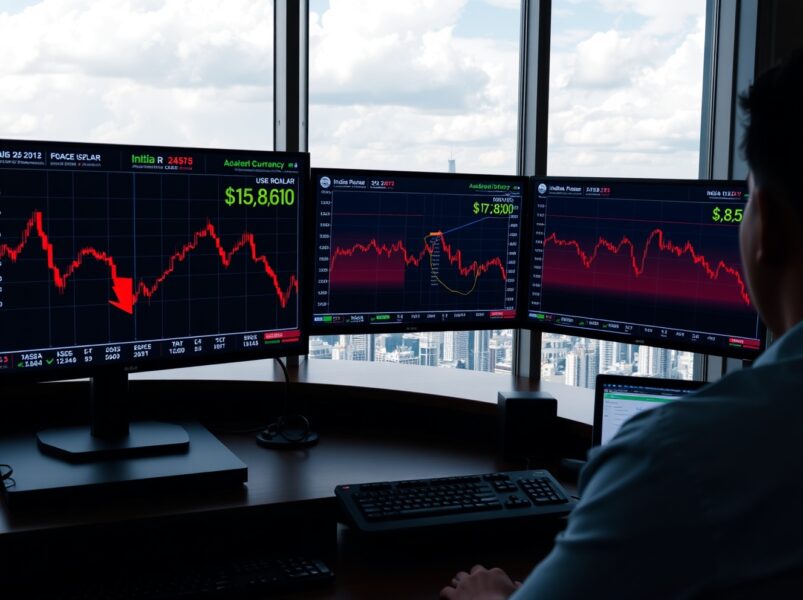
Asian foreign exchange markets are currently experiencing a period of relative stability, even as the Indian rupee faces unprecedented challenges, plunging to a record low. This situation arises as traders closely monitor the Federal Reserve”s forthcoming decisions, which could significantly affect global monetary policy.
The resilience displayed by most Asian currencies indicates a cautious optimism regarding regional economic fundamentals. As forex traders and cryptocurrency investors seek diversification, the ongoing balance between local economic strength and global monetary shifts presents both risks and opportunities.
Focus on Federal Reserve Policy
The evolving outlook of the Federal Reserve remains paramount for currency traders. Market participants are meticulously analyzing statements from Fed officials and economic indicators to assess upcoming interest rate adjustments. This heightened focus on Fed policy creates volatile opportunities for traders who can accurately navigate these shifts.
Performance of Asian Currencies
The current performance of Asian currencies against the US dollar highlights several key drivers:
- Indian Rupee: The rupee”s fall to a record low is primarily influenced by the dollar”s strength, persistent trade deficits, and rising oil prices.
- Chinese Yuan: The yuan has seen a moderate decline, affected by interventions from the People”s Bank of China and the pace of economic recovery.
- Japanese Yen: The yen has remained stable, supported by the Bank of Japan”s policy divergences and safe-haven flows.
- Southeast Asian Currencies: These currencies are exhibiting mixed performance, influenced by regional growth, tourism recovery, and export dynamics.
Understanding the Indian Rupee Crisis
The Indian rupee”s significant decline can be attributed to several converging factors:
- Dollar Strength: The US dollar”s broad-based appreciation exerts pressure on emerging market currencies.
- Trade Imbalances: India”s ongoing trade deficit necessitates regular dollar outflows.
- Energy Dependence: High costs associated with oil imports are depleting foreign exchange reserves.
- Capital Outflows: A reduction in foreign investment in Indian assets is further exacerbating the situation.
The Reserve Bank of India faces significant challenges in balancing currency defense with the need for economic growth, as the rupee”s depreciation has broad implications for inflation, corporate debt, and import costs.
Opportunities for Traders
Current market conditions offer specific opportunities for informed traders:
- Correlation Trading: Observing the relationships between Asian currencies and cryptocurrency markets can yield insights.
- Policy Divergence Plays: Positioning for varying central bank responses across regions could enhance trading strategies.
- Hedging Strategies: Utilizing currency movements to hedge against broader portfolio risks can be beneficial.
- Volatility Management: Traders should brace for increased volatility in the lead-up to Federal Reserve announcements.
As Asian central banks navigate a landscape of divergent monetary policies, this creates unique cross-currency opportunities for traders equipped with a solid understanding of regional economic fundamentals.
Conclusion: Strategies in a Complex Environment
The current state of Asia”s foreign exchange market is characterized by a mix of resilience and vulnerability. While many Asian currencies remain stable in the face of global uncertainties, the Indian rupee”s record low serves as a stark reminder of the challenges emerging markets encounter in a strong dollar environment. Traders must continue to monitor the Federal Reserve”s communications, regional economic indicators, and geopolitical developments that could prompt significant currency movements.
For more insights into the latest trends in forex markets, readers can explore comprehensive coverage on the key developments that shape currency markets, interest rate policies, and dynamics influencing trading decisions in the months ahead.