







































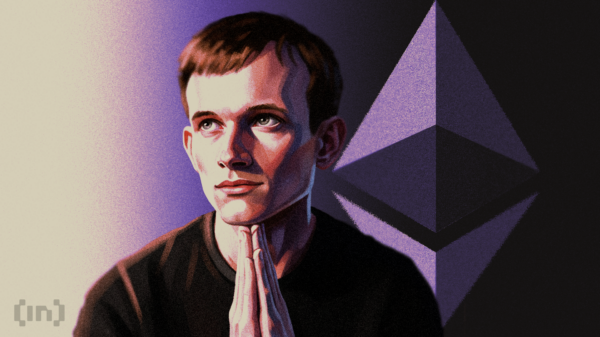




In a recent social media exchange, Vitalik Buterin, co-founder of Ethereum, brought attention to critical structural risks that decentralized stablecoins may face over the long term. His comments underscore significant unresolved challenges that could impact the stability and resilience of these financial instruments.
Buterin”s insights were sparked by a comment from an X user, “_gabrielShapir0,” who suggested that Ethereum is diverging from the current trends favored by many crypto venture capitalists. While venture firms are increasingly investing in centralized finance solutions like custodial stablecoins and neo-banks, Ethereum continues to emphasize reducing centralized control and promoting individual sovereignty.
During the exchange, Buterin identified three primary concerns that need addressing for decentralized stablecoins to thrive. First, he questioned the sustainability of linking stablecoins to the US dollar. Although this method may serve short-term purposes, he posits that it does not align with a long-term vision of resilience. He stated, “We need better decentralized stablecoins. IMO three problems: 1. Ideally figure out an index to track that”s better than USD price.” He expressed doubt that dependence on a single fiat currency would be beneficial as inflation could degrade its reliability.
Another significant issue raised by Buterin pertains to the design of oracles. He indicated that stablecoins require a decentralized oracle framework that cannot be easily manipulated by large capital pools. He emphasized that achieving this would necessitate a system where the costs of potential attacks exceed the total value of the protocol”s tokens. Otherwise, stablecoin projects may find themselves in a precarious position, needing to extract more from users to stabilize token prices.
Buterin”s critique extends to financialized governance models, which he believes often lack robust defensive mechanisms and depend heavily on value extraction from users. This pattern, according to him, is detrimental to the long-term viability of stablecoins.
As the conversation progressed, Buterin also addressed the competition posed by staking yields. He noted that when staking returns are more attractive, stablecoins backed by staked assets may struggle to maintain their appeal. He proposed various strategies to counteract this trend, such as lowering staking yields to more sustainable levels or developing a new staking model that offers similar rewards with reduced slashing risk. He cautioned that slashing risk is not solely tied to validator errors, highlighting that inactivity and participation in censorship attacks represent ongoing threats.
Ultimately, Buterin”s insights present a call to action for the decentralized finance community. Without addressing these fundamental issues, the future of decentralized stablecoins may remain uncertain, potentially stifling innovation in a sector that seeks to empower users through greater financial autonomy.