








































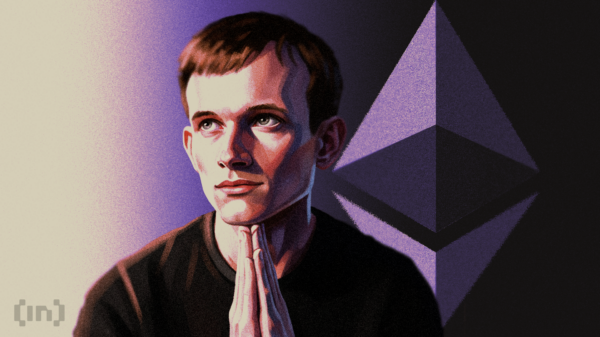




Vitalik Buterin, co-founder of Ethereum, has recently expressed significant concerns regarding the future of decentralized stablecoins. His commentary emerged during an online discussion and centers on several potential vulnerabilities that may undermine the resilience of these financial instruments.
The conversation was prompted by an X user, “gabrielShapir0,” who suggested that Ethereum”s direction diverges from the current trends favored by crypto venture capitalists. While many investors are backing centralized solutions like custodial stablecoins and neo-banks, Ethereum maintains its commitment to reducing centralization and promoting individual sovereignty. Buterin concurred with this sentiment and elaborated on three pressing challenges facing decentralized stablecoins.
Firstly, Buterin scrutinized the common practice of pegging stablecoins to the US dollar. Although this method may function effectively in the short term, he raised concerns about its long-term viability. He argued that ongoing inflation could diminish the dollar”s reliability as a reference point. For a truly resilient system, he believes it is crucial to explore alternative indices that provide a more stable price signal.
Secondly, Buterin highlighted the importance of decentralized oracles, which serve as critical components in the functioning of stablecoins. He pointed out that without a decentralized oracle system, which cannot be manipulated by large financial entities, the stability and integrity of stablecoins remain at risk. One potential solution he proposed is to design systems where the cost of attacking the protocol exceeds the total value of its tokens, thereby incentivizing security.
Additionally, Buterin addressed the issue of staking yields as a competitive factor for stablecoins. When staking rewards are higher, stablecoins that utilize staked assets may struggle to attract users. He noted that, without appropriate solutions, the returns for these stablecoins could dwindle to unsatisfactory levels. He introduced several ideas for addressing this challenge, including the possibility of lowering staking yields to hobbyist levels or creating new staking models that minimize risk.
Furthermore, Buterin emphasized that slashing risks—associated with validator errors and other issues—pose serious threats to the stability of these financial systems. He articulated that stablecoin protocols cannot afford to rely solely on fixed amounts of collateral due to the volatility of market prices. Mechanisms for rebalancing may be necessary, especially during significant market fluctuations.
Buterin”s insights underscore the ongoing evolution of decentralized finance and the critical need for robust, resilient stablecoin systems that can withstand market pressures while supporting the foundational goals of decentralization.