













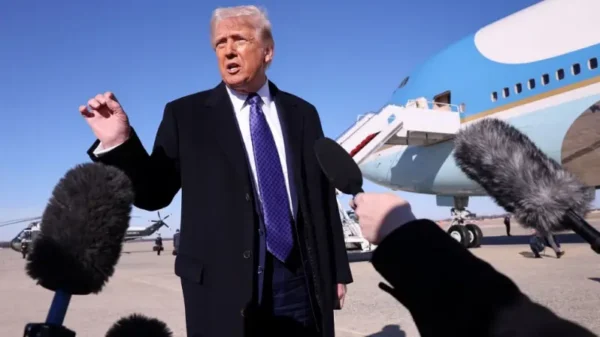




























In a notable development, US President Donald Trump”s Board of Peace is contemplating the creation of a stablecoin aimed at mitigating the ongoing cash shortage in Gaza. This initiative, reported by the Financial Times, seeks to modernize and enhance financial transactions in a region plagued by conflict and economic challenges.
The discussions around this stablecoin are still in preliminary phases, with details remaining fluid. Officials have clarified that the proposed stablecoin will not replace the existing Israeli shekel; rather, it will serve as an alternative digital payment method for the Gazan population. The economic landscape in Gaza has been severely impacted, with financial institutions, ATMs, and cash deliveries facing significant shortages.
Leading the charge in these discussions is Israeli tech entrepreneur Liran Tancman, who has been collaborating with various firms from Gulf Arab nations and the Palestinian territories. Sources familiar with the matter disclosed that the stablecoin aims to stimulate both commerce and aid distribution within the beleaguered region. Notably, the stablecoin is not envisioned as a new currency but a tool to facilitate digital transactions for residents of Gaza.
While there is speculation about whether this stablecoin will be pegged to the US dollar, no definitive statements have been made. Most existing stablecoins in the marketplace typically maintain a 1:1 peg to the US dollar, which could provide a framework for this new initiative. An official from the Trump administration indicated that the Board of Peace, along with the National Committee for the Administration of Gaza and the Office of the High Representative, is exploring all avenues to rejuvenate Gaza”s economy.
This potential stablecoin could play a crucial role in not only addressing immediate financial needs but also in laying the groundwork for a more stable economic future for the region. As discussions advance, the implications for commerce and humanitarian efforts in Gaza may become more defined, marking a significant step in the intersection of technology and socio-economic recovery.