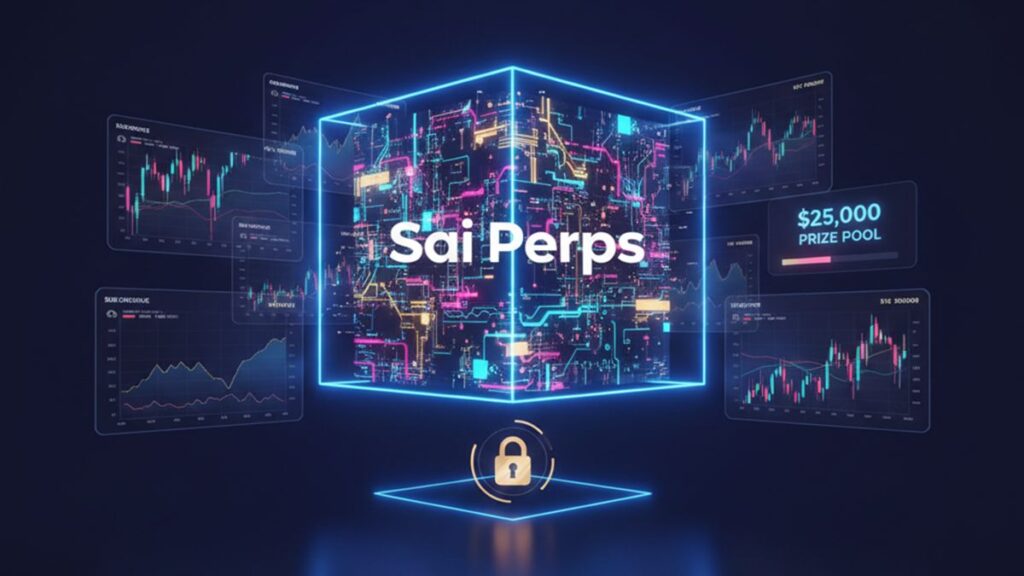
In a significant advancement for decentralized finance, Sai has introduced a gasless perpetuals trading platform designed to deliver a user experience reminiscent of centralized exchanges (CEX). This platform aims to make derivative trading more accessible, particularly for users who are accustomed to traditional trading environments.
Starting today, traders can engage with over 25 markets, including major cryptocurrencies like Bitcoin (BTC) and Ethereum (ETH), all facilitated through a seamless interface. One of the standout features of this new offering is its gasless nature, effectively removing transaction fees that can hinder trading efficiency.
According to Matthias Darblade, a contributor to Sai, the platform”s architecture is designed to ensure that traders do not have to choose between speed and security. The robust design allows for fluid navigation while maintaining the benefits of onchain settlement, which is critical for market integrity.
The underlying infrastructure leverages the Nibiru smart contract ecosystem, which optimizes risk management systems and oracle mechanisms. This setup ensures that prices are in line with global market rates, significantly reducing price slippage, even in periods of low liquidity.
Another innovative aspect of the Sai platform is its collateral flexibility. Traders have the option to utilize various collateral assets, enabling efficient capital reuse across multiple positions. Additionally, users can deposit USDC or liquid NIBI (stNIBI) into single-asset vaults, allowing them to earn passive yields without unnecessary complexity.
To commemorate the launch, Sai has initiated the “Let”s Go Saicho” trading competition, designed to stimulate initial liquidity in the market. The competition features a prize pool of $25,000, aimed at rewarding participants for their trading profitability.
This launch marks a pivotal moment in the evolution of decentralized derivatives, as it seeks to attract users who primarily engage in centralized trading platforms. The market will now observe whether the combination of technical innovation and economic advantages will successfully draw in a broader audience.