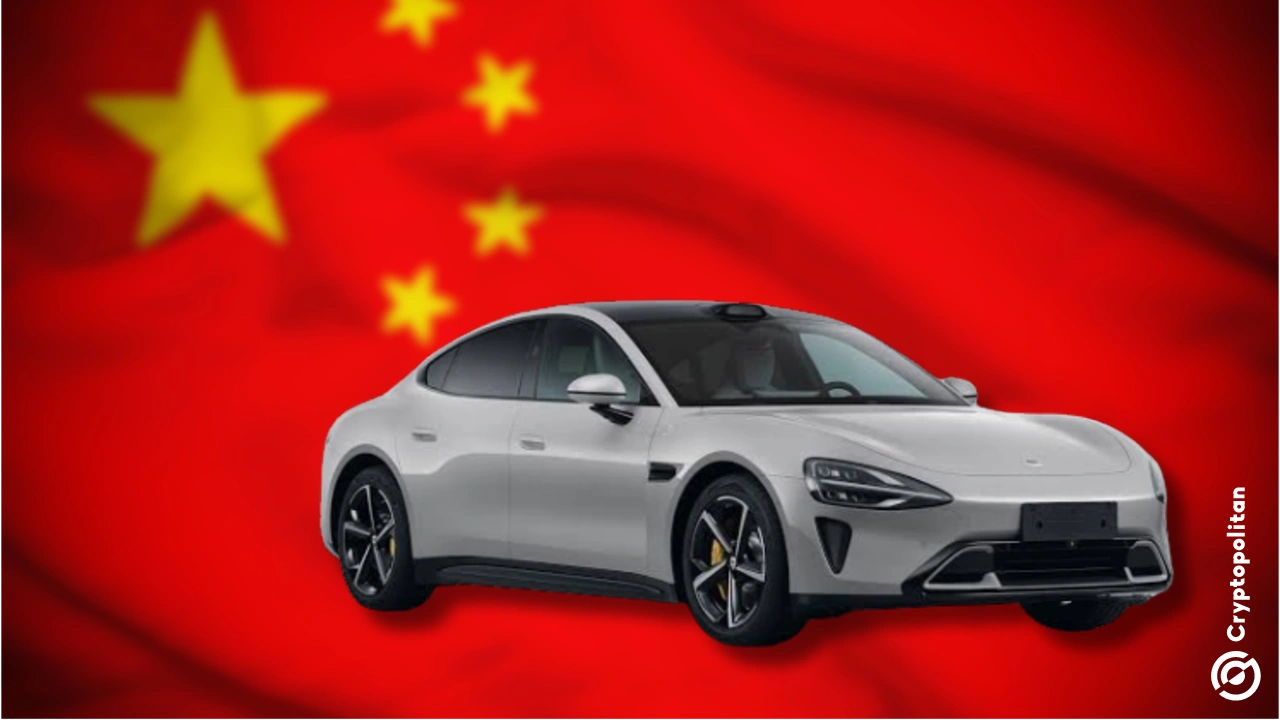
Chinese technology powerhouse Xiaomi has set an ambitious goal of delivering 550,000 electric vehicles (EVs) in 2026. This target follows a remarkable achievement in 2025, where the company successfully sold 410,000 units. This represents a substantial 34% increase as Xiaomi intensifies its efforts in the competitive Chinese EV market while also preparing for expansion into international markets.
The company”s billionaire founder, Lei Jun, disclosed this target during a recent livestream event, outlining the strategic direction for Xiaomi”s automotive division. Notably, the EV segment turned profitable in November, achieving this milestone around 18 months after the debut of its first electric sedan, a timeline that surpassed even that of Tesla, which took years to attain profitability.
Despite the positive financial news, Xiaomi”s stock performance has raised concerns. In the previous year, it was one of the underperforming names in the Chinese tech sector, affected by issues such as overcapacity, weaker consumer demand, and stricter market conditions within the EV industry, as reported by Bloomberg.
Adding to Xiaomi”s challenges, two serious incidents involving the SU7 model have prompted calls for enhanced regulatory scrutiny. These accidents have led to the introduction of draft regulations and new standards focusing on advanced driver assistance systems, battery safety, and vehicle design, particularly concerning software controls and physical components.
Despite regulatory pressures, interest in Xiaomi”s vehicles is gaining traction beyond China. Former Volkswagen China CEO, Karl-Thomas Neumann, labeled the performance of the SU7 Ultra version as a significant warning for Western automakers. Additionally, tech reviewer Marques Brownlee praised the vehicle”s software integration as “awesome,” further boosting Xiaomi”s visibility as it prepares for its next moves in global markets.
Xiaomi is also looking to expand its EV lineup with plans for up to four new model launches, including a five-seat variant and a seven-seat extended-range SUV. The extended-range models are designed with a small gasoline engine that recharges the battery when power is low, reducing the reliance on charging infrastructure.
However, the company has expressed concerns over a potential shortage of memory chips that could impact its core smartphone division, forecasting a supply crunch that might drive up prices for its mobile devices.
The global EV market is facing a slowdown, with expected sales growth of 13% to 24 million vehicles in 2026, a notable decline from the previous year”s 22% surge. This deceleration is attributed to easing demand in China, slower growth in Europe, and a predicted contraction in the U.S. market.
In the United States, EV sales are projected to fall by 29% to 1.1 million units after reaching 1.5 million in 2025. Conversely, Europe is anticipated to achieve 4.9 million sales, reflecting a 14% increase from the previous year. Meanwhile, China remains the dominant market, with projections of 15.5 million vehicle sales, including plug-in hybrids, up from 13.3 million in 2025, although this growth is significantly slower than the explosive expansion witnessed from 2020 to 2025.
Chinese manufacturers, led by BYD, continue to exert pressure on pricing. BYD has gained market share with its lower-cost models, surpassing Tesla as the world”s largest electric car manufacturer in 2025 by expanding into international markets.
As Xiaomi makes strides in its EV ambitions, the interplay between regulatory changes, market dynamics, and technological advancements will be crucial in shaping its future success in the automotive sector.