




























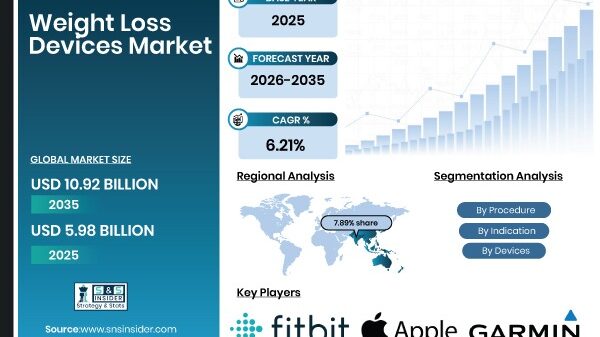















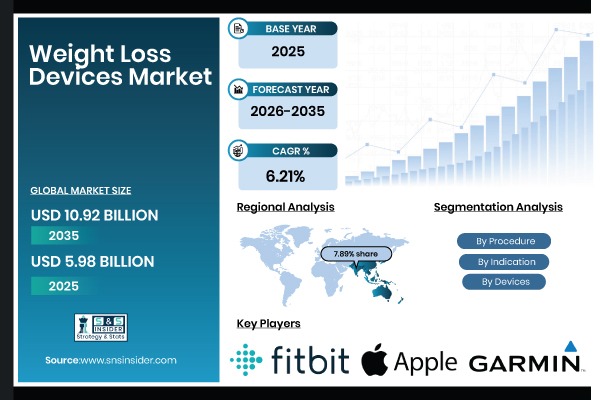
The global weight loss devices market is on a trajectory to expand considerably, with predictions indicating a rise from $5.98 billion in 2025 to $10.92 billion by 2035. This growth is projected to occur at a compound annual growth rate (CAGR) of 6.21% between 2026 and 2035, according to insights from SNS Insider.
Key factors fueling this market expansion include the increasing prevalence of obesity, heightened health consciousness among consumers, and advances in connected fitness technologies. The United States is anticipated to dominate this sector, with a market size estimated at $2.28 billion in 2025 and forecasted to grow to $4.17 billion by 2035, reflecting a CAGR of 6.26% during the same period.
The rise in obesity rates combined with a growing awareness of health risks associated with it is driving demand for effective obesity management solutions. Initiatives such as the World Health Organization”s guidelines on obesity and national health campaigns aimed at chronic disease prevention are also contributing to market growth.
However, challenges such as high device costs and limited reimbursement options could hinder broader market adoption. These financial barriers may restrict access to advanced fitness equipment and surgical weight-loss options, potentially concentrating market growth within affluent demographics while limiting opportunities in more price-sensitive markets.
The market features several notable players, including Fitbit Inc. (part of Google LLC), Peloton Interactive, and Allergan Aesthetics (a subsidiary of AbbVie). The segment for fitness devices accounted for the highest revenue share of approximately 42.18% in 2025, driven largely by the widespread adoption of home gym equipment.
In terms of technological trends, the wearables segment is forecasted to achieve the highest CAGR of nearly 7.34% from 2026 to 2035 as advancements in smart health monitoring devices gain traction globally. The obesity management segment is projected to contribute the largest revenue share by 2025, owing to a strong clinical demand for weight reduction solutions.
Regionally, the Asia Pacific is expected to witness the fastest growth in the weight loss devices market, driven by rising disposable incomes, urban obesity rates, and an increase in fitness centers across developing nations. North America remains the largest market due to its established fitness industry infrastructure and high consumer spending on health and wellness products.
Recent developments in the market include Fitbit”s expansion of smartwatch features for advanced metabolic health tracking and Peloton”s launch of a new connected fitness platform that offers personalized training programs.
As the market evolves, understanding consumer adoption metrics, technological adoption rates, and clinical efficacy will be essential for stakeholders looking to navigate this competitive landscape.