










































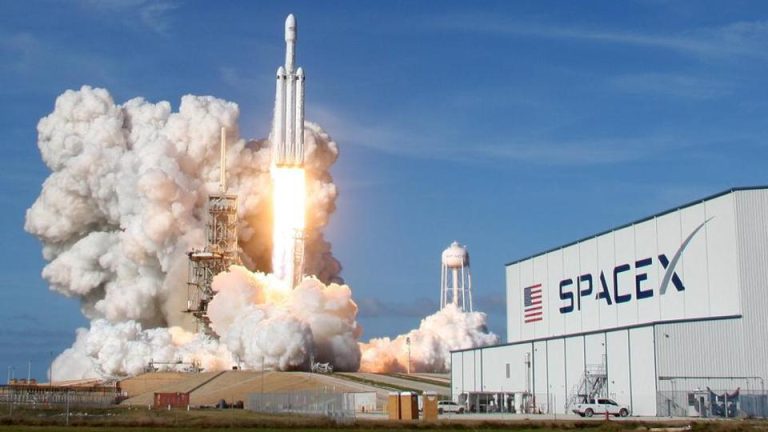
SpaceX is setting its sights on an initial public offering (IPO) aimed for mid-to-late 2026, a timeline that Elon Musk has validated as “accurate.” This move has sparked significant speculation in the markets, potentially marking the most impactful IPO of the decade.
The company is reportedly targeting a staggering valuation of $1.5 trillion. If achieved, this would surpass the record set by Saudi Aramco during its landmark IPO in 2019, establishing a new standard for future public listings. SpaceX is also looking to secure over $30 billion in fresh capital to fuel its ambitious growth plans.
This ambition builds on the momentum generated from a secondary share sale in late 2025, which solidified an internal valuation of approximately $800 billion, with shares priced around $420. This sale has reinforced market confidence in the company”s growth trajectory and established a reference for public expectations.
Strategic Funding Plans for Orbital Data Centers
A significant portion of the proceeds from the IPO is expected to be allocated towards developing orbital data centers. These space-based infrastructures will be powered by solar energy and are designed to support high-intensity artificial intelligence workloads, potentially catering to demands from xAI, among others. This strategic vision positions SpaceX at the confluence of space exploration, renewable energy, and advanced AI technologies.
On the revenue side, projections indicate that SpaceX could generate between $22 billion and $24 billion in 2026, primarily driven by the rapid expansion of its Starlink satellite internet service. Starlink continues to scale its offerings across consumer, enterprise, and government markets globally.
Technological Milestones and Market Implications
The ongoing advancements in the Starship program are pivotal to SpaceX”s valuation narrative. Regular achievements in this area are seen as essential justifications for the company”s trillion-dollar valuation aspirations, underpinning long-term launch economics and its deep-space objectives.
The anticipation surrounding a SpaceX IPO has already begun to influence the aerospace and satellite sectors. Competitors like Rocket Lab and EchoStar have reportedly experienced share price increases between 4% and 12% in response to these developments. Analysts describe the prospect of a SpaceX listing as “seismic,” suggesting that it could fundamentally alter capital markets by placing the space economy at the forefront of global finance. If SpaceX successfully enters public markets on its ambitious terms, it could redefine investor perspectives on frontier technologies and shape the leadership of the next economic era.