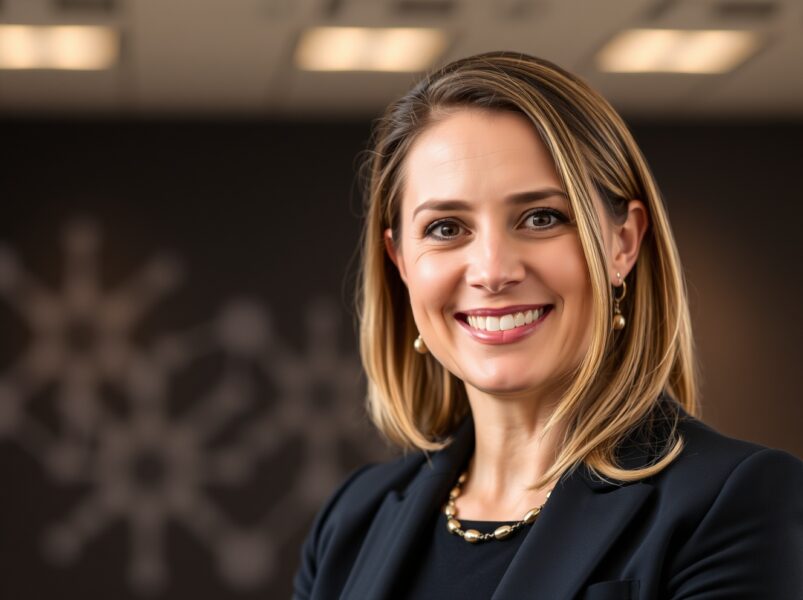
In a significant strategic maneuver, OpenAI has appointed Denise Dresser, the former CEO of Slack, as its new chief revenue officer. This pivotal shift comes at a time when the AI powerhouse is intensifying its focus on the enterprise market, aiming to convert its innovative technology into sustainable revenue streams.
Denise Dresser”s transition to OpenAI marks a defining moment in the company”s trajectory. With years of experience in integrating AI into workplace productivity at Salesforce, which owns Slack, her expertise is expected to propel OpenAI”s efforts in monetizing its advanced AI tools. This appointment signals to investors and industry watchers that OpenAI is serious about establishing a profitable business model centered around enterprise solutions.
Dresser”s history in the tech sector, especially her leadership at Slack, equips her with a unique understanding of how businesses leverage AI tools. Her role will focus on not just revenue generation but also enhancing customer success and enterprise adoption of OpenAI”s offerings. The company is poised to explore new revenue models that extend beyond conventional API access fees, targeting comprehensive solutions for business clients.
OpenAI”s strategy, underscored by Dresser”s hiring, reflects a growing recognition that long-term sustainability will rely heavily on securing business customers rather than individual users. By leveraging Dresser”s background, OpenAI aims to ensure that its tools seamlessly integrate into existing workflows, thus fostering broader acceptance and utilization among enterprises.
However, Dresser”s new role is not without its challenges. OpenAI must navigate complex issues such as developing competitive pricing models that address substantial computational costs, ensuring data privacy and regulatory compliance, and maintaining a competitive edge against entrenched software vendors enhancing their AI capabilities.
As Dresser steps into her role, the implications for the future of enterprise AI are considerable. OpenAI”s commitment to building a dedicated structure around monetization could lead to tailored AI solutions designed for specific industries and improved support services for enterprise clients. This could also pave the way for strategic partnerships with other software providers, enhancing the value proposition of OpenAI”s technology for businesses.
In the wake of Dresser”s departure, Slack has appointed Rob Seaman, the chief product officer, as interim CEO. This leadership change raises questions about Slack”s future direction in AI development without Dresser”s guidance and how it will respond to a rapidly evolving market landscape.
As the AI sector shifts from pure research to a focus on business viability, Dresser”s appointment at OpenAI is a clear indication of the industry”s evolving priorities. The move underscores the increasing importance of enterprise revenue in the AI landscape and highlights the potential for intensified competition among AI firms targeting business clients.
OpenAI”s decision to prioritize a sustainable business model around its groundbreaking technology could signal a transformative phase for both the company and the broader AI industry. The success of this strategy will rely heavily on Dresser”s capability to deliver measurable business value through OpenAI”s innovative solutions.
For ongoing insights into AI leadership developments and trends in enterprise adoption, stay tuned to CoinNewsByte.com.