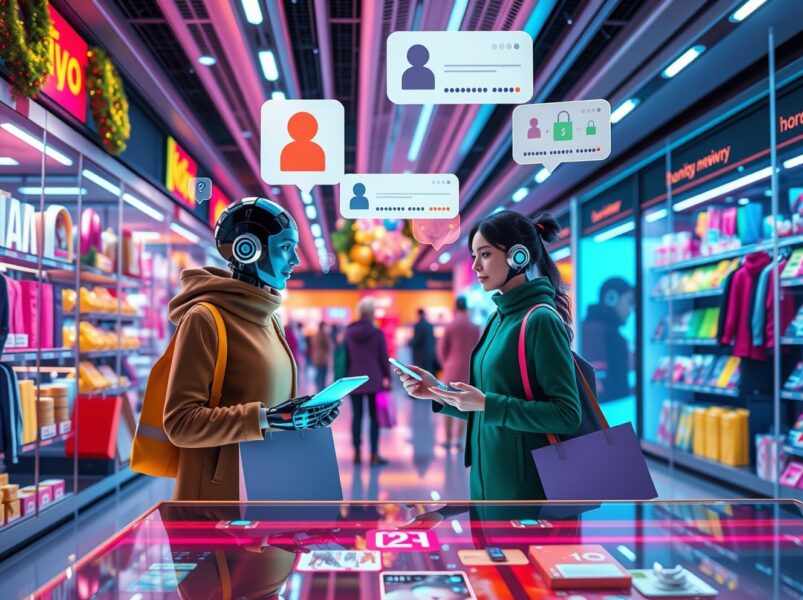
As the holiday shopping season draws near, the landscape of artificial intelligence is undergoing a significant shift. Tech giants such as OpenAI and Perplexity have recently unveiled their AI shopping assistants, tools that promise to transform how consumers explore and purchase products. However, the critical question arises: can specialized AI shopping startups effectively compete against these industry behemoths?
AI Shopping Assistants Revolutionizing E-commerce
With the launch of their shopping capabilities, OpenAI“s ChatGPT and Perplexity AI are set to enhance the shopping experience just in time for the peak holiday sales. ChatGPT can assist users in locating specific products, such as gaming laptops priced under $1,000 or suggesting cost-effective alternatives for luxury fashion items through its image recognition feature. Meanwhile, Perplexity utilizes its chatbot”s memory to provide tailored product suggestions based on individual user preferences and their geographical location.
OpenAI”s Edge in General Product Search
The extensive user base of OpenAI gives it a substantial advantage in the AI shopping assistants arena. With millions of daily users already engaged with ChatGPT, the integration of shopping functions occurs seamlessly, eliminating the need for users to adopt new tools. The collaboration with Shopify facilitates direct purchasing options within the chat, creating a smooth shopping experience that could disrupt traditional e-commerce approaches.
Perplexity AI”s Focus on Personalization
In contrast to conventional search engines, Perplexity AI prioritizes contextual awareness and memory retention. Its shopping assistant retains user preferences, locations, and historical interactions, enabling it to offer highly customized product recommendations. This unique method positions Perplexity as a formidable player among AI shopping assistants, particularly for consumers looking for personalized shopping experiences.
Specialization: The Key to Startups” Resilience
Despite the presence of tech giants, specialized startups like Onton, Daydream, and Phia maintain considerable advantages within their niches. As noted by Zach Hudson, CEO of Onton, “Any model or knowledge graph is only as good as its data sources. Right now, ChatGPT and LLM-based tools like Perplexity piggyback off existing search indexes like Bing or Google.” This reliance limits their effectiveness in specialized domains.
Reasons for Startups” Confidence
Specialized AI shopping startups have cultivated proprietary datasets that outperform general-purpose tools in specific areas. Julie Bornstein, CEO of Daydream, emphasizes that “fashion is uniquely nuanced and emotional – finding a dress you love is not the same as finding a television.” These niche players focus on domain-specific datasets and merchandising logic, which better understand elements like silhouettes and fabrics, enhancing the shopping experience over time.
The Future of AI in E-commerce: A Balancing Act
As Adobe forecasts a substantial increase in AI-assisted online shopping this holiday season, the competition between specialized startups and tech giants is set to intensify. While companies like OpenAI and Perplexity enjoy the benefits of extensive user bases and established partnerships, niche companies counter with their superior domain knowledge and curated data. The eventual winners are likely to be those that successfully merge the accessibility of scale with the depth of specialization, providing both broad reach and profound insight.
FAQs on the AI Shopping Landscape
What distinguishes the shopping assistants from OpenAI and Perplexity? OpenAI emphasizes general product discovery and image-based searches, while Perplexity focuses on personalized recommendations through memory and context.
How do specialized startups maintain competitiveness against larger companies? Startups such as Onton and Daydream create proprietary datasets and specialized algorithms that exceed the capabilities of general-purpose AI in their sectors.
What advantages do giants like OpenAI and Perplexity hold? Their existing user bases, vast computing power, and partnerships with major platforms like Shopify and PayPal provide them with a significant edge.
Who are the influential figures referenced in this analysis? Insights are provided by Zach Hudson, CEO of Onton, and Julie Bornstein, CEO of Daydream, who share their perspectives on the future direction of the industry.
The rise of AI shopping assistants marks a significant change in how consumers engage with e-commerce platforms. While tech giants bring their scale and resources to the table, specialized startups offer depth and expertise that are not easily replicated. As the holiday season approaches, both strategies will face a critical test in consumer engagement and satisfaction.
For further insights on the latest trends in AI shopping, check out our article discussing key developments influencing AI features and institutional adoption within the e-commerce sector.